

Does ChatGPT really use less water than an Almond? What Sam Altman’s claim leaves out

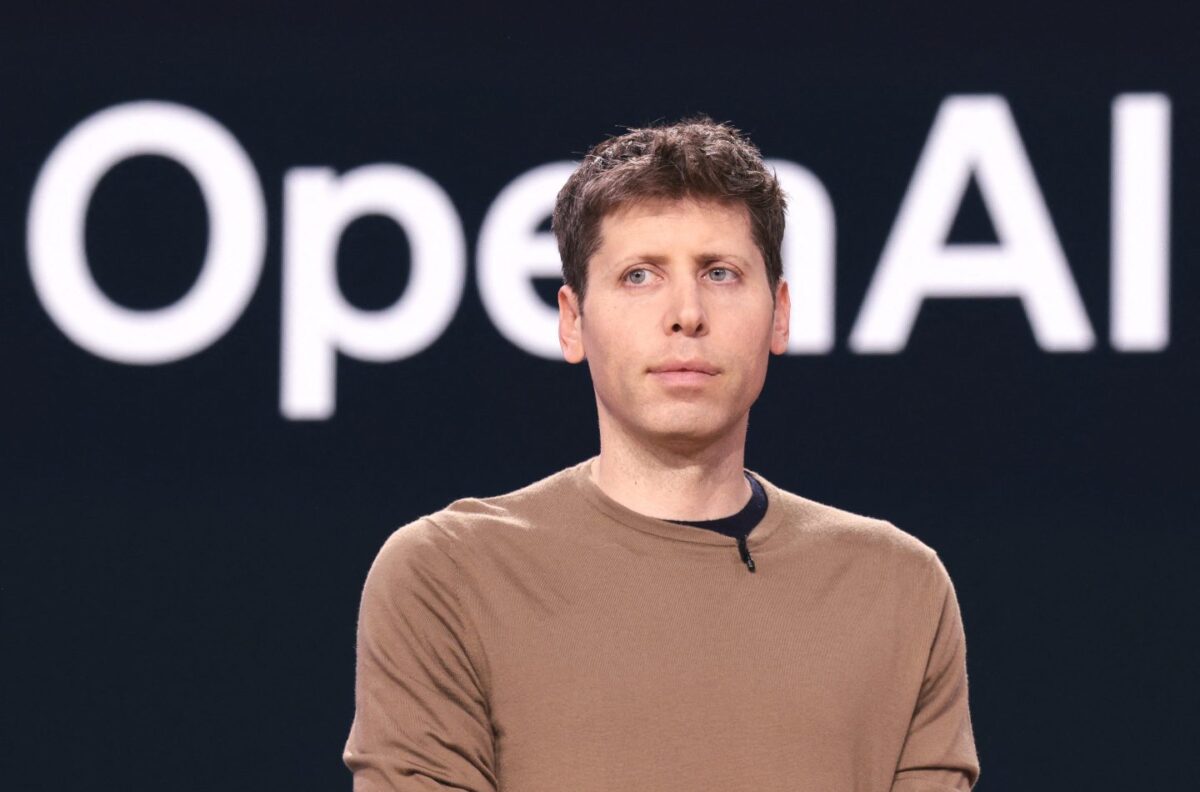
Sam Altman
Sam Altman has offered a striking answer to one of the biggest environmental criticisms facing artificial intelligence: producing a single California almond, he says, uses as much water as running about 38,000 ChatGPT queries.
The OpenAI CEO made the comparison during an interview on the Sources podcast with technology journalist Alex Heath, while pushing back against claims that artificial intelligence is consuming enormous quantities of water. Altman also disputed a widely circulated comparison suggesting that a single ChatGPT query could consume as much water as taking a shower for several hours.
His argument is straightforward: modern data centers are becoming much more efficient, and some of the most alarming figures circulating online are based on older cooling technologies.
But there is a catch.
Experts say the available public data is too limited to independently verify Altman’s 38,000-query calculation. Water consumption varies according to the location of a data center, its cooling system, outdoor temperature, the computing hardware being used and the complexity of an AI request.
That makes the almond comparison attention-grabbing, but far less definitive than it sounds.
What did Sam Altman say about ChatGPT water usage?
Altman said that about 38,000 ChatGPT queries use the same amount of water involved in producing one almond in California.
He presented the figure while arguing that concerns about AI’s water footprint have been exaggerated. He also said modern large data centers can use roughly the same amount of water as an office building for ordinary activities such as sinks and toilets.
Altman acknowledged that older data centers using evaporative cooling could consume significant quantities of water. His argument is that newer infrastructure has moved toward more efficient cooling methods, making older estimates less representative of today’s AI systems.
There is an important qualification, however: Altman said he was recalling the 38,000 figure from memory and acknowledged that he could be wrong.
That matters when the number is being used to make a broad claim about the environmental cost of AI.
How much water does one almond actually use?
Almonds have long been cited in debates about agricultural water consumption, particularly in California, where large-scale almond production is concentrated.
But there isn’t one universally applicable number for the amount of water required to produce an almond.
Research has produced substantially different estimates depending on the methodology, location and period being examined. One widely cited estimate puts the water requirement at roughly 1.1 gallons per almond, while other research has produced considerably higher figures when calculating a broader water footprint.
That variation makes comparisons with ChatGPT difficult.
An almond is an agricultural product whose water footprint develops over an entire growing cycle. A ChatGPT query, meanwhile, requires computing infrastructure that may draw water directly for cooling and indirectly through the production of electricity.
The two numbers are measuring different systems.
The problem with putting one water number on every ChatGPT query
The biggest weakness in the 38,000-query comparison is that not every ChatGPT request consumes the same amount of water.
Shaolei Ren, a professor of electrical and computer engineering at the University of California, Riverside, has pointed to several factors that can change data center water consumption.
They include where the data center is located, the weather, the cooling technology, the length of a user’s prompt, how much reasoning a model performs and the amount of content it generates.
A short question requiring a simple response is not necessarily equivalent to a long request that causes an AI system to perform substantially more computation.
The same principle applies to AI agents and more advanced reasoning models, which can perform multiple computational steps rather than simply generating a short response.
That means a statistic describing an “average” query can be useful for understanding scale, but it should not be treated as a fixed water cost for every interaction.
Why experts say Altman’s number cannot currently be verified
The biggest obstacle is not necessarily that Altman’s calculation is wrong.
It is that there is not enough publicly available information to independently reproduce it.
Data center operators do not consistently disclose detailed information about their water consumption, the source of that water, cooling technology or peak demand. That makes it difficult for outside researchers to calculate the precise water footprint of individual AI queries.
Michael Kiparsky, director of the Wheeler Water Institute at UC Berkeley’s Center for Law, Energy, & the Environment, told CalMatters that the publicly available information is limited and inconsistent.
This transparency problem is becoming more important as governments debate how to regulate rapidly expanding data center infrastructure.
California lawmakers have been considering measures that would require data center operators to disclose water sources and usage as part of the permitting process.
Until more detailed data becomes public, claims on both sides of the debate have to be treated cautiously.
Data centers really are using more water
Questioning the 38,000 figure does not mean AI has no water problem.
Federal researchers have documented significant growth in data center water consumption.
One study cited by the Congressional Research Service estimated that U.S. data centers directly consumed around 17 billion gallons of water in 2023, compared with about 5.6 billion gallons in 2014. Another estimate suggested hyperscale data centers could use about 150 billion gallons between 2025 and 2030.
Those figures cover data centers rather than ChatGPT alone, so they should not be interpreted as OpenAI’s individual water footprint.
They do, however, demonstrate why the issue is becoming harder to dismiss as AI infrastructure expands.
READ ALSO
Is ChatGPT down? OpenAI users report widespread outage on Thursday
The hidden issue is peak water demand
Annual water consumption is only part of the story.
Researchers warn that data centers can create particularly difficult demands during periods of extreme heat, when cooling systems have to work harder.
Ren’s research suggests that data center cooling could require hundreds of millions to more than a billion additional gallons of peak water capacity per day under certain scenarios. The study estimated a range of roughly 697 million to 1.45 billion gallons of additional peak capacity.
That distinction is important for communities.
A water utility doesn’t only need to know how much water a facility consumes over a year. It must also have enough capacity to supply customers during periods when demand is at its highest.
A data center can have a relatively modest annual water footprint and still create infrastructure challenges if its peak demand arrives when a community’s water system is already under stress.
Is ChatGPT’s water use really lower than almond farming?
The safest answer is: it may be for a particular comparison, but the 38,000-to-one figure has not been independently established by the available public evidence.
There are estimates suggesting that an individual ChatGPT query can consume a fraction of a milliliter of water under certain assumptions. Altman previously cited an average figure of roughly 0.32 milliliters per query, though that estimate does not necessarily capture every form of water associated with electricity generation and can differ according to the system being measured.
Some estimates of an almond’s water footprint are measured in liters rather than milliliters.
That means it is entirely plausible that thousands of AI queries could have a water footprint comparable to a single almond under particular assumptions.
The question is whether 38,000 is the correct number for modern ChatGPT infrastructure.
Current public evidence does not provide enough information to confidently establish that.
Why the comparison can be misleading
The almond comparison has another weakness: it can make the AI water debate sound like a contest between two individual products.
That’s not really the central environmental question.
The bigger issue is scale.
One almond requires water once. Millions or billions of AI queries require computing infrastructure operating continuously across data centers.
If AI usage continues growing rapidly, even a relatively small water requirement per query can become significant when multiplied across enormous volumes of requests.
That is why researchers and policymakers are increasingly focused on the water consumption of entire data center networks, rather than asking whether a single ChatGPT prompt uses more water than a particular food item.
New cooling technology could change the calculation
Altman is right about one important part of the debate: data center technology is changing.
Companies are developing cooling systems designed to reduce dependence on water-intensive evaporative cooling. Closed-loop and liquid-cooling systems can potentially reduce direct water consumption substantially.
But lower water use can involve tradeoffs.
Some cooling approaches require more electricity, and electricity production itself can have a water footprint. Ren has said that water use could potentially fall by as much as 50% when less water-intensive cooling systems are adopted, while also noting the energy tradeoffs involved.
That means replacing one water-intensive system with another technology does not necessarily make the entire environmental footprint disappear.
It can move the burden somewhere else.
Why California is demanding more answers from data centers
The debate is particularly sensitive in California because the state has a long history of water shortages, drought and disputes over how water should be allocated.
At the same time, technology companies are seeking to build increasingly large data centers capable of supporting AI models.
California lawmakers have passed measures aimed at improving transparency around data center water use, with the proposals awaiting Gov. Gavin Newsom’s decision. The measures would require more information about water sources and consumption and would impose additional planning requirements for new facilities.
The political argument is no longer simply about whether AI is “green” or “bad for the environment.”
It is becoming a question of whether communities should be able to see exactly how much water a proposed facility will require before approving it.
What Sam Altman’s almond claim really tells us
The most revealing part of the debate may be what the 38,000 figure cannot tell us.
It cannot establish the water footprint of every ChatGPT query. It cannot account for every data center, every cooling system or every electricity source. And it cannot resolve how AI’s water demand will change as models become more powerful and usage increases.
What it does show is how difficult it has become to discuss AI’s environmental impact using a single number.
Altman is challenging the most alarming claims about ChatGPT’s water consumption. Researchers, meanwhile, are asking for something more basic: better data.
Until that data is publicly available, the almond comparison should be viewed as a claim that needs more evidence, not a final verdict on AI’s water footprint.
Frequently Asked Questions
Does ChatGPT really use more water than an almond?
There is no reliable universal answer. Water use varies by data center, cooling system, location, weather and computing workload. Altman’s claim that 38,000 queries equal one California almond has not been independently verified.
How much water does one ChatGPT query use?
Estimates vary. Altman previously cited roughly 0.32 milliliters per average ChatGPT query, while other estimates have produced different figures depending on what is included in the calculation.
How much water does it take to produce one almond?
Estimates vary substantially. A commonly cited figure is around 1.1 gallons per almond, while broader research has produced higher estimates. The figure depends on the methodology, location and period studied.
Why does ChatGPT need water?
Water can be used to cool the servers in data centers that run AI models. The amount depends heavily on the cooling technology and environmental conditions.
Did Sam Altman say 38,000 ChatGPT queries equal one almond?
Yes. Altman made the comparison during an interview on the Sources podcast. He also acknowledged that he was recalling the figure from memory and could be wrong.
Is Sam Altman’s 38,000-query claim proven?
No. Experts cited by CalMatters said the public data about data center water consumption is too limited to independently verify the calculation.
Are AI data centers actually using large amounts of water?
Yes. Research cited by the Congressional Research Service indicates that direct water consumption by U.S. data centers has increased substantially over the past decade.
Could ChatGPT use less water in the future?
Potentially. More efficient cooling systems, including some closed-loop and dry-cooling technologies, can reduce direct water consumption. Some alternatives, however, can increase electricity demand.
Why is data center water use becoming a political issue?
Communities need to understand how new data centers could affect local water supplies, particularly during hot or dry periods. California lawmakers are considering greater disclosure and planning requirements partly for this reason.
Does using ChatGPT personally have a major environmental impact?
A single query is relatively small compared with the total water consumption of large data center operations. The larger environmental question is the cumulative impact of billions of AI interactions and the infrastructure being built to support them.