

Ghana Card biometric verification: what changes for cardholders from 3 November

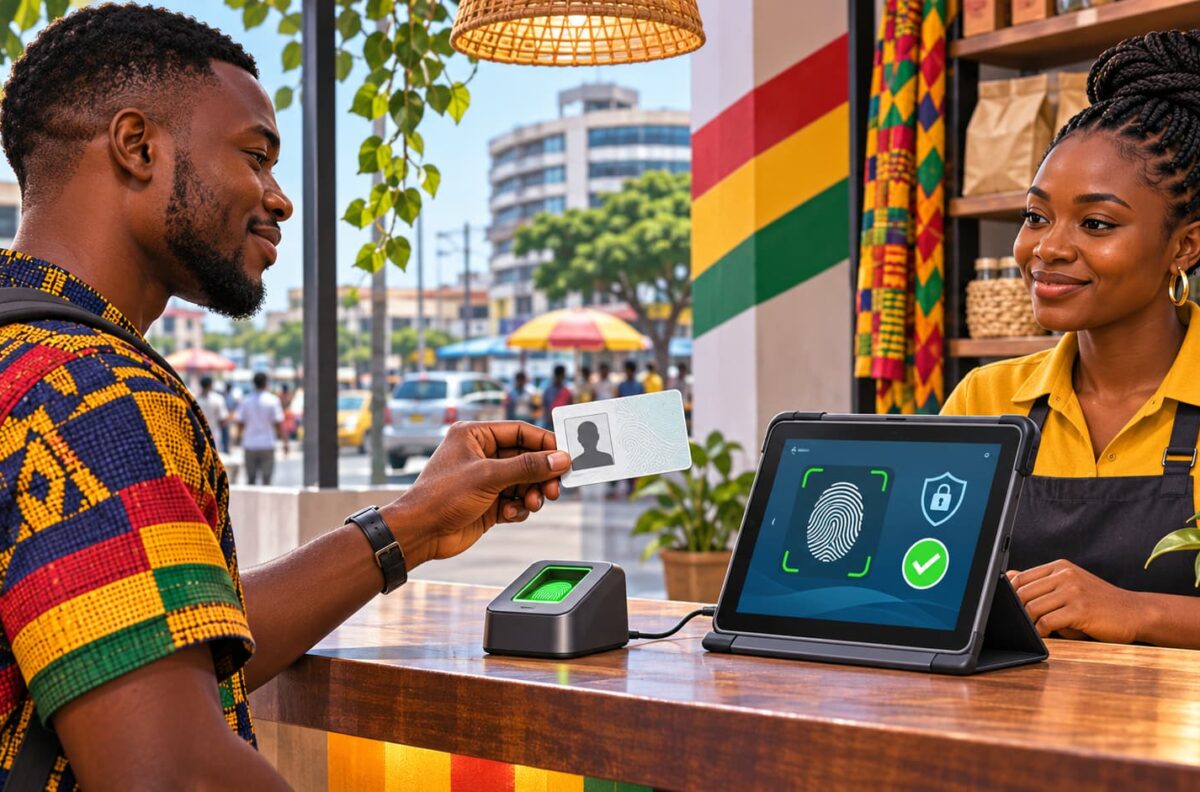
Conceptual illustration of a biometric identity check in Ghana; it does not depict an actual NIA office, cardholder or service.
Ghana’s biometric verification rules are entering their enforcement phase, bringing new checks for banks, mobile operators and other organisations that rely on the Ghana Card. Cardholders can keep using their existing cards, while businesses must change how they confirm identity.
Ghana’s National Identification Authority (NIA) began enforcing biometric verification rules on 3 November 2026 after a three-month grace period. Under the National Identity Register (Amendment) Regulations, 2026, or L.I. 2523, organisations verifying a person’s identity must use approved biometric methods instead of relying solely on visual inspection of the card. The NIA says the change is designed to curb impersonation and protect personal information. NIA’s legal notice says the regulation took effect on 9 June; 3 November marks active enforcement after the grace period.
What Ghana Card biometric verification means for users
The change affects everyday identity checks at banks, telecom companies, public agencies and businesses that use the Ghana Card to confirm a customer’s identity. Those organisations must connect to the NIA’s approved identity verification system and use biometric verification tools.
The NIA has clarified that cardholders can keep their existing cards without fresh enrolment. Existing Ghana Cards remain valid. People may still present the physical card, while the institution checks identity through an approved biometric system. Depending on the service, this can involve matching a fingerprint or another biometric feature against the national identity record. GNA’s NIA briefing says the regulation changes the verification process rather than the card itself.
Why organisations must stop photocopying Ghana Cards
L.I. 2523 restricts institutions from photocopying, scanning or keeping card copies for identity verification, subject to exceptions permitted by law. The aim is to reduce the spread of sensitive personal data and make fraud harder by checking the cardholder against biometric records.
On 2 November, NIA corporate affairs director Williams Ampomah Emmanuel Darlas said the grace period had ended and that a biometric verification task force would inspect public and private institutions. The Ghana News Agency reported that NIA would pursue legal sanctions against non-compliant organisations, including fines of 500 to 2,000 penalty units, depending on the offence. GNA’s enforcement report also said institutions must obtain access directly from the NIA and complete its onboarding process.
The NIA’s official guidance says organisations should use its own verification system and approved tools. Class FM’s report likewise says institutions must use NIA-approved biometric checks and stop routine photocopying for identity verification. A business already connected to the system should review any arrangement that allows another company to use its access. The authority has warned against third-party resellers and unauthorised intermediaries.
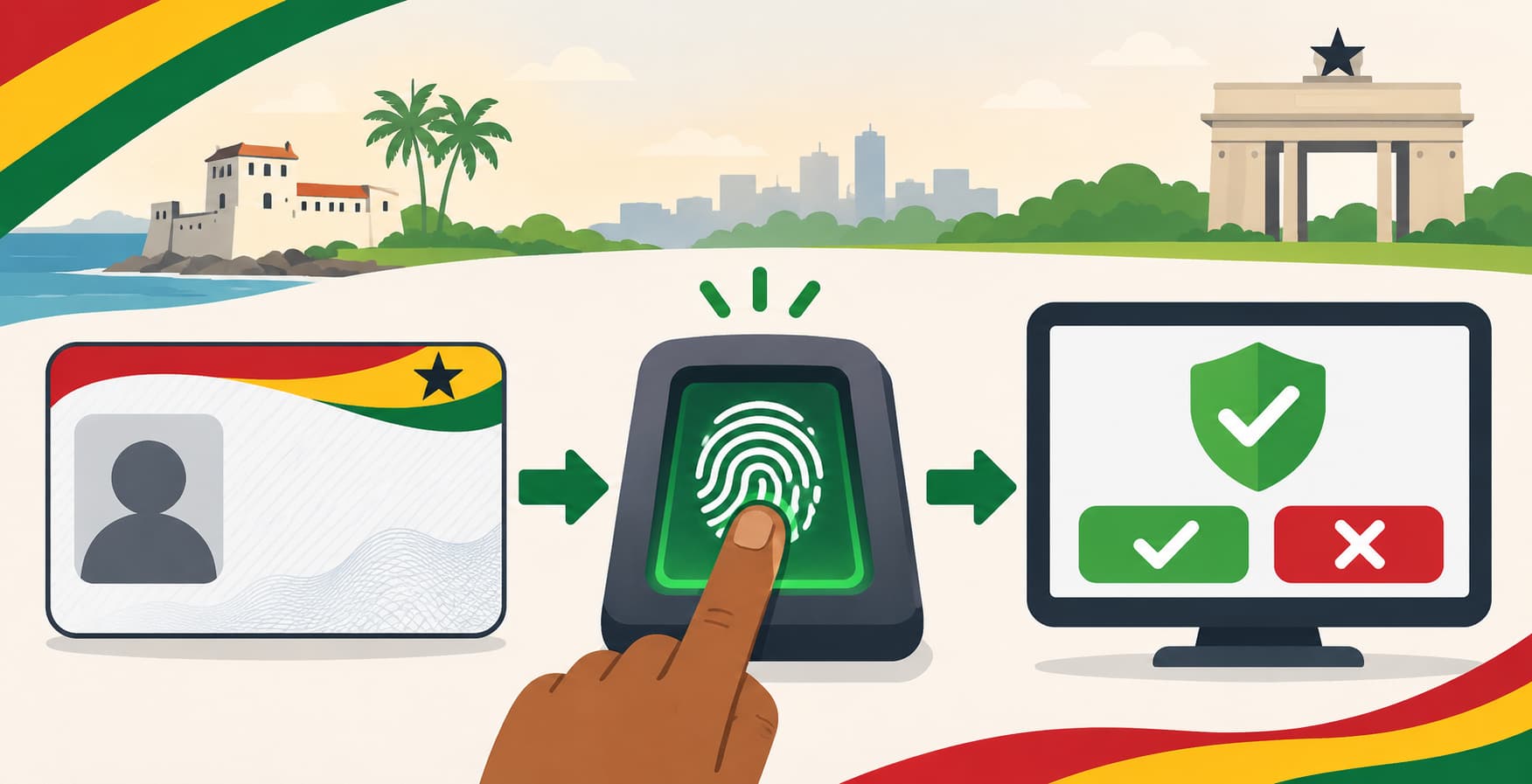
What cardholders and businesses should do next
Cardholders should continue carrying their Ghana Card when a service requires it and follow the provider’s instructions for biometric checks. They can ask how an organisation will verify their identity and how it will protect personal information. If a business requests a photocopy solely for identification, customers can ask whether it has an approved biometric verification process.
Businesses should contact the NIA directly, confirm their legal registration and data-protection certification, and begin or complete technical onboarding. The regulations also apply to organisations that already use the Ghana Card, so existing procedures deserve review. Employers and service providers should brief staff on the change and remove routine card-copying from identity checks where the law requires biometric verification.
For Ghanaians living abroad, the rules matter when dealing with Ghana-based banks, government services, telecom providers or businesses. Before travelling or completing a transaction remotely, customers can contact the institution to ask which verification channel it supports and whether the service can be completed digitally.
Ghana Card biometric verification: frequently asked questions
Do Ghanaians need a new Ghana Card?
Existing Ghana Cards remain valid, and the NIA says cardholders can keep using them without new enrolment.
When did enforcement begin?
The regulation took effect on 9 June 2026. The NIA enforcement phase began on 3 November, after the three-month grace period.
Can an organisation photocopy my Ghana Card?
The rules restrict photocopying, scanning or retaining card copies for identity verification, except where another law permits it.
Where should a business apply for verification access?
Businesses should contact the NIA directly and complete its approved onboarding and technical integration process.