
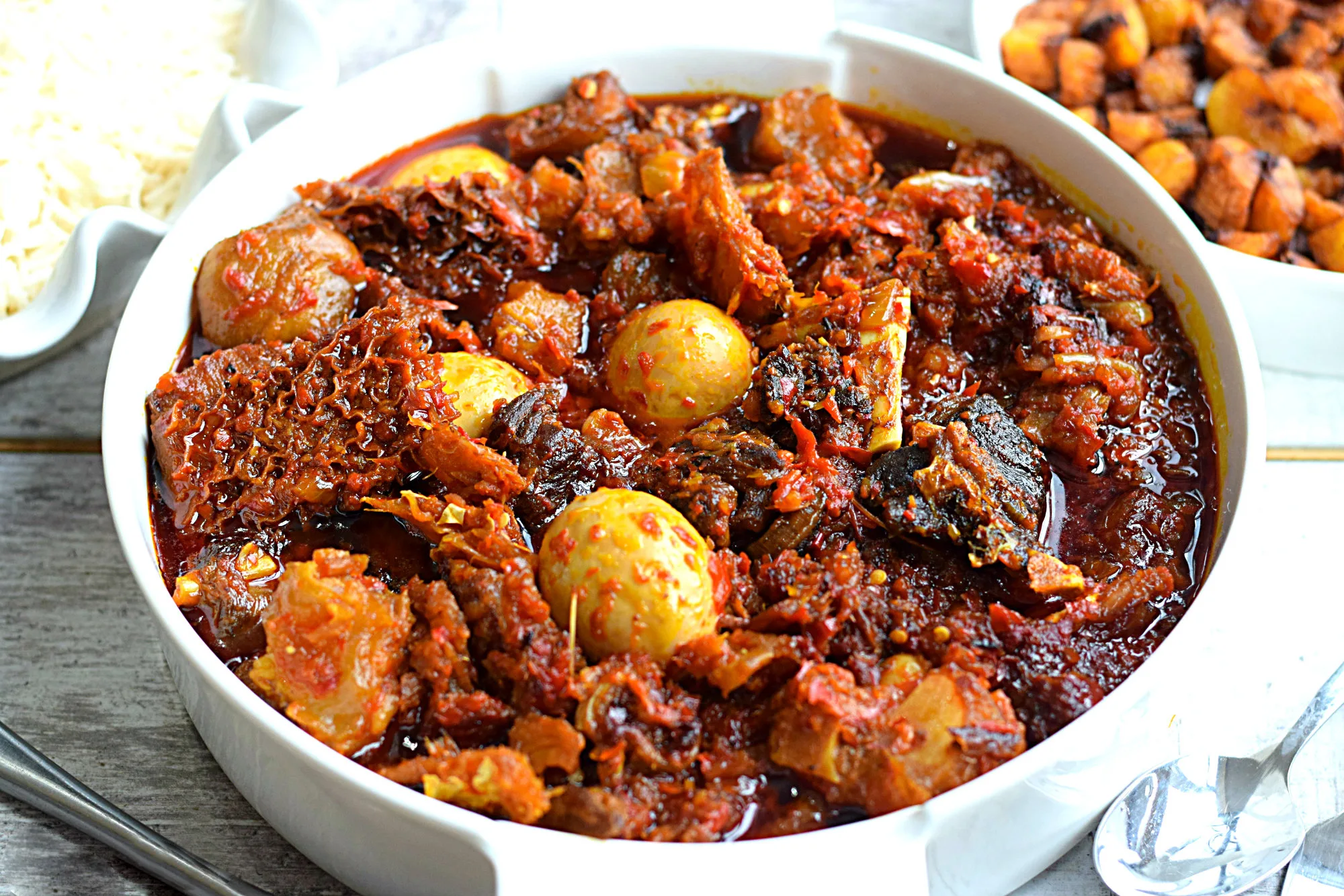
Instead of spending hours cooking every day, you can set aside a few hours during the weekend to prepare meals and ingredients that are easy to store, reheat and serve when needed.
For Nigerian households, bulk cooking can include familiar staples such as beans, stew, soups, rice dishes and proteins. These foods can be divided into portions and stored for convenient use throughout the week.
Here are 10 foods worth preparing in bulk to save time during busy weeks.
1. Tomato Stew
Tomato stew is one of the most useful foods to prepare in bulk because it can accompany several Nigerian meals.
A large batch can serve as a base for rice, spaghetti, yam, beans and other dishes. You can prepare it with tomatoes, peppers, onions, seasoning and your preferred cooking oil.
Once cooked, divide the stew into smaller portions based on how much you typically use for one meal. This makes it easier to take out only what you need rather than repeatedly reheating the entire pot.
You can also prepare separate batches with different levels of seasoning or heat to suit different meals.
2. Nigerian Soups
Preparing Nigerian soups in bulk can significantly reduce the amount of cooking required during the week.
Popular options include egusi, ogbono, efo riro, vegetable soup and other household favourites.
These soups can take considerable time to prepare, particularly when they involve washing vegetables, blending ingredients, cooking meat and preparing assorted proteins.
Cooking a larger quantity at once allows you to portion the soup into meal-sized containers and freeze what you will not use within a few days.
For soups containing leafy vegetables, consider how their texture changes after freezing and reheating. Some vegetables retain their quality better than others.
3. Beans
Beans are filling, versatile and suitable for batch cooking.
You can cook a large quantity of beans and divide it into portions for different meals. Depending on your preference, the beans can be prepared plain or cooked with ingredients such as onions, pepper and palm oil.
Cooked beans can be served with bread, garri, rice, yam or plantain. They can also be turned into porridge when you want a more complete meal.
To make preparation easier, sort and wash the beans before cooking. You can also measure portions of dry beans ahead of time so they are ready whenever you want to prepare a fresh batch.
4. Jollof Rice
Jollof rice is another meal that can be prepared in larger quantities, particularly when you have a busy schedule or a household with several people.
Cooking a large pot can provide meals for more than one sitting, provided the rice is cooled and stored properly.
You can prepare the rice with your preferred pepper base, seasoning and vegetables. Divide the cooked food into individual or family-sized portions so you can reheat only what is needed.
If you prefer freshly cooked rice, another option is to prepare and freeze the jollof sauce separately. When it is time to eat, you only need to cook the rice and combine it with the prepared sauce.
5. Cooked Chicken and Other Proteins
Preparing proteins ahead of time can make everyday cooking considerably faster.
Chicken, beef, turkey and fish can be seasoned and cooked in batches. Depending on the meal, you can boil, grill, bake or fry them before dividing them into portions.
Prepared proteins can be added to rice, pasta, soups, noodles and other dishes without having to start the cooking process from scratch.
You can also season raw chicken or beef in advance and freeze it in meal-sized portions if you prefer cooking the protein fresh.
Ensure that meat and poultry are thoroughly cooked before storing them as ready-to-eat meals.
READ ALSO
8 Traditional Nigerian Soups That Are Prepared Differently Across States
6. Moi Moi
Moi moi is a convenient food to prepare in bulk because it can serve as breakfast, lunch, dinner or a side dish.
Making it involves soaking or processing beans, removing the skin where necessary, blending the mixture and preparing the ingredients for steaming or baking.
Since these steps can take time, preparing several portions in one cooking session saves effort later.
You can make individual wraps or use suitable containers to prepare different serving sizes. Moi moi can be eaten with pap, custard, bread, rice or other meals.
Allow cooked portions to cool safely before storing them in the refrigerator or freezer.
7. Yam Porridge
Yam porridge is a filling meal that can be prepared in a large pot and divided into portions.
The dish typically combines yam with pepper, onions, palm oil, seasoning and other preferred ingredients. Some households also add vegetables, fish or smoked fish.
Preparing a larger quantity can reduce the number of times you need to cook during the week.
However, yam porridge is best stored in portions that can be consumed after reheating, as repeated heating and cooling can affect its texture and quality.
8. Pasta Sauce
Preparing pasta sauce ahead of time makes it easier to put together a quick meal when you have little time to cook.
You can prepare a sauce using tomatoes, peppers, onions, vegetables and your preferred protein. Store it separately from the pasta so you can combine it with freshly cooked spaghetti or macaroni whenever necessary.
This also gives you flexibility. The same sauce can be used for pasta, rice and other meals depending on how it is prepared.
Rather than cooking a new sauce every time you want spaghetti, you can simply heat the portion you need.
9. Pancakes and Breakfast Batters
Breakfast preparation can be particularly challenging on mornings when everyone is rushing to work or school.
Pancakes are one option that can be prepared in advance. You can make several pancakes in one session, allow them to cool and store them in portions.
They can be reheated when needed and served with fruit, honey or other preferred toppings.
For people who prefer freshly cooked pancakes, dry ingredients can also be measured and stored together in advance. This reduces the preparation required in the morning.
If preparing pancake batter ahead, follow an appropriate refrigerated storage period and avoid keeping mixtures containing eggs or milk at room temperature.
10. Chopped Vegetables and Cooking Ingredients
Not every item worth preparing in bulk has to be a complete meal. Preparing ingredients ahead of time can also make everyday cooking faster.
You can wash and chop vegetables such as carrots, green peppers, onions and other ingredients used regularly in your kitchen.
Other useful preparations include peeled garlic, blended pepper mixtures and measured portions of spices.
Store prepared ingredients in clean, covered containers under suitable refrigeration conditions. Some vegetables may be better frozen, while others retain their texture when refrigerated and used within a shorter period.
Having these ingredients ready can reduce the time spent washing, peeling and chopping whenever you want to cook.
How to Store Bulk-Cooked Food Safely
Bulk cooking saves time only when the food is stored properly. Poor storage can cause prepared meals to spoil and increase the risk of foodborne illness.
Follow these basic practices:
- Use airtight containers: Divide meals into clean, covered containers to protect them from contamination and help maintain quality.
- Store food promptly: Refrigerate or freeze cooked food within two hours of preparation. Do not leave perishable meals sitting out for extended periods.
- Divide large portions: Shallow containers allow food to cool more quickly than leaving a large quantity in one deep pot.
- Label stored meals: Write the preparation date on containers so you can keep track of how long food has been stored.
- Avoid repeated reheating: Take out only the portion you intend to eat and reheat it thoroughly.
- Check storage conditions: Keep your refrigerator at or below 4°C and your freezer at or below -18°C.
Cooked leftovers generally keep for three to four days in a properly maintained refrigerator. Meals intended for longer storage should be frozen, with storage times varying according to the type of food.
Make Weekly Meal Preparation Easier
Preparing food in bulk does not mean cooking every meal for the entire week in one sitting. You can start with two or three items that take the longest to prepare, such as stew, soup and beans.
Once those are ready, everyday meals become easier to assemble. Combining prepared sauces, proteins and ingredients with freshly cooked rice, pasta or yam can provide variety without requiring hours in the kitchen.
With a little planning, bulk cooking can reduce daily kitchen work, make meal decisions easier and help households manage busy schedules.
Frequently asked questions
1. What foods can I cook in bulk for the week?
Foods such as tomato stew, Nigerian soups, beans, jollof rice, cooked chicken, moi moi, yam porridge and pasta sauce are suitable options for batch cooking.
2. What Nigerian foods can I prepare ahead of time?
You can prepare egusi soup, efo riro, ogbono, beans, tomato stew, moi moi, pepper sauce and cooked proteins ahead of time. Store them in suitable portions for later use.
3. How long can cooked food stay in the fridge?
Many cooked leftovers can be refrigerated for three to four days when stored properly at 4°C or below. Some foods have different storage recommendations.
4. Can I freeze Nigerian soups?
Yes. Many Nigerian soups can be frozen in airtight, meal-sized containers. Their texture may change depending on the vegetables and ingredients used.
5. How do I save time cooking during busy weekdays?
Prepare meals and ingredients in advance, cook staples in larger quantities, portion food into containers and store meals safely. You can combine prepared sauces and proteins with freshly cooked staples.
6. Is it better to freeze cooked food or refrigerate it?
Refrigeration is suitable for meals you intend to eat within a few days. Freezing is more appropriate for food you want to keep for longer.
7. Can I reheat bulk-cooked food more than once?
Repeated reheating and cooling can affect food quality and increase food-safety risks. It is better to divide meals into individual portions and reheat only what you intend to eat.
8. What should I prepare for meal prep on Sundays?
Tomato stew, beans, soup, cooked proteins and chopped vegetables are useful starting points. They can be combined in different ways to create meals throughout the week.