
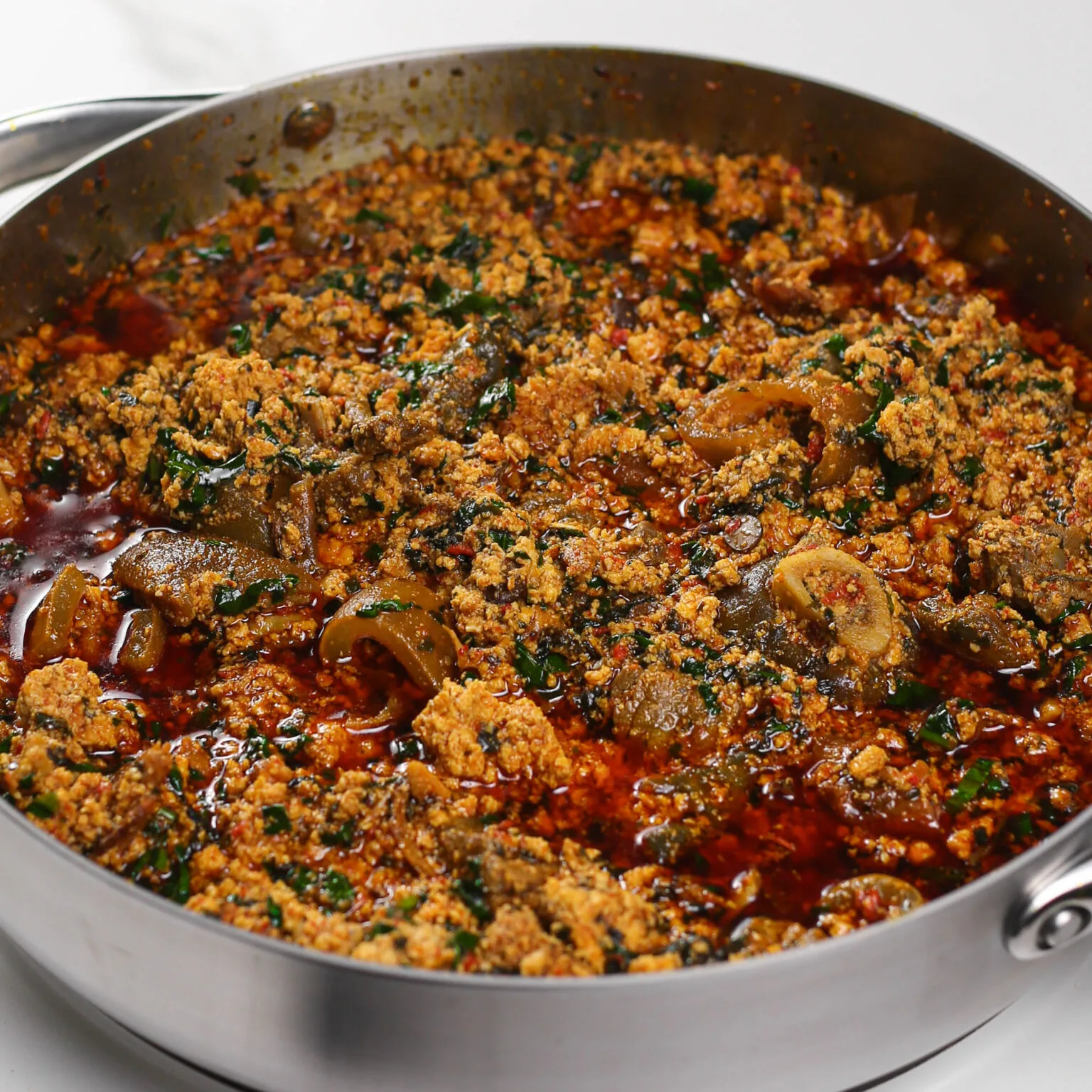
Nigerian cuisine is known for its variety, with traditional soups offering a glimpse into the country’s different cultures, ingredients and cooking traditions. Across the 36 states, communities prepare familiar dishes in different ways, using locally available vegetables, seafood, meat, spices and other ingredients to create distinct flavours.
Some soups share names across ethnic groups but differ significantly in their preparation. Others are closely associated with particular communities, reflecting generations of food traditions passed down through families.
From the rich, draw-textured Ofe Owerri of Imo State to the seafood-based Edikang Ikong popular in Cross River and Akwa Ibom, Nigerian soups demonstrate how geography and culture influence what eventually appears on the dining table.
Here are eight traditional Nigerian soups that are prepared differently across states and communities.
1. Egusi Soup: A Nigerian Favourite With Regional Variations
Egusi soup is one of Nigeria’s most widely enjoyed traditional dishes. Prepared with ground melon seeds, the soup is popular across several regions, including the South-West, South-East, South-South and parts of the North.
Its ingredients and cooking methods, however, vary from one community to another.
In many Yoruba households, egusi is prepared with palm oil, pepper, assorted meat, stockfish, crayfish and vegetables such as ugu or bitter leaf. Some cooks fry the ground melon mixture before adding stock, while others prepare it using a method that produces a softer, more uniform texture.
In Igbo communities, egusi may be cooked with bitter leaf, pumpkin leaves or other local vegetables. Some versions are thicker and contain generous portions of assorted meat and fish.
The difference is not limited to vegetables. The consistency, oil content and choice of protein can also change depending on family preferences and local traditions.
2. Oha Soup: A Signature Dish of Igbo Communities
Oha soup, also known as Ofe Oha, is traditionally associated with Igbo communities in south-eastern Nigeria. It is prepared using the tender leaves of the Oha tree, which give the soup its distinctive flavour.
The soup is particularly popular in Imo, Anambra, Abia and parts of Ebonyi and Enugu states.
A typical preparation combines Oha leaves with cocoyam paste, palm oil, meat, stockfish, dried fish, crayfish and traditional seasonings. The cocoyam thickens the soup, while the leaves are usually added towards the end of cooking to preserve their texture and flavour.
Preparation differs among households and communities. Some cooks use cocoyam as the primary thickener, while others adjust the quantity of thickener or combine ingredients to achieve their preferred consistency.
The soup is commonly served with swallow foods such as fufu, eba and pounded yam.
3. Edikang Ikong: The Vegetable Soup of Akwa Ibom and Cross River
Edikang Ikong is strongly associated with the Efik and Ibibio people of Akwa Ibom and Cross River states. It is known for its generous use of vegetables, particularly waterleaf and ugu, also called fluted pumpkin leaves.
The traditional preparation combines these vegetables with palm oil, assorted meat, stockfish, dried fish, crayfish and periwinkles. The result is a thick, richly textured soup with a strong vegetable presence.
In some preparations, waterleaf is cooked first because of its high moisture content. The ugu is then added, alongside the other ingredients, to achieve the desired consistency.
Variations exist across families and communities. Some versions contain more seafood, while others use a wider selection of meat. The quantity of waterleaf and ugu also affects the final texture.
Edikang Ikong is often served with garri, fufu, pounded yam and other traditional swallow foods.
4. Afang Soup: A Different Vegetable Tradition in the South-South
Afang soup is another well-known vegetable soup associated with Akwa Ibom and Cross River states. It is prepared using afang leaves, known in botanical terms as Gnetum africanum, alongside waterleaf.
The leaves are usually shredded or finely sliced, with the afang often pounded or processed to achieve a suitable texture.
The soup typically contains palm oil, assorted meat, dried fish, stockfish, crayfish and periwinkles. Waterleaf provides moisture, while the afang contributes its distinctive leafy texture.
Although Afang and Edikang Ikong are associated with the same broad region, they are not the same dish. Afang relies heavily on the characteristic afang leaf, while Edikang Ikong is built around waterleaf and ugu.
Preparation also varies between households, particularly in the amount of afang used and the balance of seafood, meat and vegetables.
READ ALSO
10 Nigerian Food Preservation Methods That Are Still Useful Today
5. Ofe Owerri: The Rich Soup Associated With Imo State
Ofe Owerri is a traditional Igbo soup closely associated with Owerri and other parts of Imo State. It is widely recognised for its rich ingredients and the variety of vegetables used in its preparation.
The soup can contain a combination of vegetables such as ugu, uziza, oha and other locally available leaves, depending on the cook’s preference and the particular version being prepared.
Cocoyam is commonly used as a thickener, while assorted meat, stockfish, dried fish, crayfish and palm oil contribute to its flavour.
One feature often associated with Ofe Owerri is the variety of proteins and vegetables that can go into a single pot. However, the ingredients are not fixed across every household.
The preparation may also differ in the type and quantity of vegetables used, the thickness of the soup and the choice of meat and fish.
Ofe Owerri is commonly eaten with pounded yam, fufu and other swallow foods.
6. Banga Soup: From Delta to Rivers and Beyond
Banga soup, prepared from palm fruit extract, is popular in several Niger Delta communities, particularly in Delta, Edo and parts of Rivers State.
The soup is known by different names and prepared with different ingredients across communities. In Delta State, particularly among Urhobo communities, it is commonly known as Oghwo or Oghwo amiedi. It is traditionally eaten with starch, although other swallow foods may also accompany it.
In other parts of the Niger Delta, variations may include different combinations of fresh fish, dried fish, seafood and assorted meat.
The cooking process begins with extracting the thick juice from boiled palm fruits. The extract is then cooked with traditional spices, including ingredients such as oburunbebe stick, depending on the regional recipe.
Banga soup is also popular among Itsekiri communities, where it is commonly served with starch. Its preparation can differ in seasoning, protein choices and the accompanying swallow.
The soup’s regional variations make it one of the clearest examples of how a shared ingredient can produce different culinary traditions across Nigeria.
7. Efo Riro: A Yoruba Vegetable Soup With Different Interpretations
Efo Riro is a traditional Yoruba vegetable soup popular in Lagos, Ogun, Oyo, Osun, Ekiti and other parts of south-western Nigeria.
The name is commonly translated as stirred vegetables, reflecting the central role of leafy vegetables in the dish.
Efo Riro is typically prepared with vegetables such as spinach or local varieties of green leaves, alongside pepper, palm oil, onions, assorted meat, dried fish and crayfish.
Some cooks use shoko, a traditional Yoruba leafy vegetable, while others use efo tete or substitute with spinach where local varieties are unavailable.
The preparation often involves cooking the pepper and protein mixture separately before adding the vegetables. The vegetables are then stirred into the sauce and cooked until the desired texture is achieved.
There are also differences in how much palm oil, pepper and assorted meat are used. Some households prefer a relatively dry, richly seasoned vegetable sauce, while others prepare a version with more moisture.
Efo Riro is commonly served with eba, amala, pounded yam and other swallow foods.
8. Miyan Kuka: A Northern Nigerian Soup With a Distinctive Ingredient
Miyan Kuka is a traditional soup widely associated with northern Nigeria, particularly among Hausa communities.
Its defining ingredient is kuka powder, made from dried and ground baobab leaves. The powder gives the soup its characteristic texture, colour and slightly tangy flavour.
The soup is commonly prepared with meat, dried fish, groundnut or palm oil, pepper and traditional seasonings. Recipes differ across households and communities, particularly in the ingredients used to enrich the soup.
In many Hausa homes, Miyan Kuka is served with tuwo shinkafa, a soft rice-based swallow. It may also be eaten with other local staples depending on the community.
The soup reflects the importance of locally available ingredients in northern Nigerian cooking. Baobab leaves, which can be dried and stored, provide a practical ingredient for preparing meals beyond their fresh harvesting season.
Why Nigerian Traditional Soups Differ Across States
The differences in Nigerian soups are closely connected to geography, culture and the ingredients available in each community.
In riverine areas of the South-South, seafood and fresh fish feature prominently in many traditional recipes. Communities in the South-East have developed distinctive soups using local leaves, cocoyam and other ingredients. In the South-West, vegetable-based dishes often feature pepper sauces and locally sourced greens, while northern recipes make use of ingredients such as baobab leaves.
Family traditions also influence preparation. Two people from the same state may prepare the same soup differently because of inherited recipes, personal preferences and the ingredients available to them.
These variations are part of what makes Nigerian food culture diverse. A soup may have a familiar name across different communities, but its taste, texture and preparation can tell a different story.
The eight soups highlighted here offer only a glimpse of Nigeria’s culinary traditions. Across the country, countless local recipes continue to preserve the food history and identity of different communities.
Frequently Asked Questions About Traditional Nigerian Soups
1. What are the most popular traditional soups in Nigeria?
Some popular traditional Nigerian soups include Egusi, Oha, Edikang Ikong, Afang, Ofe Owerri, Banga, Efo Riro and Miyan Kuka. Their popularity varies across regions and ethnic communities.
2. Which Nigerian states are known for Edikang Ikong soup?
Edikang Ikong is strongly associated with Akwa Ibom and Cross River states, particularly among the Ibibio and Efik communities.
3. What is the difference between Afang soup and Edikang Ikong?
Afang soup is prepared mainly with afang leaves and waterleaf, while Edikang Ikong uses waterleaf and ugu, also known as fluted pumpkin leaves. Their ingredients, textures and preparation methods differ.
4. Which state is known for Oha soup?
Oha soup is traditionally associated with Igbo communities in south-eastern Nigeria, particularly in states such as Imo, Anambra, Abia, Enugu and Ebonyi.
5. What is Ofe Owerri made of?
Ofe Owerri is commonly prepared with a combination of vegetables, cocoyam paste, palm oil, assorted meat, stockfish, dried fish and crayfish. The exact vegetables and proteins vary by recipe.
6. Which Nigerian states are known for Banga soup?
Banga soup is popular in Delta, Edo and parts of Rivers State. Different communities have their own names, seasonings and methods of preparation.
7. What is the difference between Banga soup and Owo soup?
Banga soup is made from palm fruit extract and is associated with several Niger Delta communities. Owo soup is a distinct traditional soup popular in parts of the South-South and South-West, with preparation methods and ingredients that vary by community.
8. Which Nigerian soup is made from baobab leaves?
Miyan Kuka is made with dried and ground baobab leaves, known as kuka. It is widely associated with Hausa communities in northern Nigeria.
9. What is the most popular soup in South-West Nigeria?
Egusi soup and Efo Riro are among the widely enjoyed soups in South-West Nigeria. Other traditional dishes, including Ewedu and Gbegiri, are also important to Yoruba food culture.
10. What are Nigerian soups commonly eaten with?
Nigerian soups are commonly eaten with swallow foods such as eba, amala, pounded yam, fufu, starch, tuwo shinkafa and semovita. The preferred accompaniment often depends on the soup and the community.