

9 Smart Home Technologies That Could Save You Time and Money

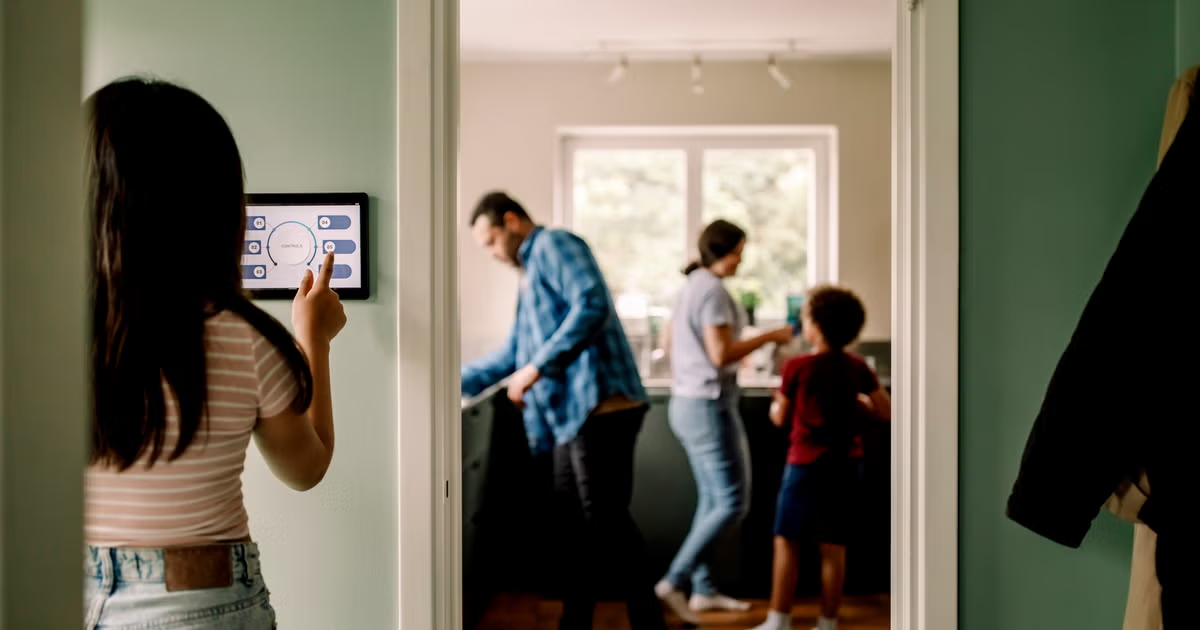
Smart home technologies can simplify daily life and cut waste. CREDIT: Getty Images/Maskot
Smart home technology is no longer limited to voice-controlled lights and entertainment systems. A growing range of connected devices can help households reduce energy waste, automate routine tasks and keep track of household spending.
From smart thermostats and energy monitors to automated lighting and smart plugs, these technologies can make everyday life more convenient while potentially lowering running costs. The savings, however, depend on how the devices are used, their upfront prices and the type of home they are installed in.
Here are nine smart home technologies worth considering if you want to save time, reduce waste and make your home more efficient.
1. Smart Thermostats Can Reduce Unnecessary Energy Use
Smart thermostats can automatically adjust heating and cooling based on schedules, temperature settings and, in some cases, whether people are at home.
Instead of leaving heating or cooling running at the same level throughout the day, homeowners can create schedules that match their routines. Some systems can also be controlled remotely through a smartphone.
For households that frequently forget to adjust their thermostat, this type of automation could help prevent unnecessary energy consumption.
2. Smart Lighting Makes Everyday Tasks Easier
Smart bulbs and lighting systems allow users to control lights remotely or automate when they switch on and off.
Lights can be programmed to turn off at specific times, reducing the possibility of leaving them running unnecessarily. Motion sensors can also activate lighting when someone enters a room and switch it off after the area becomes empty.
The technology can be particularly useful in homes with multiple rooms where lights are often forgotten.
3. Smart Plugs Can Help Control Energy-Using Appliances
Smart plugs provide a simple way to add automation to ordinary electrical appliances.
Users can schedule devices to switch off automatically or control them through an app. This can make it easier to manage appliances that might otherwise remain powered for long periods.
Smart plugs can also help homeowners monitor and change their habits by making it easier to control when certain appliances receive power.
4. Smart Energy Monitors Show Where Your Electricity Goes
One of the biggest challenges with household energy management is knowing which appliances are responsible for the most consumption.
Smart energy monitors can provide information about electricity usage, sometimes in real time. Seeing consumption patterns can help households identify appliances or routines that may be contributing significantly to their bills.
The information can then be used to make practical changes, such as reducing unnecessary usage or changing when certain appliances operate.
5. Robot Vacuum Cleaners Can Save Valuable Time
Not every smart home saving has to come from a lower electricity bill.
Robot vacuum cleaners can automate routine floor cleaning, allowing homeowners to spend less time doing household chores. Many models can operate according to schedules and return to their charging stations automatically.
For busy households, the main benefit may be time saved rather than money saved.
READ ALSO
7 Cybersecurity Habits Everyone Should Adopt Before 2027
10 AI Tools That Are Transforming Work and Daily Productivity
6. Smart Irrigation Systems Can Reduce Water Waste
Smart irrigation technology can automate watering schedules for gardens and outdoor spaces.
Depending on the system, watering can be adjusted according to schedules and environmental conditions. This can help prevent gardens from being watered unnecessarily.
For households that regularly maintain lawns, flowers or vegetable gardens, smarter irrigation could make outdoor maintenance more efficient while helping reduce water waste.
7. Smart Appliances Can Automate Household Routines
Smart washing machines, dishwashers, ovens and other connected appliances can provide additional automation through mobile apps and scheduled operations.
Some appliances allow users to monitor cycles remotely or receive notifications when a task has been completed. This can make household routines easier to manage, particularly for people balancing work, family and other responsibilities.
However, the potential financial benefit depends heavily on the individual appliance and how efficiently it operates.
8. Smart Security Systems Can Provide Remote Monitoring
Smart doorbells, cameras, locks and security sensors can allow homeowners to monitor their properties remotely.
Notifications can alert users when movement is detected or when someone interacts with a door. Smart locks can also make it possible to manage access without relying entirely on physical keys.
While security technology is primarily designed for safety and convenience, remote monitoring can also save time by allowing homeowners to check their property without physically being there.
9. Smart Water Leak Detectors Could Prevent Costly Damage
A small water leak can become an expensive household problem if it goes unnoticed.
Smart leak detectors can monitor areas around pipes, washing machines, water heaters and other vulnerable locations. Some devices can send alerts to a smartphone when they detect moisture.
Early warnings could allow homeowners to address leaks before they cause more extensive damage. This makes leak detection one of the smart home technologies that could potentially provide significant financial value by helping prevent avoidable repairs.
Smart Home Technology Is Not Always an Instant Money Saver
Despite the potential benefits, buying smart devices does not automatically guarantee lower household expenses.
The initial purchase price, installation costs, electricity consumption and maintenance requirements should all be considered. A device that saves a small amount each month may take considerable time to recover its purchase cost.
Homeowners should also consider compatibility. Not every smart device works with every platform, and buying products from different manufacturers can sometimes create additional setup complications.
How to Choose Smart Home Technology That Is Worth the Cost
The best approach is to identify a specific household problem before buying a device.
If electricity bills are the concern, an energy monitor or smart plug may be more useful than a smart entertainment system. If cleaning consumes too much time, a robot vacuum may offer greater value.
Automation should solve a real problem rather than simply add another gadget to the home.
Privacy and cybersecurity are also worth considering. Connected devices can collect information about household activities, so buyers should review privacy policies, use strong passwords and keep device software updated.