

The electric Range Rover is finally here, but its £154,070 price reveals who the EV revolution is really for

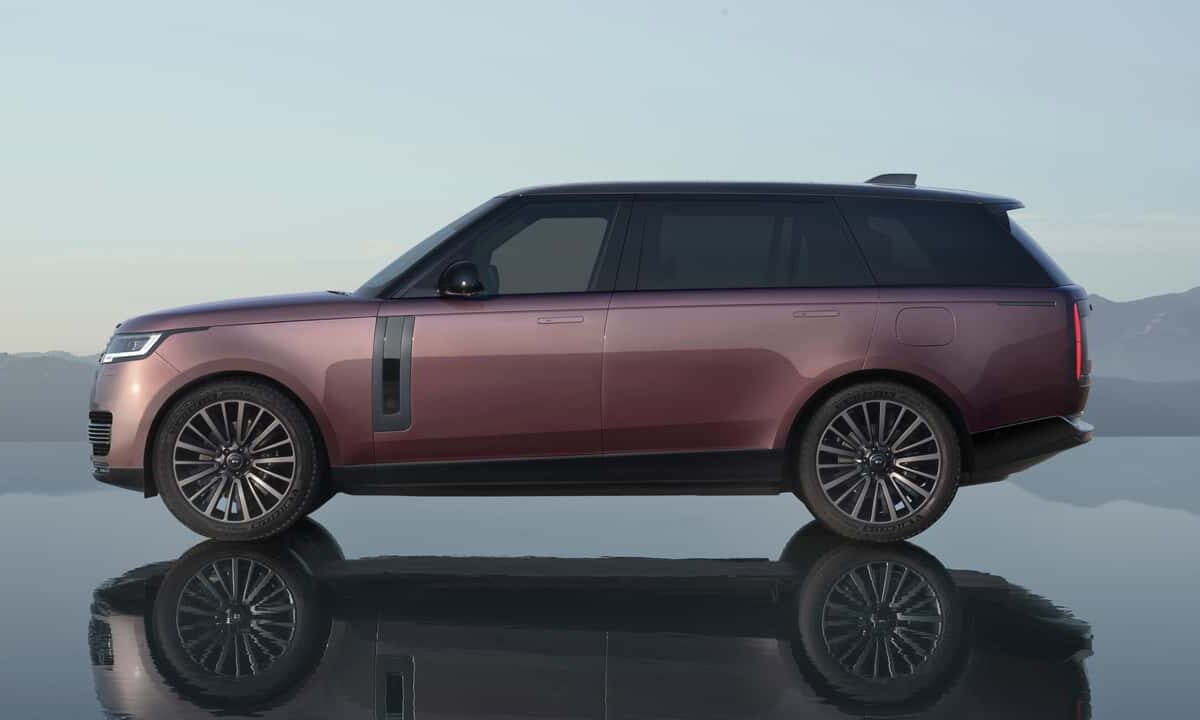
Range Rover first fully electric SUV marks a new era for the luxury marque. Photo by: Land Rover
After decades of building some of Britain’s most recognisable petrol and diesel luxury SUVs, Range Rover has officially entered the fully electric era.
The first electric Range Rover has been launched with a starting price of £154,070, placing it firmly among the most expensive mainstream luxury electric SUVs on the market. The vehicle arrives around a year later than originally planned, but its launch represents a significant strategic moment for Jaguar Land Rover and the wider British automotive industry.
The electric SUV will be built in Solihull, England, where Range Rover production has been rooted since 1970. Its arrival signals more than the launch of another premium electric vehicle. It represents a test of whether one of the world’s best-known luxury SUV brands can preserve its identity while moving away from the fossil-fuel engines that helped define it.
For Range Rover, the question is no longer whether electric vehicles are part of the future. The question is whether luxury buyers are ready to pay a premium for an electric version of one of the world’s most recognisable SUVs.
Electric Range Rover Launch Marks a Major Shift for Jaguar Land Rover
The launch is a major milestone for Jaguar Land Rover (JLR), the British carmaker owned by India’s Tata Motors.
JLR has faced a difficult period marked by falling profits, pressure from international tariffs and supply chain disruption following a major cyber-attack. Against that backdrop, the electric Range Rover offers the company an opportunity to demonstrate progress in one of the most competitive areas of the global car industry.
Electric vehicles have increasingly become central to the strategies of major luxury manufacturers. Consumers in the premium market now have access to electric models from established European brands and fast-growing international competitors.
Range Rover’s entry into the segment therefore comes at a critical moment.
The company says the new model represents the result of a decade of engineering and technological development, with 10,500 employees receiving additional training connected to the project.
The vehicle was also subjected to testing equivalent to 38 trips around the world, according to JLR.
That level of development highlights the challenge of electrifying a vehicle known not only for luxury but also for size, off-road capability and performance.
How Fast Is the New Electric Range Rover?
The electric Range Rover is capable of reaching 60mph in 4.3 seconds, according to the company.
That performance demonstrates one of the advantages of electric propulsion. Electric motors can deliver power almost instantly, giving large and heavy vehicles rapid acceleration despite their size.
For Range Rover buyers, performance is only part of the equation.
The brand has traditionally focused heavily on refinement, comfort and the ability to travel across difficult terrain. JLR says electric propulsion will bring a new level of refinement and capability to the model.
Electric power could also improve the quietness of the vehicle because it removes the constant noise and vibration associated with internal combustion engines.
That may suit the Range Rover brand particularly well. Luxury and silence are closely connected, and electric propulsion could enhance one of the key characteristics premium SUV buyers expect.
Why the £154,070 Electric Range Rover Price Is Important
The starting price of £154,070 makes the electric Range Rover a vehicle for a narrow section of the market.
Its price also highlights a broader issue facing the transition to electric transport.
Electric vehicles are often presented as a central part of efforts to reduce emissions from road transport. Yet many of the newest luxury electric SUVs remain expensive and extremely large.
The Range Rover’s launch raises questions about the direction of the premium EV market.
The vehicle offers a cleaner powertrain than comparable petrol and diesel models because it does not produce tailpipe emissions while driving. Still, the environmental debate surrounding large SUVs remains complicated.
Large vehicles require more materials to manufacture and generally consume more energy to move than smaller cars. SUVs have also faced criticism over road safety, with their size and weight creating greater risks in collisions involving pedestrians.
The electric Range Rover therefore sits at the intersection of two powerful trends: the shift toward electric mobility and the continued demand for increasingly large luxury SUVs.
READ ALSO
Tesla Model X discontinued as Elon Musk shuts down Flagship EV to make way for Robots
Electric Range Rover Production Keeps a Key British Manufacturing Role
The decision to build the vehicle in Solihull gives the launch wider importance for Britain’s automotive sector.
Solihull has been closely associated with Range Rover for more than half a century. Producing the electric model there allows JLR to retain a major part of its luxury vehicle manufacturing in the UK while adapting production for the electric age.
The project is also supported by JLR’s Propulsion Manufacturing Centre in Wolverhampton.
The facility produces battery packs and electric drive units alongside traditional internal combustion engines, illustrating how Britain’s automotive industry is navigating a period in which electric and combustion technologies are existing side by side.
For workers, the transition requires new technical skills.
JLR says it provided additional training to 10,500 staff connected to the electric Range Rover project, underlining the scale of workforce changes required as manufacturers shift towards battery-powered vehicles.
Can the Electric Range Rover Compete in a Changing Luxury EV Market?
The biggest challenge for the electric Range Rover may not be engineering.
It may be timing.
The global electric vehicle market is becoming increasingly competitive, with traditional manufacturers facing pressure from Tesla, Chinese EV companies and established luxury brands that have already introduced electric models.
Range Rover’s advantage lies in its name.
Few SUV brands carry the same association with prestige, comfort and off-road ability. The challenge will be convincing customers that the electric model offers those qualities without compromise.
The company’s extensive personalisation options could help.
Range Rover buyers can choose from a wide range of paint finishes, materials, colour combinations and bespoke design features, including personalised embroidery.
That reflects the market the company is targeting.
At more than £154,000 before additional customisation, the electric Range Rover is not attempting to compete as an affordable EV. It is positioning itself as an exclusive luxury product.
What the Electric Range Rover Means for the Future of Luxury Cars
The electric Range Rover’s arrival may ultimately be remembered as a symbolic moment rather than simply another vehicle launch.
Range Rover has spent decades building its reputation around powerful combustion engines and large luxury SUVs. The move to electricity shows how deeply the automotive industry’s transformation is reaching.
Even brands built on traditional ideas of engine power are being forced to rethink what performance and luxury mean.
For the electric Range Rover, that could mean redefining prestige around silence, instant acceleration, advanced technology and personalisation, rather than the sound and character of a large petrol or diesel engine.
The £154,070 price ensures the vehicle will remain inaccessible to most drivers.
Yet its significance extends beyond the buyers who can afford one.
The electric Range Rover is evidence that the EV transition has reached one of the automotive world’s most traditional luxury brands, and the industry’s next challenge will be proving that electrification can change the powertrain without changing what customers love about the vehicle.
FAQ
How much does the electric Range Rover cost?
The first fully electric Range Rover starts at £154,070, before additional optional features and bespoke personalisation.
Is the Range Rover fully electric?
Yes. The newly launched model is Range Rover’s first fully electric vehicle and represents a major shift away from traditional petrol and diesel power.
When was it launched?
Range Rover announced its first fully electric vehicle in September 2026 after a launch delay of around one year.
Where is it built?
The electric Range Rover is due to be manufactured at Jaguar Land Rover’s plant in Solihull, England, the historic home of the Range Rover brand.
How fast is the electric Range Rover?
According to Jaguar Land Rover, the vehicle can accelerate from 0 to 60mph in approximately 4.3 seconds.
Who owns Range Rover?
Range Rover is part of Jaguar Land Rover, which is owned by India’s Tata Motors.
Why was it delayed?
The launch arrived about a year later than originally planned. The information provided does not specify a single official reason for the delay.
Is it better for the environment?
The electric model eliminates tailpipe emissions while driving, giving it an environmental advantage over petrol and diesel versions. Its overall environmental impact also depends on factors including battery production, electricity generation and the resources required to manufacture a large SUV.
Will the electric Range Rover replace petrol and diesel models?
The launch represents an important expansion of Range Rover’s electric strategy, but JLR’s manufacturing operations continue to support both electric propulsion and traditional internal combustion technology.
Why is the electric Range Rover so expensive?
The vehicle is positioned in the ultra-luxury SUV market and includes extensive engineering, advanced electric technology, high-end materials and a wide range of bespoke personalisation options.
What makes the electric Range Rover important?
It is the first fully electric vehicle from the Range Rover brand and represents a major step in Jaguar Land Rover’s transition toward electric mobility.