

What would UK sanctions on Israel mean for both Countries? Ed Miliband’s policy reset could test a key relationship

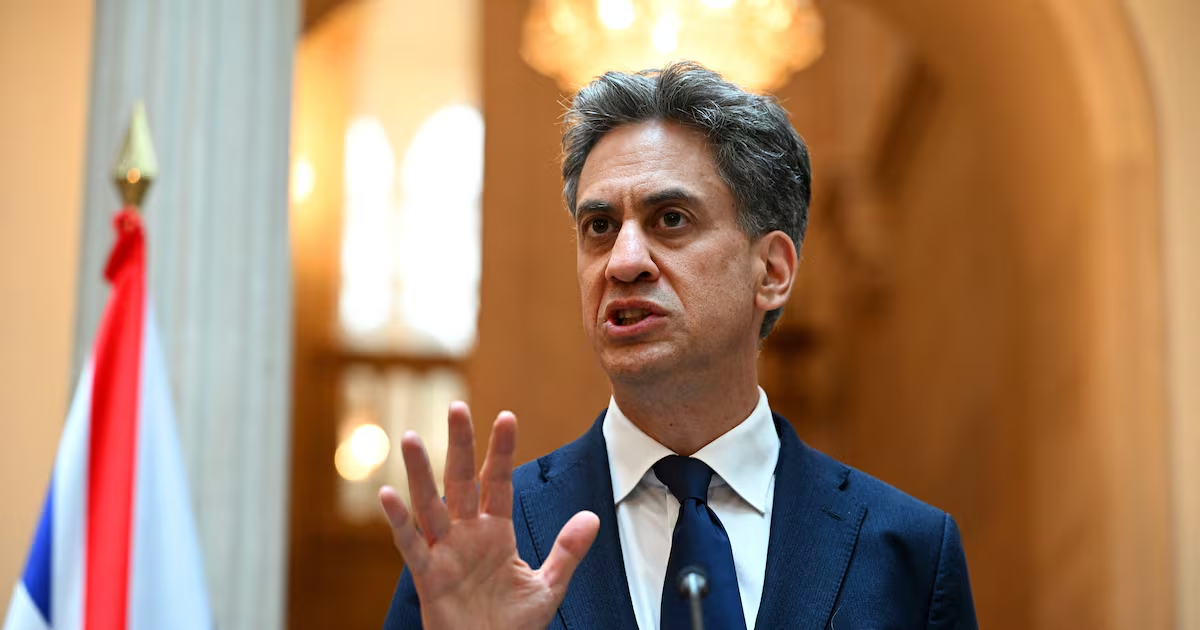
British Foreign Secretary Ed Miliband has condemned an Israeli West Bank development. Reuters
Britain’s relationship with Israel could be entering a more difficult phase after Foreign Secretary Ed Miliband signalled a “comprehensive reset” of UK policy, including potential measures aimed at preventing British companies from supporting Israeli settlement projects in the occupied West Bank.
The immediate focus is the controversial E1 settlement project, where Israel has moved ahead with plans for thousands of homes in an area between East Jerusalem and the settlement of Ma’ale Adumim. Critics and several foreign governments argue that development in the area could further fragment the West Bank and damage prospects for a future Palestinian state.
Miliband’s comments have raised a bigger question beyond the immediate dispute: what would sanctions or trade restrictions actually mean for the United Kingdom and Israel?
The answer depends heavily on how far Britain is prepared to go. Measures targeted specifically at settlement-linked individuals, companies and goods would have very different consequences from broad economic sanctions directed at Israel as a whole.
Ed Miliband’s Israel Policy Reset Focuses on West Bank Settlements
Miliband told MPs that the British government was examining ways to prevent UK companies from financing, constructing or advertising new Israeli settlements.
The proposed E1 development has become central to the dispute because of its location. Critics say large-scale construction there could make the West Bank less territorially connected, complicating efforts to establish a viable Palestinian state alongside Israel.
Britain has already joined other countries and the European Union in condemning the project.
The UK government’s next decisions could involve stronger restrictions on economic activity connected specifically to settlements, including potential action against trade in goods and services associated with settlements considered illegal under international law.
This distinction is important.
Sanctions targeting settlement activity would not necessarily amount to sanctions against the Israeli economy as a whole. They could instead focus on specific companies, products, individuals or business relationships.
That approach would allow Britain to increase pressure over West Bank policy while attempting to limit wider economic disruption.
What Could UK Sanctions Mean for Israel?
For Israel, the most immediate consequences would likely depend on the scope of any British measures.
If the UK limits trade in settlement-produced goods, Israeli businesses operating directly within affected settlements could lose access to British customers and commercial relationships. Companies based in Britain could also face restrictions on investment, construction contracts or other business activities connected to settlement expansion.
The financial impact of targeted restrictions may be smaller than broad sanctions against Israel’s entire economy. However, the political significance could be substantial.
Britain remains an important diplomatic and economic partner for Israel. Tougher UK action could also encourage other European governments to consider similar restrictions.
That is one reason targeted sanctions can carry influence beyond their immediate financial cost.
Israel has already signalled that it could respond if Britain takes action against it. Foreign Minister Gideon Sa’ar warned that Israel has tools available to respond to measures taken against the country.
Possible responses could involve diplomatic or economic measures, though the precise nature of any Israeli action would depend on what restrictions Britain ultimately introduces.
What Would Sanctions Mean for the United Kingdom?
The consequences for Britain could be equally complex.
A tougher policy could expose UK companies to new compliance requirements. Businesses would need to determine whether suppliers, investments or contracts have links to settlement activity covered by government restrictions.
Some companies could face the prospect of changing supply chains or ending commercial relationships.
Britain could also face diplomatic consequences.
The UK has historically maintained close security, trade and political ties with Israel. A significant policy shift could create new friction between London and Jerusalem at a time when Middle East diplomacy remains highly sensitive.
There is also the possibility of reciprocal action.
If Israel responds with restrictions affecting British companies or institutions, some UK businesses could face commercial consequences. The scale of that risk would depend on whether the dispute remains focused on settlement-related activity or develops into a broader diplomatic confrontation.
READ ALSO
Why a Settlement Trade Ban Would Be Different From Broad Sanctions
Calls within Parliament have included proposals to ban trade involving goods and services linked to illegal settlements.
Such a measure would represent a narrower form of economic pressure than a general embargo or comprehensive sanctions against Israel.
A settlement-focused ban could potentially target products made in specific locations or companies involved in financing and supporting settlement construction.
That approach would allow Britain to argue that its measures are directed at activities connected to the occupied territories rather than Israeli citizens or businesses generally.
Still, drawing that distinction in practice could prove difficult.
Modern supply chains are interconnected, and determining the origin of products, investments and services can require extensive corporate due diligence.
Any new sanctions framework could also raise legal and regulatory questions for companies operating internationally.
Could Tougher UK Action Change Israel’s Settlement Policy?
This may be the most important political question.
Sanctions and trade restrictions are designed to create economic and diplomatic costs that governments may consider when making policy decisions. Their effectiveness, however, depends on several factors, including how severe the measures are and whether other countries adopt similar policies.
Britain acting alone could have a more limited impact than coordinated measures involving major European economies and other international partners.
Yet the diplomatic symbolism of a British policy change could still be significant.
The UK has joined France, Germany, Italy and other governments in opposing the E1 project. A shift from condemnation toward concrete economic restrictions would demonstrate a move from diplomatic criticism to policy enforcement.
That transition could increase pressure on Israel but could also deepen tensions between the two governments.
The Risk for Both Countries Is a Wider Diplomatic Fallout
The emerging dispute illustrates why sanctions are rarely a simple political tool.
For Britain, stronger action could demonstrate opposition to settlement expansion and support for a two-state solution. It could also complicate relations with a country that remains an important regional partner.
For Israel, rejecting British pressure may reinforce its position domestically and politically, but retaliatory measures could create additional tensions with London and potentially affect business relationships.
The biggest unanswered question is how far Miliband’s “comprehensive reset” will go.
Britain has indicated that further measures are being considered, including possible restrictions involving trade with illegal settlements. Details have not yet been announced.
Until the UK government publishes its final policy, claims about the exact economic consequences remain speculative.
What is clear is that the debate has moved beyond diplomatic statements.
If Britain introduces targeted sanctions or settlement trade restrictions, the consequences could extend beyond construction projects in the West Bank, testing trade, diplomacy and the political relationship between London and Jerusalem.
Frequently Asked Questions About Ed Miliband, Israel and Potential UK Sanctions
What did Ed Miliband say about Israel?
Ed Miliband said he wants a “comprehensive reset” of Britain’s policy toward Israel and indicated that the UK is considering measures to stop British companies from financing, constructing or advertising new settlement projects in the West Bank.
Is the UK imposing sanctions on Israel?
At the time of the announcement, the UK had not publicly set out a comprehensive new sanctions package against Israel. The government said it was examining further measures, including possible restrictions related to illegal settlements.
What sanctions could the UK impose on Israel?
Potential measures could include targeted sanctions against individuals or organisations, restrictions on companies involved in settlement construction, investment limitations or bans on trade in goods and services linked to illegal settlements.
Would UK sanctions affect all Israeli businesses?
Not necessarily. A settlement-focused policy could target specific activities, companies or goods linked to settlements rather than imposing restrictions on Israel’s entire economy.
What is the E1 settlement project?
E1 refers to an area of the occupied West Bank between East Jerusalem and Ma’ale Adumim where Israel has advanced plans for major settlement construction. Critics argue that development there could affect territorial continuity within the West Bank.
Why does Britain oppose the E1 settlement project?
The UK and other governments have argued that the development could undermine prospects for a two-state solution by further dividing areas of the West Bank and affecting the territorial continuity of a future Palestinian state.
What would a UK ban on settlement goods mean?
A trade ban could prevent the import, sale or commercial involvement of goods and services connected to settlements covered by the restrictions. The exact scope would depend on legislation or regulations introduced by the UK government.
Could Israel retaliate against Britain?
Israel’s foreign minister, Gideon Sa’ar, has warned that Israel could respond if Britain takes action against the country. No specific retaliatory measures have been formally announced in connection with Miliband’s latest comments.
Would sanctions hurt the UK economy?
The economic impact would depend on how broad the measures are. Targeted restrictions involving settlement-linked activity would likely have different consequences from broad sanctions affecting UK-Israel trade more generally.
Could sanctions force Israel to stop settlement expansion?
There is no guarantee. Sanctions can increase economic and diplomatic pressure, but their effectiveness depends on the scale of the restrictions and whether other countries adopt similar measures.
Why are sanctions important in UK-Israel relations?
Sanctions can move a disagreement from diplomatic criticism to direct economic or legal pressure. Any major new restrictions could reshape political and commercial relations between Britain and Israel.