
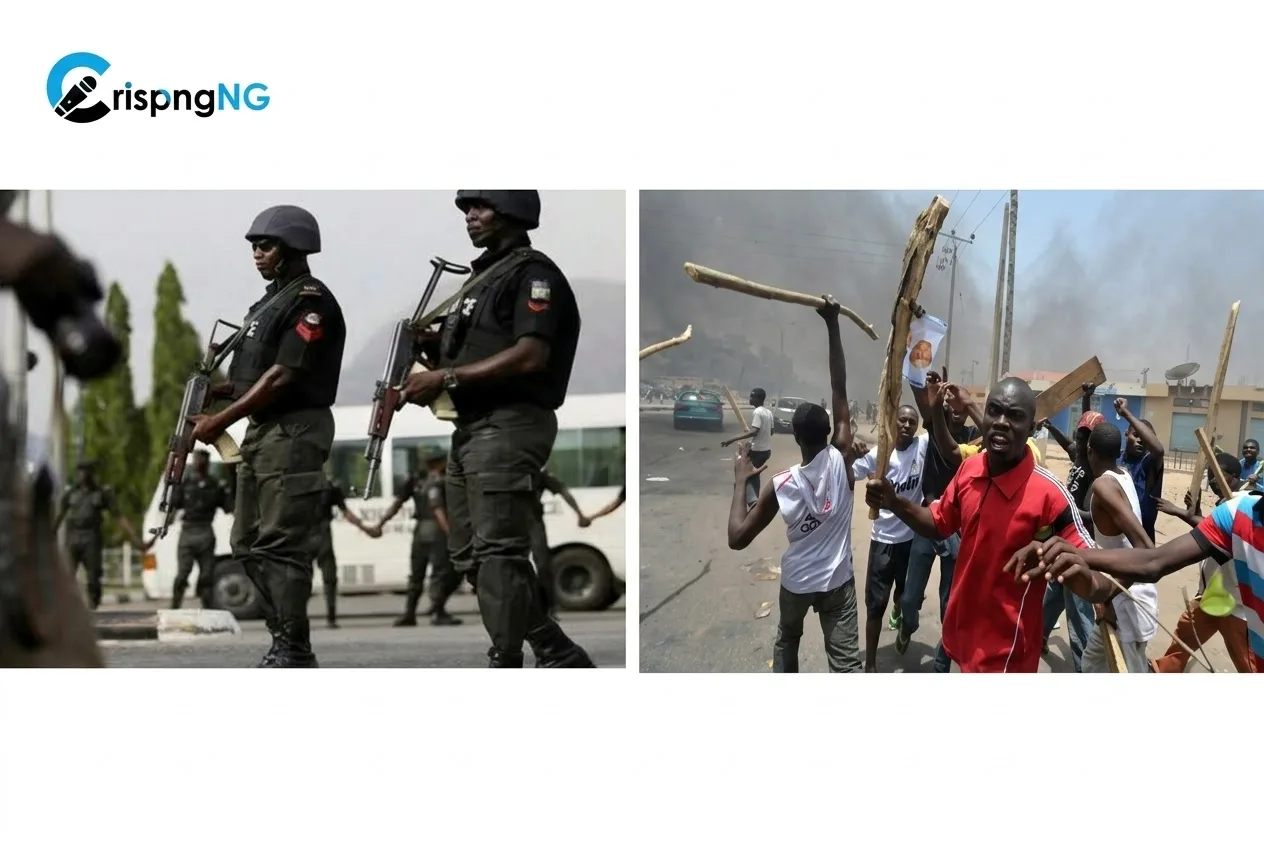
With reports of killings, attacks on campaign convoys and threats attributed to political office-holders emerging ahead of the 2027 elections, attention is turning to the people who organise and finance electoral violence, not just those caught carrying it out.
Nigeria’s preparations for the 2027 general elections have been accompanied by a growing number of attacks on political gatherings, candidates and supporters.
On November 25, armed men reportedly attacked campaign vehicles belonging to the Nigeria Democratic Congress (NDC) along Airport Road in Benin City, Edo State. The party said at least one supporter sustained critical injuries.
The incident occurred barely two days after gunmen attacked the campaign team of former Deputy Senate President Ovie Omo-Agege in Uduere community, Ughelli North Local Government Area of Delta State. The police said preliminary reports indicated that six people were killed, while several others sustained injuries. Omo-Agege reportedly escaped unharmed.
The police subsequently invited Omo-Agege and five others for questioning as investigations continued.
These incidents followed the November 12 attack on NDC supporters during a town hall meeting in Oregun, Lagos. Suspected thugs reportedly invaded the venue, injured supporters and destroyed property, including vehicles.
The attacks are not limited to physical confrontations. Statements attributed to some political office-holders have also raised concerns about threats and intimidation ahead of the elections.
In Edo State, APC chairman Jarrett Tenebe was reported to have invoked the use of AK-47 rifles against anyone who obstructed the party’s plan to secure 2.5 million votes for President Bola Tinubu in 2027.
In August, Borno State Commissioner for Youth and Sports Development Sainna Buba was captured in a video threatening to flog residents who refused to support the APC. He later apologised.
Senator Francis Fadahunsi also faced criticism over a video in which he appeared to threaten members of the Accord Party. He subsequently clarified that he meant defeating the opposition politically, not physically killing its members.
The police said in September that they had questioned Fadahunsi and were investigating alleged inciting comments attributed to him, Buba and Kuje Area Council Chairman Danjuma Shekwolo.
The developments have renewed questions about how Nigeria intends to protect political participation and punish those responsible for electoral violence.
More importantly, when attacks occur, will authorities investigate only the people wielding weapons or also those who allegedly recruit, finance and direct them?
Political violence has spread beyond isolated campaign disputes
The November incidents form part of a wider pattern documented by election observers and civil society organisations.
A report by the National Peace Committee recorded 109 breaches of the National Peace Accord across 26 states and the Federal Capital Territory between August 19 and October 27, 2026.
Political violence and thuggery accounted for 33 incidents, making them the largest category of reported violations.
Separately, the African Centre for Security, Governance and Development reported 70 physical election-related attacks across 19 states and the FCT between January 1 and October 27. It said 27 people were killed in 20 of those incidents.
The incidents included attacks on political convoys, campaign gatherings, party meetings and supporters.
In November, the House of Representatives also resolved to investigate the rising attacks on political activities. Lawmakers cited incidents in Enugu, Katsina, Nasarawa and Delta states.
The House said the attacks could discourage citizens from participating in elections and weaken confidence in the democratic process.
Read also: 2027 Elections: Five Major Threats Already Emerging Across Nigeria
Nigeria’s Electoral Act prohibits the organisation of political thugs 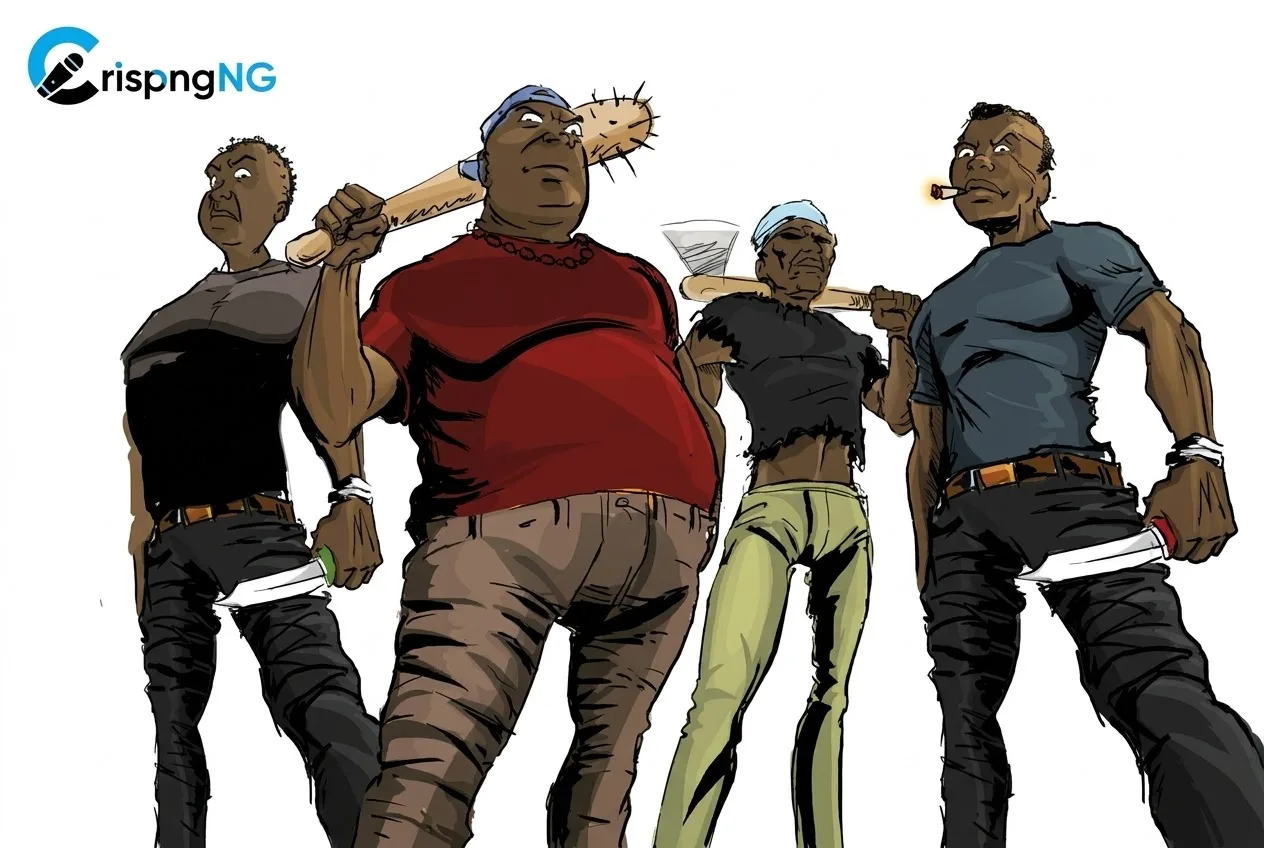
The Electoral Act 2026 contains provisions that address the organisation of armed groups, intimidation and violence during political activities.
Section 96(5) prohibits political parties, candidates and aspirants from retaining, organising, training or equipping individuals or groups to use physical force or coercion to advance political interests.
Section 96(6) also prohibits parties and candidates from keeping or using armed private security organisations, vanguards or other groups to assist them during campaigns, rallies, processions and elections.
The penalties are significant. Under Section 96(7), a candidate or aspirant who violates the provision faces a maximum fine of ₦5 million or 12 months’ imprisonment. A political party faces a ₦10 million fine for a first offence and ₦5 million for subsequent offences.
Section 96(8) also provides for anyone who aids or abets a violation of subsection 5. Such a person faces a ₦2 million fine, three years’ imprisonment or both.
The law therefore provides grounds to investigate people who help organise or equip groups for political violence, not just those who eventually attack opponents.
Section 97 separately prohibits political parties, candidates, aspirants and individuals from directly or indirectly threatening people with force or violence to compel them to support or reject a political party or candidate.
This provision is particularly relevant to threats against citizens because of their political affiliations or voting preferences.
However, not every controversial political statement automatically amounts to a criminal offence. Prosecutors must establish the relevant legal elements, including the words used, their context and whether they satisfy the requirements of the particular offence.
Other provisions also address disorderly conduct at political meetings and elections, intimidation around polling units, destruction of election materials and the use of force to influence voting.
Read also: Police Begin Election Security Training for 10,000 Officers
Arresting political thugs is not the same as prosecuting their sponsors
One of the major challenges in electoral violence cases is establishing who organised or financed an attack.
Security agencies may arrest people found at a scene, but investigators must still determine whether someone recruited them, supplied weapons, provided transport or financed their activities.
Evidence could include financial transactions, phone records, messages, instructions, witness accounts and other material connecting an alleged sponsor to the offence.
A politician’s association with an arrested suspect does not automatically establish criminal responsibility. Equally, accusations made by rival political parties cannot replace evidence.
However, where investigators establish that a political actor organised, financed or directed a prohibited armed group, the Electoral Act provides a basis for prosecution.
Human rights lawyer Femi Falana has argued that authorities must go beyond arresting suspected political thugs and hold accountable those who recruit, finance and arm them.
Speaking to Premium Times in a November 15 report, Falana also called for an effective prosecution mechanism within INEC to handle electoral offences.
The distinction is important because prosecuting the person who carried out an attack does not necessarily establish that authorities have identified everyone responsible for organising it.
Previous electoral prosecutions show how slowly justice can move
Nigeria has prosecuted electoral offenders, but the process has often taken years.
Following the 2023 general elections, the Nigerian Bar Association disclosed in March 2024 that 196 suspects were being prosecuted with support from volunteer lawyers.
The cases involved allegations including criminal conspiracy, disorderly conduct, unlawful possession of arms, assault, destruction of election materials and electoral violence.
In February 2025, former INEC Chairman Mahmood Yakubu also disclosed that the Commission was prosecuting 774 alleged offenders from the 2023 elections.
He reported successful prosecutions in Kebbi, Kogi, Lagos, Kwara and Gombe states.
However, Yakubu highlighted the lengthy process involved in prosecuting electoral offences. He disclosed that a case involving a returning officer in Akwa Ibom State, arising from the 2019 general elections, took almost six years to reach a successful prosecution at the trial court.
The figures demonstrate that electoral prosecutions are possible. But they also raise questions about how many cases eventually result in convictions and whether investigations reach alleged political sponsors.
A tribunal’s decision to nullify an election because of violence or intimidation is also different from a criminal conviction. The two proceedings have different purposes and standards.
Read also: Is Nigeria Returning to the Era of Political Thuggery?
INEC says it is waiting for police case files
The question of accountability has also featured in recent engagements between INEC and security agencies.
On November 24, INEC Chairman Joash Amupitan asked the Nigeria Police Force to speed up investigations and transmit completed case files involving campaign violence.
He said the Commission needed the files to prosecute electoral offenders directly and urged authorities to check impunity before January 2027.
Amupitan explained that Section 148 of the Electoral Act empowers INEC to prosecute electoral offenders after receiving completed case files.
He also drew attention to Section 95, which assigns the police responsibility for providing security at political rallies and processions.
The Inspector-General of Police, Olatunji Disu, said the Force would treat those who sponsor, finance or direct political violence with the same seriousness as those who carry it out.
These statements indicate that both institutions recognise the need to pursue more than the immediate perpetrators.
However, the effectiveness of that commitment will depend on the investigations, evidence gathered and cases eventually taken to court.
The 2027 elections will test whether political sponsors can face justice
Nigeria’s electoral laws provide penalties for organising political thugs, threatening voters and using violence to influence political participation.
The challenge is ensuring that these provisions apply regardless of a suspect’s political position or influence.
The police must investigate attacks, identify the perpetrators and follow evidence pointing to possible organisers or financiers. INEC must prosecute cases where sufficient evidence exists.
Political parties also have a responsibility to prevent their members and supporters from engaging in intimidation or violence.
Citizens, meanwhile, need more than announcements of arrests and investigations. They need to know whether suspects were charged, whether courts delivered judgments and whether people who allegedly financed or directed attacks were investigated.
With the presidential and National Assembly elections scheduled for January 16, 2027, the coming weeks will test the ability of security agencies and INEC to enforce the Electoral Act 2026.
The central question remains: will accountability reach only the people caught attacking political opponents, or will it extend to those who allegedly organise and finance the violence?