

Is Nigeria Returning to the Era of Political Thuggery?

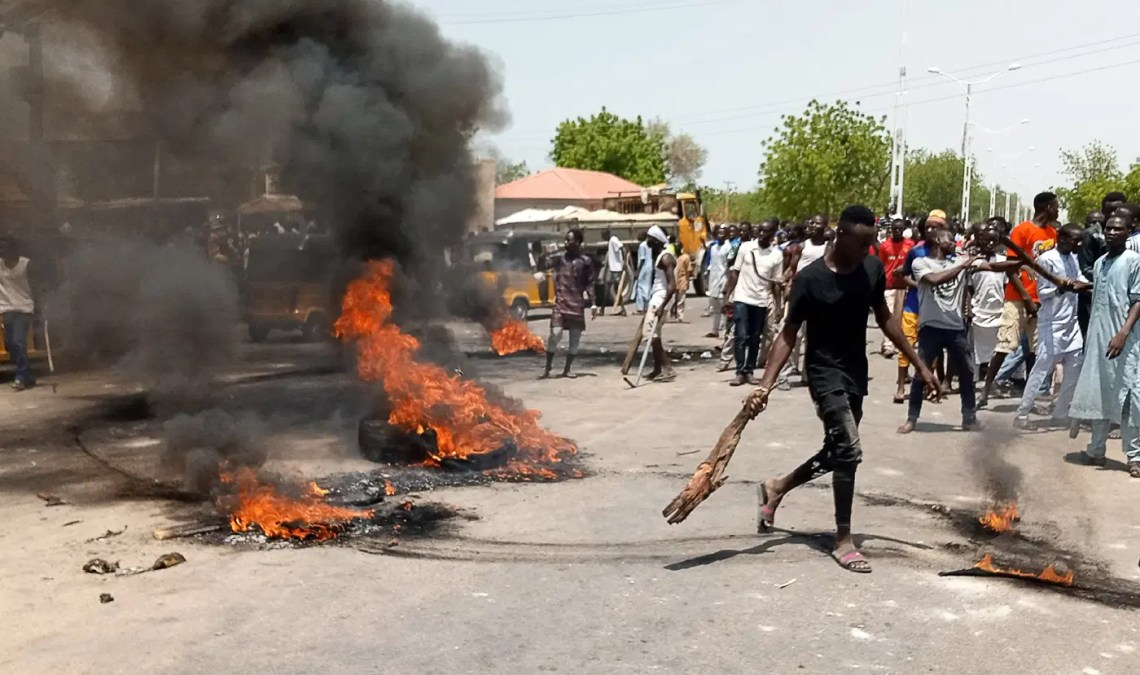
For many Nigerians, the sight of political thugs storming a party meeting, chasing away supporters or destroying property is a reminder of a period when violence was deeply embedded in the country’s political contests.
As Nigeria moves towards the 2027 general elections, such scenes appear to be returning to the political landscape.
The latest incident occurred in Enugu State, where suspected political thugs reportedly attacked a Peoples Democratic Party (PDP) meeting in Agbani, Nkanu West Local Government Area, on September 12.
According to reports, the attackers disrupted the meeting and vandalised properties. Party members said the incident had raised fresh concerns about the safety of opposition supporters and their ability to organise political activities freely. The PDP also alleged that a similar incident occurred during a ward meeting in Obe, also in Nkanu West, on August 29.
The incidents have added to a growing list of disruptions involving political parties as preparations for the 2027 elections intensify.
The question now is whether Nigeria is witnessing the return of the political thuggery that once made political participation dangerous in some parts of the country.
Enugu and the warning signs
The developments in Enugu are significant because they involve activities taking place before the main election period.
In May, suspected political thugs also disrupted a state congress of the Nigeria Democratic Congress (NDC) in Enugu, throwing the exercise into chaos. Reports at the time said the attackers stormed the venue and disrupted the proceedings.
The latest PDP incident therefore does not stand alone.
Earlier in the year, Enugu also witnessed tensions surrounding political meetings and party activities. A civil society organisation, Youths Off The Street Initiative, raised concerns in July about what it described as growing political intolerance and undemocratic practices in the state.
That does not prove that one political group is responsible for the incidents, nor does it establish a coordinated campaign of violence.
But repeated disruptions are enough to raise a broader democratic concern.
Political parties are supposed to be able to hold meetings, organise supporters and mobilise voters without their members fearing physical attacks.
When that freedom begins to disappear, the problem extends beyond the affected party.
This is bigger than Enugu
The concern is not restricted to one state.
In February, suspected thugs reportedly attacked an All Progressives Congress (APC) stakeholders’ meeting in Ondo State. The state party chairman and other members were among those attacked, according to reports.
In Rivers State, suspected political thugs also disrupted a meeting of the African Democratic Congress (ADC) Young Women Forum earlier in the year.
There have also been reports of political violence around meetings and rallies in Ebonyi State. In one reported incident, more than 50 suspected thugs allegedly disrupted a PDP gathering, forcing organisers to move the programme to another location.
Taken individually, each incident could be explained as a local political dispute.
Taken together, however, they raise a more uncomfortable question about the political environment ahead of 2027.
Nigeria’s political history provides reasons for that concern.
Nigeria has seen this before
Political violence is not new to Nigeria.
The country’s earlier elections were frequently associated with intimidation, clashes between supporters and the use of political groups to enforce the interests of politicians.
The 1964 general election, for example, was marked by manipulation and violence. The 1983 elections were also marred by violence and allegations of widespread electoral malpractice.
In later years, political violence remained a feature of some election cycles.
The 2003 and 2007 elections witnessed violence, while the aftermath of the 2011 presidential election produced deadly clashes in parts of northern Nigeria.
Political thuggery has therefore never completely disappeared from Nigeria’s political system.
What has changed is the political environment in which it operates.
Today, violence does not necessarily have to occur on election day to threaten democracy.
A political meeting that is prevented from taking place is already an attack on political participation.
A candidate who cannot visit an area safely cannot campaign freely.
A supporter who fears being attacked for attending a party meeting is not participating in a genuinely open political process.
What does the law say?
Nigeria’s Electoral Act 2026 expressly prohibits the use of force or violence during political campaigns.
The law contains provisions dealing with the conduct of political campaigns and prohibits violence in the electoral process.
That means political parties and their supporters cannot treat violence as an ordinary part of political competition.
The responsibility does not, however, rest only with political parties.
Security agencies also have a role to play in ensuring that citizens can participate in political activities without intimidation.
If political thugs repeatedly disrupt meetings without consequences, it can create the impression that political violence is tolerated.
That is where the danger lies.
Why 2027 makes the situation more worrying
Nigeria is still more than a year away from the 2027 general elections, but political activity has already intensified.
The closer the election gets, the greater the possibility that local political disputes could become connected to larger party battles.
The early emergence of political violence is therefore something that authorities cannot afford to dismiss as ordinary political rivalry.
The danger is not simply that people may be injured or property destroyed.
Persistent intimidation can gradually narrow the political space.
If opposition parties cannot organise in certain communities, if candidates cannot campaign freely, or if supporters are afraid to attend meetings, voters may eventually be presented with a political contest in which participation depends on which side has greater control over the streets.
That is not democracy.
Is Nigeria returning to the era of political thuggery?
It may be too early to conclude that Nigeria has returned to the worst period of political thuggery.
There is not yet enough evidence to establish a nationwide, coordinated return to the violence associated with some of the country’s earlier political eras.
But the recent incidents should not be ignored either.
The attacks and disruptions reported in Enugu, alongside similar incidents in other states, show that political violence remains a real threat.
The warning signs are particularly important because they are appearing before the election itself.
The question for political leaders and security agencies is therefore not whether Nigeria has already returned to the past.
It is whether they will act before the past has the opportunity to return.
If political parties allow thugs to determine who can meet, campaign or mobilise supporters, the damage will go beyond individual parties.
It will affect the ability of Nigerians to freely choose who governs them.
The 2027 election will ultimately be decided by voters, not by the people capable of making the most noise, mobilising the largest crowd or intimidating their opponents.
Preventing political thuggery from becoming normal again may therefore be one of the earliest tests of Nigeria’s democratic institutions before the ballots are even printed.