
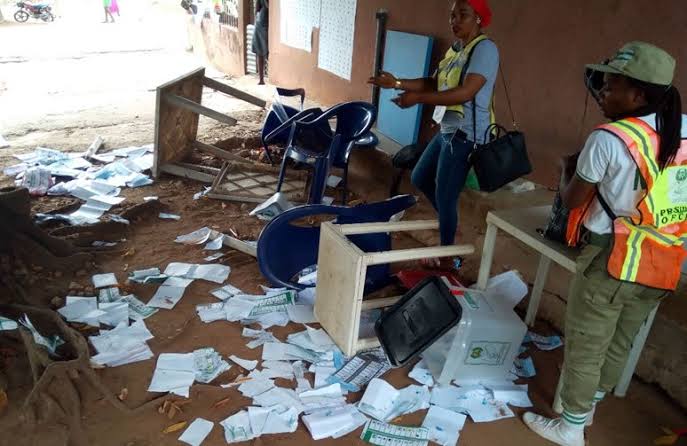
With the 2027 general elections still months away, a monitoring report by the National Peace Committee has identified 109 breaches of the National Peace Accord across 26 states and the Federal Capital Territory. The findings point to growing threats involving political violence, intimidation and misinformation.
Nigeria is already facing several election-related security concerns ahead of the 2027 general elections.
A monitoring report by the National Peace Committee, chaired by former Head of State General Abdulsalami Abubakar, recorded 109 breaches of the National Peace Accord between August 19 and October 27, 2026.
The findings show that political violence and thuggery accounted for 33 incidents, while misinformation and disinformation recorded 29 cases.
Attacks on political activities and campaign materials accounted for another 19 incidents. Intimidation and threats made up 15 cases.
According to The PUNCH, Kaduna recorded the highest number of incidents, with nine. Edo, Enugu and the FCT followed with seven each.
The committee also identified five major threats that could affect political participation and the credibility of the elections.
1. Political violence and armed mobilisation
The use of armed groups to disrupt political activities remains one of the major concerns.
The committee documented repeated disruptions of political meetings involving the Nigeria Democratic Congress (NDC) and Peoples Democratic Party (PDP) in Enugu State.
In Cross River, gunmen reportedly disrupted a PDP consultation meeting in Calabar South on October 2.
Oyo State also recorded violence during a political procession in Ibadan between October 14 and 17. The incident reportedly claimed one life. An APC ward member was also killed days later.
These incidents raise concerns about whether political parties and their supporters can organise meetings and campaigns without facing attacks.
Read also: Is Nigeria Returning to the Era of Political Thuggery?
2. Intimidation by political office-holders
The report identified threats allegedly made by political office-holders and party officials against people who did not support their political interests.
One case involved an alleged threat by an APC state chairman to use AK-47 rifles against people obstructing an electoral target.
The committee also cited a statement attributed to the chairman of Ibi Local Government Area in Taraba State, warning civil servants against voting for candidates other than his preferred choice.
Such threats could discourage voters from freely expressing their political preferences.
3. Misinformation and disinformation
False political information is another major concern ahead of the elections.
The committee recorded 29 incidents involving fabricated newspaper headlines, forged documents, recycled campaign videos and false attribution of statements to political figures.
Some old campaign videos were reportedly circulated as though they showed recent events. Fabricated letters involving President Bola Tinubu and Peter Obi were also identified.
The committee warned that false information could damage reputations, distort public debate and deepen mistrust between political groups.
Read also: How to Spot a Fake Political Headline Like the Viral Atiku ‘Rent-Free’ Story
4. Restrictions on campaign activities
The committee also warned about attempts to restrict lawful political meetings, public gatherings and freedom of expression.
It documented seven incidents involving restrictions on expression and assembly.
These included the arrest and subsequent charging of individuals in Borno State over shirts carrying anti-government messages. Another incident involved the police dispersing a political support-group procession in Akwa Ibom State.
The committee said citizens and political groups should be able to express their views and organise peaceful activities without unnecessary interference.
5. Declining confidence in public institutions
The fifth threat concerns public trust in institutions responsible for protecting the electoral process.
The committee warned that inconsistent responses to political violence, intimidation and misinformation could weaken confidence in the country’s democratic institutions.
It urged security agencies to provide equal protection for political parties and candidates. It also called for transparent investigations and accountability for reported electoral offences.
The committee further asked political parties to condemn violence, disown armed groups and discipline members involved in intimidation.
What happens before the 2027 elections?
The committee recommended a four-stage response involving independent verification of reported incidents, protection of lawful political participation, institutional and party responses, and transparent investigations.
Meanwhile, the police have begun an election security training programme targeting 10,000 officers ahead of the polls.
Read also: Police Begin Election Security Training for 10,000 Officers
The presidential and National Assembly elections are scheduled for January 16, 2027, while governorship and State Assembly elections will hold on February 6.
With political activities already producing reported cases of violence and intimidation, the coming months will test the commitment of political parties, security agencies and public institutions to peaceful elections.