

Who is Francis Halzen, physicist who won 2026 Nobel Prize in Physics?

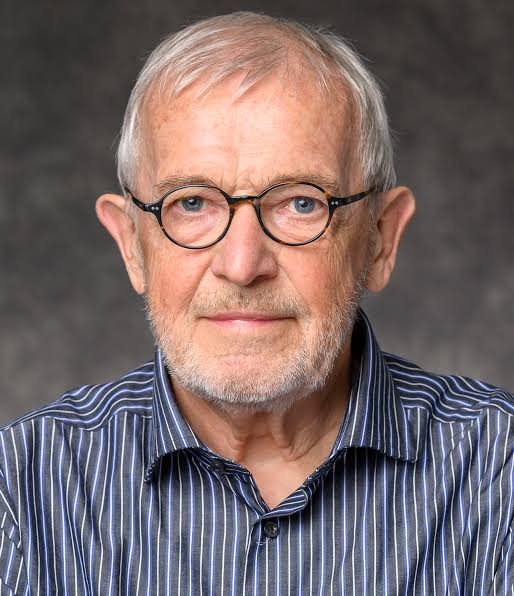
Francis Halzen has spent decades trying to detect particles that are almost impossible to see.
His work eventually led scientists to use a vast stretch of Antarctic ice as a giant detector for neutrinos, tiny particles that can travel across the universe with little interaction with matter.
On Tuesday, October 6, 2026, that work earned Halzen the 2026 Nobel Prize in Physics.
The Nobel Committee recognised the Belgian-American physicist for his decisive contributions to the IceCube Neutrino Observatory and the discovery of high-energy neutrinos of astrophysical origin.
But who is Francis Halzen, and how did a physicist become central to one of the world’s most ambitious attempts to study the universe?
Who is Francis Halzen?
Francis Halzen is a Belgian-American particle physicist and professor at the University of Wisconsin-Madison in the United States.
He is known for his work on neutrinos and high-energy particles from space.
For much of his career, Halzen focused on a question that had challenged scientists for years: how can researchers detect extremely energetic neutrinos arriving from distant parts of the universe?
His answer was unusual.
Instead of trying to build a detector on the surface, he proposed using the enormous volume of clear ice beneath the South Pole.
That idea eventually became the IceCube Neutrino Observatory.
Where was Francis Halzen born?
Halzen was born in Belgium in 1944.
He studied physics at the University of Louvain, where he obtained his undergraduate and doctoral degrees.
His academic career later took him to the United States, where he joined the University of Wisconsin-Madison.
It was there that he developed much of the research that would eventually make him one of the leading figures in neutrino astronomy.
How did Halzen become interested in neutrinos?
Neutrinos are among the most difficult particles for scientists to detect.
They have no electric charge and interact extremely weakly with matter. This means enormous numbers of them can pass through the Earth without being stopped.
That same characteristic, however, makes neutrinos valuable to scientists.
When neutrinos are produced by violent events in space, they can travel vast distances and reach Earth while carrying information about their sources.
Halzen became interested in developing ways to detect these particles and use them to study some of the universe’s most powerful phenomena.
In 1988, he proposed detecting high-energy neutrinos using the deep ice at the South Pole.
The idea would take years to become reality.
How did Antarctic ice change his career?
Halzen’s proposal eventually led to the development of the IceCube Neutrino Observatory.
The project uses thousands of light sensors buried deep beneath the Antarctic surface.
The sensors are spread through roughly one cubic kilometre of ice.
When a neutrino occasionally collides with matter inside the ice, the interaction can produce a tiny flash of light.
The sensors detect that flash.
Scientists can then analyse the signal to determine information about the neutrino, including its energy and direction.
In effect, Halzen and his collaborators turned a huge section of Antarctic ice into a telescope — although one designed to detect particles rather than ordinary light.
IceCube was completed in 2011.
What did Francis Halzen discover?
The IceCube experiment made a major breakthrough in 2013 when scientists announced the detection of high-energy neutrinos coming from outside our Solar System.
The discovery provided strong evidence that powerful cosmic sources were producing these extremely energetic particles.
It also opened a new field of astronomy.
Instead of relying only on light and other electromagnetic signals to study the universe, scientists could now use neutrinos as another source of information.
The particles could potentially reveal what happens inside some of the universe’s most violent environments.
Why are neutrinos called ‘ghost particles’?
Neutrinos are sometimes described as ghost particles because they are extraordinarily difficult to detect.
Billions of neutrinos can pass through a person’s body every second without causing any noticeable effect.
They also pass through the Earth.
Their weak interaction with matter is a problem for scientists trying to detect them, but it is also what makes them useful.
Because neutrinos can travel through matter with little interference, they can escape from places that other particles or forms of radiation may not.
They can therefore carry information from distant cosmic events to Earth.
What is Francis Halzen’s role in IceCube?
Halzen was not simply a scientist who participated in the IceCube project.
He was one of the key figures behind the idea and development of the observatory.
His research helped establish the scientific case for building a neutrino detector in the Antarctic ice.
The project eventually became an international scientific collaboration involving researchers from universities and institutions around the world.
Its success transformed Halzen’s decades-old proposal into a working observatory capable of detecting particles from distant cosmic sources.
Why did Francis Halzen win the Nobel Prize?
The 2026 Nobel Prize in Physics recognised Halzen for his decisive contributions to IceCube and the discovery of high-energy neutrinos of astrophysical origin.
The award reflects both the scientific discovery and the technological achievement required to make that discovery possible.
Halzen’s work demonstrated that neutrinos arriving from distant parts of the universe could be detected and studied on Earth.
That gave scientists a new way to investigate the universe.
His contribution also showed how an unusual idea — using Antarctic ice as a particle detector — could develop into a major scientific instrument.
What happens to Halzen’s work after the Nobel?
The Nobel Prize does not mark the end of the research.
Scientists are continuing to improve IceCube and develop plans for a much larger next-generation observatory known as IceCube-Gen2.
The proposed expansion would increase the detector’s ability to identify and study high-energy neutrinos.
For Halzen, the recognition comes more than three decades after he first proposed using Antarctic ice to detect these elusive particles.
His journey from a Belgian physics student to one of the leading figures in neutrino astronomy is therefore closely tied to an idea that initially sounded almost extraordinary: looking into the universe by listening for particles moving through the ice beneath the South Pole.
That idea has now earned him one of the highest honours in science.