

Why did the UK send an emergency alert to millions? Government issues urgent wildfire warning as fires destroy homes

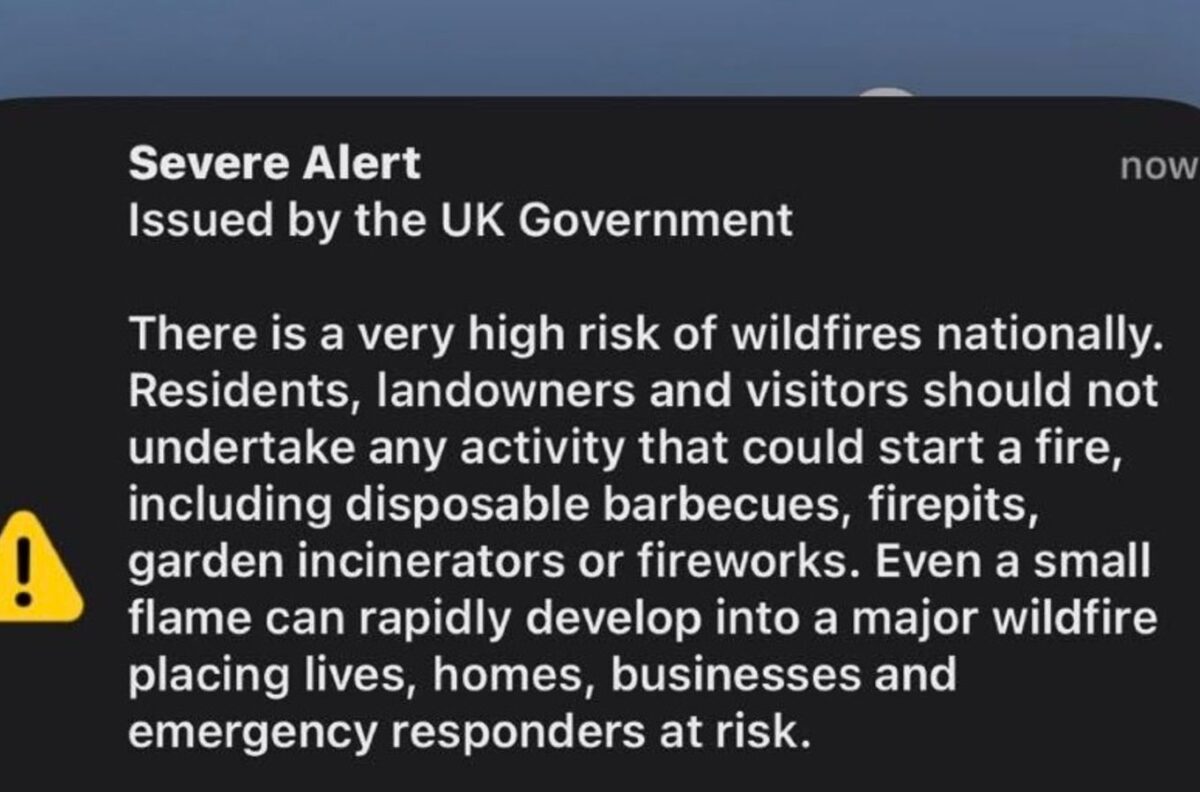
UK Government sends emergency wildfire alert as fires destroy homes. Credit: ITV News
Millions of people across England and Wales have received an emergency alert warning of a very high risk of wildfires as firefighters continue to battle major blazes across parts of the UK.
The UK Government issued the alert on Friday, August 14, asking people to avoid activities that could spark fires, including barbecues, campfires and fireworks. The warning comes as extreme heat and dry conditions have created dangerous conditions for the rapid spread of wildfires.
The alert is the most extensive use of the UK’s Emergency Alert system in response to an active incident, according to the government.
Why Did the UK Government Send the Emergency Alert?
The government said the emergency warning was prompted by the continued very high risk of wildfires across England and Wales.
The alert urged people to take simple precautions to prevent additional fires while emergency services remain under significant pressure. Residents were also told to report any fire immediately by calling 999.
The warning followed a series of major fires that have affected communities, homes and emergency responders across the country.
Stourbridge Wildfire Destroys 19 Homes
One of the worst-hit areas is Stourbridge in the West Midlands, where a wildfire spread across more than 500 acres.
West Midlands Fire and Rescue Service said 19 houses were fully destroyed and 18 others were damaged. Fire crews remained at the scene to tackle hotspots and monitor areas where flames could reignite.
The scale of the destruction prompted Prime Minister Andy Burnham to visit the affected community. He described the scenes as unprecedented and thanked firefighters and emergency responders working in difficult conditions.
Residents whose homes were destroyed have been left facing major losses, with some families losing possessions accumulated over decades.
Wildfires Spread Across Other Parts of England and Wales
The wildfire emergency is not limited to Stourbridge. Firefighters have been responding to incidents in several locations, including Birmingham, Stoke-on-Trent, Cannock Chase, Worcestershire, Hampshire, Norfolk and Carmarthenshire in Wales.
A major incident was declared near Llandovery in Carmarthenshire, where dozens of homes were evacuated and roads were closed.
Firefighters in Hampshire have also spent several days tackling a wildfire in the New Forest, while other crews have responded to fires in Norfolk and Staffordshire.
The widespread incidents have placed considerable pressure on fire and rescue services.
READ ALSO
Stourbridge fire update: 19 hospitalised after massive West Midlands wildfires
Lewes train derailment: ‘Bumpy track’ concerns emerge as 20 passengers are hospitalised
Government Announces Disposable Barbecue Ban
As part of its response, the government announced a temporary nationwide ban on the sale of disposable barbecues.
Retailers were instructed to remove disposable barbecues from sale immediately. The measure will remain under review and is intended to reduce the risk of fires while dangerous conditions persist.
The government has also reminded people not to light fires or use open flames in vulnerable areas such as parks, moorland, woodland and other open spaces.
Military Personnel Deployed to Support Fire Response
The government has announced additional support for frontline emergency services, including the deployment of military personnel.
Around 100 members of the Armed Forces were immediately deployed to support response and recovery operations in South Wales, with another 100 personnel scheduled to deploy later.
Emergency funding will also be provided to fire and rescue services facing the greatest operational pressures.
The government said insurers are being urged to process claims quickly for households and businesses affected by the fires.
What Should People Do During the Wildfire Warning?
Authorities are urging the public to take extra care while the dry conditions continue.
People are advised not to light fires or open flames in the countryside or other open spaces. Anyone using a household barbecue should never leave it unattended and must ensure it is fully extinguished after use.
The public has also been told to dispose of smoking materials carefully, avoid throwing cigarette ends from vehicles and take litter home. Glass bottles can intensify sunlight and potentially contribute to fire risk.
Anyone who sees a fire should call 999 immediately.
Government Plans National Wildfire Summit
The government said its response will extend beyond the current emergency. Ministers plan to hold a national wildfire summit later in 2026 involving fire chiefs, the National Fire Chiefs Council, the Fire Brigades Union and other key organisations.
The summit will examine how the UK can strengthen its preparedness for increasingly severe weather events and improve its ability to respond to future wildfires.
The government also highlighted £97 million in existing investment in fire service training and specialist equipment.
With firefighters still working across multiple incident sites, officials are urging the public to follow the emergency alert guidance and avoid activities that could trigger further fires.
FAQ
Why did millions of people in England and Wales receive an emergency alert?
The UK Government sent the emergency alert because the wildfire risk remained very high across England and Wales. The warning urged people not to carry out activities that could start fires, including lighting barbecues, campfires and fireworks.
The government said the alert was issued as firefighters continued dealing with major fires in several parts of the country.
What did the UK emergency wildfire alert say?
The alert warned recipients about a very high risk of wildfires nationally and advised them not to light anything that could start a fire.
People were also told to report fires immediately by calling 999.
Who received the UK wildfire emergency alert?
The alert was sent to people across England and Wales. The government described it as the most extensive use of the UK’s Emergency Alert system in response to an active incident.
The alert was issued on 14 August 2026, with messages sent on a rolling basis from around 19:00 BST.
Why is the UK wildfire risk so high?
The government linked the heightened risk to extreme heat and dry conditions. Dry vegetation can ignite and allow fires to spread rapidly, increasing pressure on fire and rescue services.
Officials are urging members of the public to take extra precautions while the dangerous conditions continue.
Are barbecues banned in the UK?
The government announced a temporary nationwide ban on the sale of disposable barbecues while the heightened wildfire risk continues.
Retailers were instructed to remove disposable barbecues from sale immediately. The measure will remain under review.
The announcement does not mean that every type of barbecue has been permanently banned across the UK.
Can I use a barbecue during the UK wildfire warning?
The government is urging people to exercise extreme caution and avoid activities that could cause wildfires, particularly in countryside and open spaces.
People are advised not to light fires or open flames in parks, moorland, wooded areas and other vulnerable locations.
What should I do if I see a wildfire?
People who see signs of a fire should call 999 immediately and report the emergency.
The government also advises people to avoid actions that could put themselves or others at risk while emergency services respond.
What happened in Stourbridge?
A major fire in Stourbridge in the West Midlands spread across more than 500 acres. According to West Midlands Fire and Rescue Service, 19 houses were fully destroyed and 18 others were damaged.
Fire crews continued working at the scene to extinguish hotspots and reduce the risk of the fire reigniting.
How many people have been affected by the wildfires?
The fires have caused extensive disruption across parts of England and Wales. The BBC reported that the ambulance service treated 54 casualties at different fires across the West Midlands, with 19 people taken to hospital.
Several firefighters were also taken to hospital following exposure to smoke, heat and difficult conditions.
Are there wildfires outside the West Midlands?
Yes. Fire crews have been dealing with multiple incidents across England and Wales.
The government and BBC reports referenced fires and major incidents in locations including Stourbridge, Birmingham, Stoke-on-Trent, Cannock Chase, Worcestershire, Hampshire, Norfolk and Carmarthenshire in Wales.
What other measures has the UK Government announced?
Alongside the emergency alert, the government announced emergency funding for fire and rescue services, military assistance and the temporary nationwide disposable barbecue sales ban.
Around 100 military personnel were deployed to support response and recovery efforts in South Wales, with another 100 members of the Armed Forces scheduled to deploy.
Why is the UK Government sending military personnel?
Military personnel are being deployed to support response and recovery operations in areas affected by major incidents. The move is intended to help emergency services manage the pressure created by the widespread wildfire response.
What financial support is available to areas affected by wildfires?
The government said the Bellwin Scheme remains available to help local authorities meet exceptional recovery costs.
Ministers also said they would consider requests for assistance from affected areas.
Will the UK hold a wildfire summit?
Yes. The government said ministers will convene a national wildfire summit later in 2026.
The summit is expected to bring together fire chiefs, the National Fire Chiefs Council, the Fire Brigades Union and other organisations to examine future wildfire preparedness and response capabilities.
How much has the UK invested in wildfire resilience?
The government said it has already invested £97 million in fire service training and specialist equipment as part of its wider wildfire resilience efforts.
What can people do to help prevent wildfires?
The government has advised people to:
- Avoid lighting fires or open flames in the countryside and other open spaces.
- Take particular care with barbecues.
- Never leave a household barbecue unattended.
- Make sure barbecues are completely extinguished.
- Dispose of smoking materials safely.
- Never throw cigarette ends from vehicles.
- Take litter home, especially glass bottles.
- Call 999 immediately if a fire is spotted.
Is the UK emergency alert system being used for the first time?
No. The UK’s Emergency Alert system was introduced in 2023 and has previously been used for real-world incidents and tests.
However, the government described the 14 August 2026 wildfire alert as its most extensive use in response to an active incident.
What should I do if I received the wildfire emergency alert?
Take the warning seriously and follow the safety instructions. Avoid activities that could start a fire, particularly in dry outdoor areas, and report any fire immediately to 999.
The government is asking the public to help reduce additional pressure on firefighters and emergency responders while wildfire conditions remain severe.