

Why did Benjamin Netanyahu call Britain an “Islamic Republic”? UK condemns Israeli PM’s controversial remark

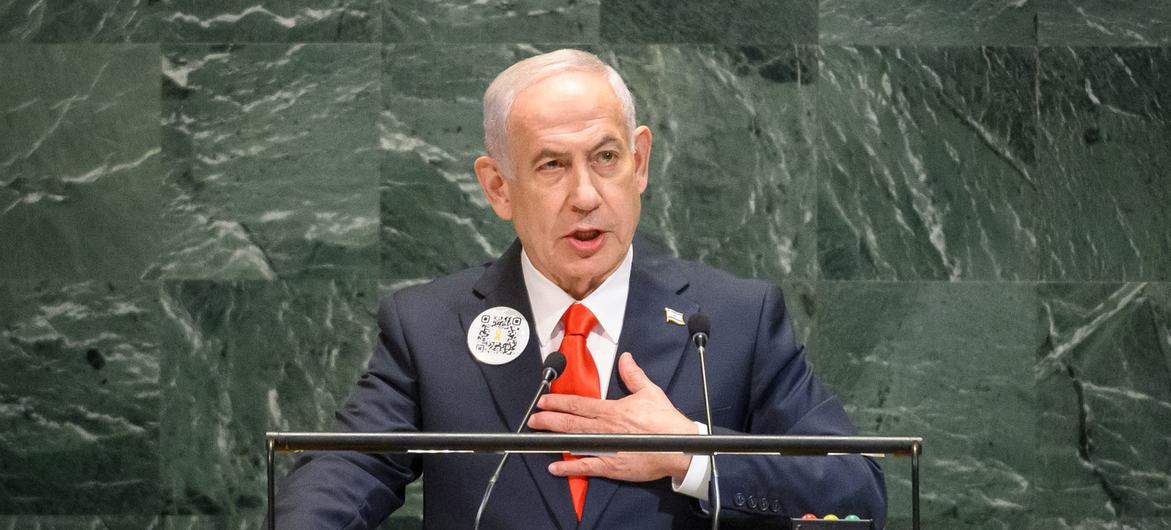
Prime Minister Benjamin Netanyahu of Israel addresses the general debate of the General Assembly’s eightieth session. Image Credit: UN Photo/Loey Felipe
Israeli Prime Minister Benjamin Netanyahu has sparked controversy after referring to Britain as the “Islamic Republic of Britain” during a podcast interview, drawing criticism from British officials, Jewish groups and political figures.
Netanyahu made the remarks while discussing Britain’s changing attitude toward Israel and its increasingly critical coverage of the Israeli government’s actions. He also referred to Britain as the potential “first Islamic republic” with nuclear weapons, a comment that drew further condemnation.
The comments come at a time when UK-Israel relations are already under growing strain, with disagreements over Gaza, Israeli settlements and Britain’s wider Middle East policy adding to diplomatic tensions.
Netanyahu Criticises Britain’s Changing Position on Israel
During the interview, Netanyahu praised journalist Randolph Churchill, son of former British Prime Minister Winston Churchill, for what he described as positive coverage of Israel during the 1967 Six-Day War.
He then contrasted that period with the present-day UK, referring to the country as the “Islamic Republic of Britain.”
When the interviewer questioned whether Netanyahu was singling out Britain when similar changes had taken place elsewhere in Europe, the Israeli prime minister doubled down on the claim.
Netanyahu later referred to comments previously associated with US Vice-President JD Vance about Britain potentially becoming an Islamist country with nuclear weapons.
UK Government Condemns Netanyahu’s Remarks
The British government has rejected Netanyahu’s comments. The Foreign, Commonwealth and Development Office described the remarks as “completely unacceptable” and said the matter had been raised with the Israeli government.
The controversy has emerged as Britain and Israel face a difficult period in their diplomatic relationship.
The Israeli Prime Minister’s Office did not respond to requests for clarification on whether Netanyahu’s remarks represented the official position of the Israeli government.
British Jewish Groups Reject Netanyahu’s Comments
Netanyahu’s remarks have also faced criticism from Jewish organisations in Britain.
The Movement for Progressive Judaism described the language as dangerous and irresponsible, pointing to concerns about antisemitism, anti-Muslim hatred and growing social division in the UK.
The organisation also stressed that Netanyahu does not speak for British Jews and said his remarks should not be interpreted as representing the views of Britain’s Jewish community.
Former Downing Street chief of staff Gavin Barwell also criticised the Israeli prime minister’s comments, describing them as Islamophobic.
READ ALSO
Why UK-Israel Relations Are Becoming More Tense
The latest dispute comes after a series of disagreements between Britain and Israel over the war in Gaza and the future of the Israeli-Palestinian conflict.
Under the previous Labour government, Britain paused free trade talks with Israel and suspended some arms export licences. The UK has also imposed sanctions on far-right Israeli cabinet ministers Itamar Ben-Gvir and Bezalel Smotrich.
Britain has further moved closer to countries supporting Palestinian statehood, with the reports noting that the UK joined allies including France and Canada in recognising a Palestinian state last year.
Andy Burnham Takes a Tougher Position on Israel
British Prime Minister Andy Burnham has also adopted a more critical position toward the Israeli government.
According to the reports, Burnham apologised for Labour’s initial response to Israel’s military actions in Gaza, saying the party had not responded appropriately.
He subsequently called for stronger measures against those involved in violence in Gaza and raised the possibility of further sanctions and restrictions on trade involving illegal Israeli settlements.
Those policy differences have contributed to the increasingly tense relationship between London and Jerusalem.
Netanyahu Faces Criticism at Home
The comments have also triggered criticism from within Israel.
Avi Dabush, an opposition politician running with Israel’s Democrats party, accused Netanyahu of attacking an important international ally at a time when Israel faces growing diplomatic isolation.
Dabush described the situation as evidence of what he called a “horrific diplomatic failure”, arguing that Israel needs stronger international relationships.
Another analyst cited by Al Jazeera suggested Netanyahu’s comments could have a domestic political dimension, potentially helping him maintain support among members of his governing coalition.
What Netanyahu’s Comments Could Mean for UK-Israel Relations
The latest controversy adds another difficult episode to an already strained relationship between the two countries.
Rodwan Abouharb, an associate professor of international relations at University College London, described Netanyahu’s remarks as a “new low” in UK-Israel relations, while also noting that Britain and Israel continue to share some policy interests, particularly regarding Iran.
The dispute is likely to keep attention focused on Britain’s Middle East policy, Netanyahu’s diplomatic strategy and the wider political debate surrounding Israel, Gaza and relations with Western allies.
With Netanyahu seeking another electoral mandate in Israel later this year, his comments could also become part of a wider domestic and international debate over his government’s foreign policy and its relationship with traditional allies.
FAQ
What did Benjamin Netanyahu say about Britain?
Israeli Prime Minister Benjamin Netanyahu referred to the UK as the “Islamic Republic of Britain” during a podcast interview. He also referred to Britain as a possible “first Islamic republic” with nuclear weapons.
His comments came while discussing changes in British media coverage of Israel and the UK’s increasingly critical position toward the Israeli government.
Why did Netanyahu call Britain the “Islamic Republic of Britain”?
According to the reports provided, Netanyahu used the phrase while criticising what he sees as a change in Britain’s attitude toward Israel.
He contrasted current British coverage with the more favourable coverage of Israel that he associated with journalist Randolph Churchill during the 1967 Six-Day War.
Did Netanyahu say Britain has nuclear weapons?
Netanyahu referred to a statement that the “first Islamic republic with nuclear weapons” could be Britain. The remark was presented as a reference to comments previously attributed to US Vice-President JD Vance.
The reports also note that Pakistan is officially known as the Islamic Republic of Pakistan and has possessed nuclear weapons since the 1990s.
What was the UK response to Netanyahu’s comments?
The UK’s Foreign, Commonwealth and Development Office said Netanyahu’s remarks were “completely unacceptable” and confirmed that the issue had been raised with the Israeli government.
The Israeli Prime Minister’s Office did not respond to requests for comment on whether Netanyahu’s comments represented the official position of the Israeli government.
Have British Jewish groups criticised Netanyahu’s comments?
Yes. The Movement for Progressive Judaism criticised the remarks, describing the language as dangerous and irresponsible amid concerns about antisemitism, anti-Muslim hatred and social division in Britain.
The group also stressed that Netanyahu does not speak for British Jews and that his remarks do not represent them.
Were Netanyahu’s comments described as Islamophobic?
Yes. Critics cited in the reports described the remarks as Islamophobic.
Former Downing Street chief of staff Gavin Barwell called the comments “blatant Islamophobia,” while the Guardian reported that the remarks played into a far-right trope about Britain’s Muslim population.
Why are UK-Israel relations tense?
The reports point to several disagreements between the two governments, particularly over Israel’s military actions in Gaza, settlements and Britain’s approach to the Palestinian issue.
The UK has taken a more critical position toward the Israeli government in recent years, including sanctions against some far-right Israeli ministers and other measures affecting relations.
What has Andy Burnham said about Israel?
According to the reports, British Prime Minister Andy Burnham apologised for Labour’s initial response to Israel’s military actions in Gaza and said the party needed to do more.
He has also said the UK should consider additional sanctions against individuals and entities involved in the violence in Gaza and measures concerning trade with illegal Israeli settlements.
Has Britain recognised a Palestinian state?
The Al Jazeera report says the UK joined countries including France and Canada in recognising a Palestinian state last year.
This represents part of the broader shift in Britain’s position toward the Israeli-Palestinian conflict described in the reports.
What did JD Vance previously say about Britain?
The reports say JD Vance made similar remarks during the 2024 US presidential campaign, suggesting Britain could become the first “truly Islamist country” to obtain a nuclear weapon.
Netanyahu appeared to reference that earlier comment during his own remarks about Britain.
What did Netanyahu say about Iran?
During the podcast discussion, Netanyahu linked his comments about Britain’s nuclear status to Iran, saying that Israel was working to ensure there would not be another nuclear-armed Islamic republic “here, in Iran.”
The provided reports do not offer additional details about the context of that statement.
Could Netanyahu’s comments affect UK-Israel relations?
The remarks have added to already strained relations between the two countries. A UCL associate professor cited by Al Jazeera described the comments as a “new low” in UK-Israel relations.
The same analyst suggested the remarks could also have a domestic political purpose, including helping Netanyahu maintain support within his governing coalition.
Is Netanyahu facing political pressure in Israel?
The reports indicate that Netanyahu is facing criticism from political opponents, including opposition politician Avi Dabush, who accused him of contributing to what he described as a diplomatic failure.
The Guardian also reports that Netanyahu is hoping to be reelected when Israel holds elections later in 2026.
Does Netanyahu’s statement represent Israel’s official position?
It is not established by the provided reports that the comments represent a formal Israeli government policy.
The Israeli Prime Minister’s Office did not respond to requests for clarification on whether Netanyahu’s statement represented the official government position.
Why is Netanyahu’s latest Britain comment attracting attention?
The remarks have drawn attention because they were made at a time when UK-Israel relations are already under strain.
Criticism from British officials, Jewish organisations and political figures has added to the controversy, while the comments have also renewed debate about Islamophobia, political rhetoric and Britain’s changing approach to Israel and the Gaza conflict.