

Lewes train derailment: ‘Bumpy track’ concerns emerge as 20 passengers are hospitalised

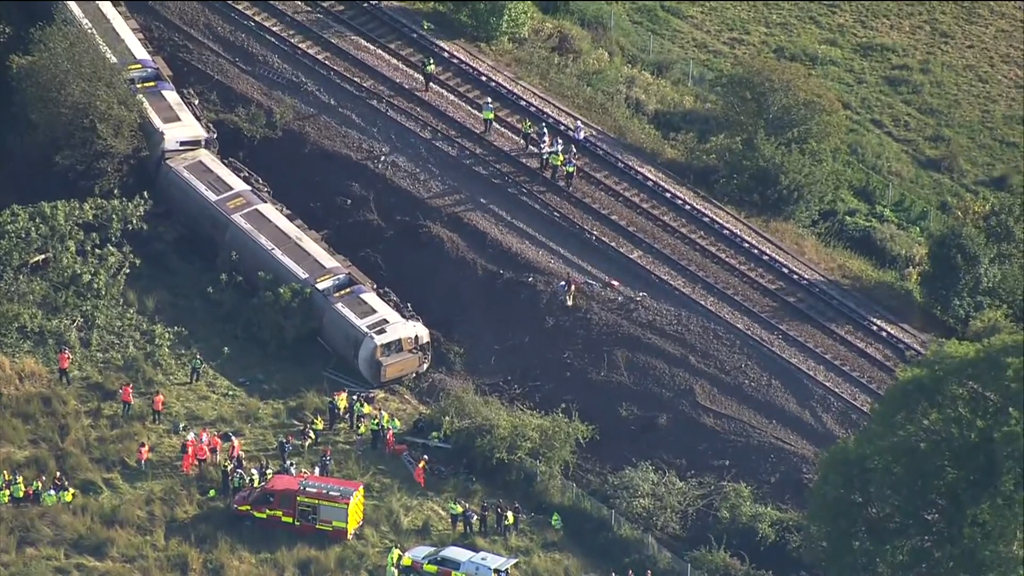
Lewes train derailment leaves 20 people injured. Image Source: Sky News
A Southern Rail train derailment near Lewes in East Sussex has left 20 people hospitalised and triggered an investigation into what caused three carriages to leave the tracks.
The incident happened shortly before 16:00 BST on Thursday, when the 14:24 Southern service from London Victoria to Eastbourne derailed between Haywards Heath and Lewes. About 150 passengers were on board.
Two passengers suffered serious injuries, while another 18 people were taken to hospital with injuries of varying severity, according to information provided by the BBC and The Independent.
The derailment has also raised questions about the condition of the railway line after Lewes MP James MacCleary said concerns had been discussed with Greater Thameslink Railway about the track feeling “bumpier” in recent months.
What Happened in the Lewes Train Derailment?
The Southern Rail service was travelling from London Victoria towards Eastbourne when it derailed while approaching Lewes.
Three carriages left the railway tracks, with images from the scene showing at least some of the carriages lying on their sides near an embankment.
Emergency services declared a major incident at about 15:54 BST. Passengers were evacuated from the train as emergency workers responded at the scene.
The train had been scheduled to stop at several stations, including Clapham Junction, East Croydon, Gatwick Airport, Haywards Heath, Wivelsfield and Cooksbridge before reaching Lewes and continuing towards Polegate, Hampden Park and Eastbourne.
Passengers Describe Panic as Train Tipped Over
Passengers have described a terrifying experience inside the train, with several saying they feared they could die.
Rachel Heath told BBC Radio 4’s Today programme that the train began jostling from side to side before appearing to lift and then fall onto its side.
She said there was widespread screaming and panic among passengers and recalled thinking that she was going to die.
Another passenger, Tracy McGregor, described the train as being like a “metal tube” moving through the earth. She said passengers were left with mud on their faces after the train came to a stop.
McGregor also described the absence of life-threatening injuries as a miracle, saying she remained shaken the following morning.
Two Passengers Suffer Serious Injuries
The derailment resulted in 20 people being taken to hospital, according to the reports provided.
Two passengers sustained serious injuries and remained in hospital, while 18 others were treated for injuries described as being of varying severity.
The South East Coast Ambulance Service deployed more than 50 staff at the scene at the height of the emergency response, including specialist and critical care teams.
Other passengers were evacuated from the train and assisted by emergency responders and people from the surrounding community.
Local businesses and residents also provided water and other support while emergency crews worked at the scene.
Lewes MP Raises Concerns About ‘Bumpier’ Track
One of the most significant developments in the investigation is a claim by Lewes MP James MacCleary that concerns about the railway track had been raised shortly before the derailment.
MacCleary said he had met Greater Thameslink Railway, the parent company of Southern Rail, about a week before the crash.
According to the MP, the track had appeared to become “bumpier” in recent months and the condition was discussed during the meeting.
He suggested the change could possibly have been connected to the period of exceptionally hot weather, but the cause of the derailment has not been established.
The comments have added another line of inquiry for investigators, but they should not be treated as confirmation that heat caused the crash.
READ ALSO
Stourbridge fire update: 19 hospitalised after massive West Midlands wildfires
Did Extreme Heat Cause the Train to Derail?
Investigators are examining whether the extreme heat played a role, but authorities have warned against speculation while the investigation is ongoing.
Images from the scene appear to show damaged or buckled sections of track. Railway experts have noted that high temperatures can place stress on railway infrastructure.
The Independent reported that Richard Bowker, former chairman of the Strategic Rail Authority, said investigators would examine the condition of the track and determine whether damage occurred before or during the derailment.
The train’s onboard data is also expected to be important. Investigators can examine information such as the train’s speed and braking activity, alongside other evidence from the scene.
At this stage, there is no confirmed cause of the Lewes train derailment.
RAIB Investigation Underway
The Rail Accident Investigation Branch (RAIB) has begun a full independent safety investigation.
Investigators are examining the derailed train, railway infrastructure and other evidence from the scene. The investigation is expected to include CCTV footage, signalling information and data downloaded from the train.
British Transport Police led the initial emergency response, while the Office of Rail and Road also sent investigators because of its role as the railway safety regulator.
The RAIB said it expected to provide a further update the following week as investigators gathered more evidence.
Are Trains Running Between Lewes and Haywards Heath?
Train services between Lewes and Haywards Heath remain suspended until further notice, according to the information supplied by the BBC and The Independent.
Rail replacement buses have been introduced between the two stations, serving locations including Cooksbridge and Plumpton.
Passengers travelling towards Eastbourne or Hastings have been advised to change at Brighton.
Southern has also added extra carriages to some services between Brighton and Hastings and Brighton and Seaford where possible.
Alternative travel arrangements include certain Southern, Thameslink, Gatwick Express, Southeastern and London Underground services, with ticket acceptance arrangements in place on some routes.
Passengers travelling through the affected area should check the latest service information before setting out.
How Long Will the Lewes Rail Disruption Last?
There is no confirmed date for the full reopening of the affected line in the information provided.
The recovery operation involves investigating the site, assessing the railway infrastructure and removing the derailed carriages.
Rail industry editor Richard Wilcock said removing the carriages could take several days, while the wider process of assessing and repairing the railway could take longer.
The eventual reopening will depend on the condition of the infrastructure and the progress of the investigation and recovery work.
FAQ: Lewes Train Derailment
What happened in the Lewes train derailment?
A Southern Rail passenger train travelling from London Victoria to Eastbourne derailed between Haywards Heath and Lewes shortly before 16:00 BST on Thursday. Three carriages left the tracks and passengers were evacuated.
How many people were injured in the Lewes train crash?
20 people were taken to hospital. Two passengers suffered serious injuries, while another 18 people were treated for injuries of varying severity.
How many people were on the train?
About 150 passengers were on the Southern Rail service when it derailed.
What caused the Lewes train derailment?
The cause has not yet been confirmed. The Rail Accident Investigation Branch is examining the train, track, railway infrastructure and other evidence.
Did heat cause the Lewes train derailment?
Investigators are considering the possible effects of extreme heat, but there is no confirmed evidence yet that heat caused the derailment. Reports of a potentially buckled track have prompted attention to the condition of the railway infrastructure.
Was the railway track already damaged?
The available reports indicate that concerns had previously been raised about the track being “bumpier”. However, investigators have not established whether a track problem caused the derailment or whether the damage visible after the crash resulted from the derailment itself.
Who is investigating the Lewes train crash?
The Rail Accident Investigation Branch (RAIB) is conducting an independent safety investigation. British Transport Police and the Office of Rail and Road are also involved in different aspects of the response.
Are trains running between Lewes and Haywards Heath?
No. According to the latest information provided, trains cannot currently operate between Lewes and Haywards Heath, with disruption continuing until further notice.
Are there replacement buses after the Lewes derailment?
Yes. Rail replacement buses are operating between Lewes and Haywards Heath, with stops including Cooksbridge and Plumpton.
Can passengers still travel to Eastbourne?
Passengers travelling towards Eastbourne or Hastings have been advised to change trains at Brighton. Alternative services and ticket acceptance arrangements are available on some routes.
When will trains resume between Lewes and Haywards Heath?
There is no confirmed reopening time in the supplied reports. The railway must undergo investigation, assessment and recovery work before normal services can safely resume.
Was the Southern Rail train travelling from London?
Yes. The affected train was the 14:24 Southern service from London Victoria to Eastbourne.
Where exactly did the train derail?
The train derailed on the railway between Haywards Heath and Lewes in East Sussex, while approaching Lewes.
What are passengers saying about the derailment?
Passengers described scenes of panic and fear, with accounts of the train rocking violently before carriages tipped onto their sides. Some passengers said they believed they might die.
Is Southern Rail safe during hot weather?
The chief executive of Greater Thameslink Railway said the railway has procedures for managing hot-weather risks, including inspections, temporary speed restrictions and suspending services when necessary. The specific cause of this derailment remains under investigation.
When will investigators reveal the cause?
The RAIB said it expected to provide a further update the following week, but the supplied reports do not give a final timetable for the full investigation. Establishing the cause may require detailed analysis of the track, train and operational data.
Could the Lewes derailment have been prevented?
It is too early to determine this. Investigators will need to establish exactly what happened, whether there were infrastructure or operational factors involved and whether any safety measures could have prevented the derailment.