
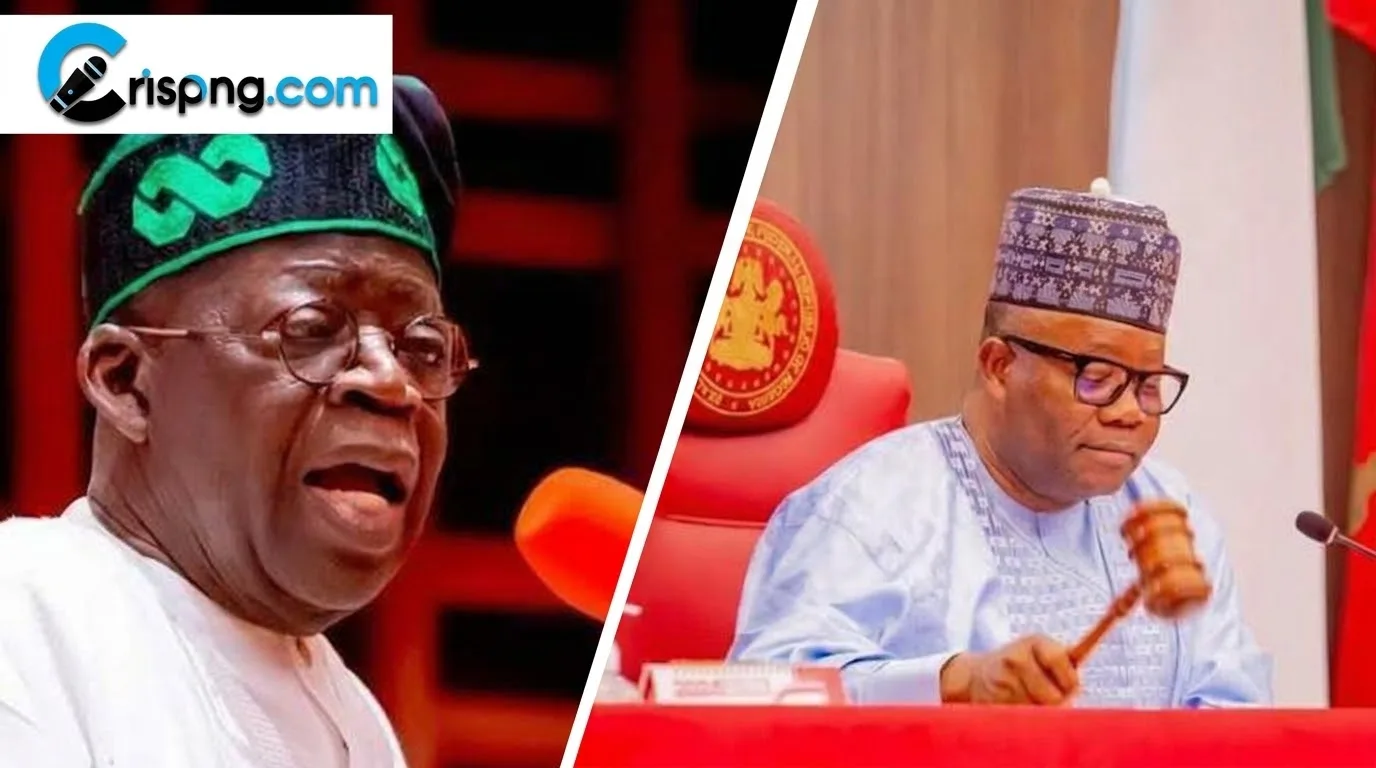
President Bola Tinubu withdrew a request for $20.5 billion and €1.05 billion in external borrowing after submitting it to the National Assembly. He replaced it with a smaller $7.7 billion proposal. However, the Senate has now approved both requests, raising questions about what lawmakers actually authorised and whether Nigeria could still access the earlier borrowing plan.
The Senate’s decision on November 24, 2026, created an unusual situation. Lawmakers approved a borrowing proposal the president had formally withdrawn weeks earlier. They also approved the revised $7.7 billion request.
According to Premium Times, the Senate considered a report from its Committee on Local and Foreign Debts before approving the requests.
The development means lawmakers endorsed three borrowing amounts in one sitting: $20.5 billion, €1.05 billion and approximately $7.7 billion.
However, the approvals do not automatically mean the Federal Government has collected all the money. The circumstances surrounding the withdrawn proposal also require a closer look.
Tinubu first requested $20.5 billion and €1.05 billion
The borrowing controversy began in October when Tinubu asked the National Assembly to approve a supplementary external borrowing plan covering 2026 and 2027.
The proposal sought approval to process external loans worth $20,517,755,901 and €1,045,083,643.
In his communication, the president said the funds would support projects across several sectors. These included infrastructure, agriculture, healthcare, education, water supply, security and employment generation.
The proposal also covered financial management reforms.
The request was presented as part of the administration’s effort to finance development projects and address the country’s infrastructure needs.
Read also: Tinubu Seeks Fresh Loans: How Much Does Nigeria Owe Already?
Tinubu withdrew the proposal and replaced it with $7.7 billion
On November 4, Senate President Godswill Akpabio announced that Tinubu had withdrawn the earlier request.
Instead, the president sought approval for a new external borrowing plan worth $7,707,404,882.49, approximately $7.7 billion.
The revised proposal was intended to finance part of the 2026 budget deficit.
Tinubu explained that the government would explore different funding sources. These included Eurobonds, multilateral and bilateral lenders, and other financing arrangements.
He placed particular emphasis on Eurobonds, describing them as a relatively faster way to raise larger amounts.
The president also explained that the final interest rates, repayment periods and other conditions would depend on the borrowing arrangements eventually secured.
Akpabio told lawmakers that the new request effectively superseded the earlier proposal.
This meant the $20.5 billion and €1.05 billion request was no longer the proposal the president wanted the National Assembly to consider.
Why did the Senate approve a withdrawn request?
This is the central question raised by the latest development.
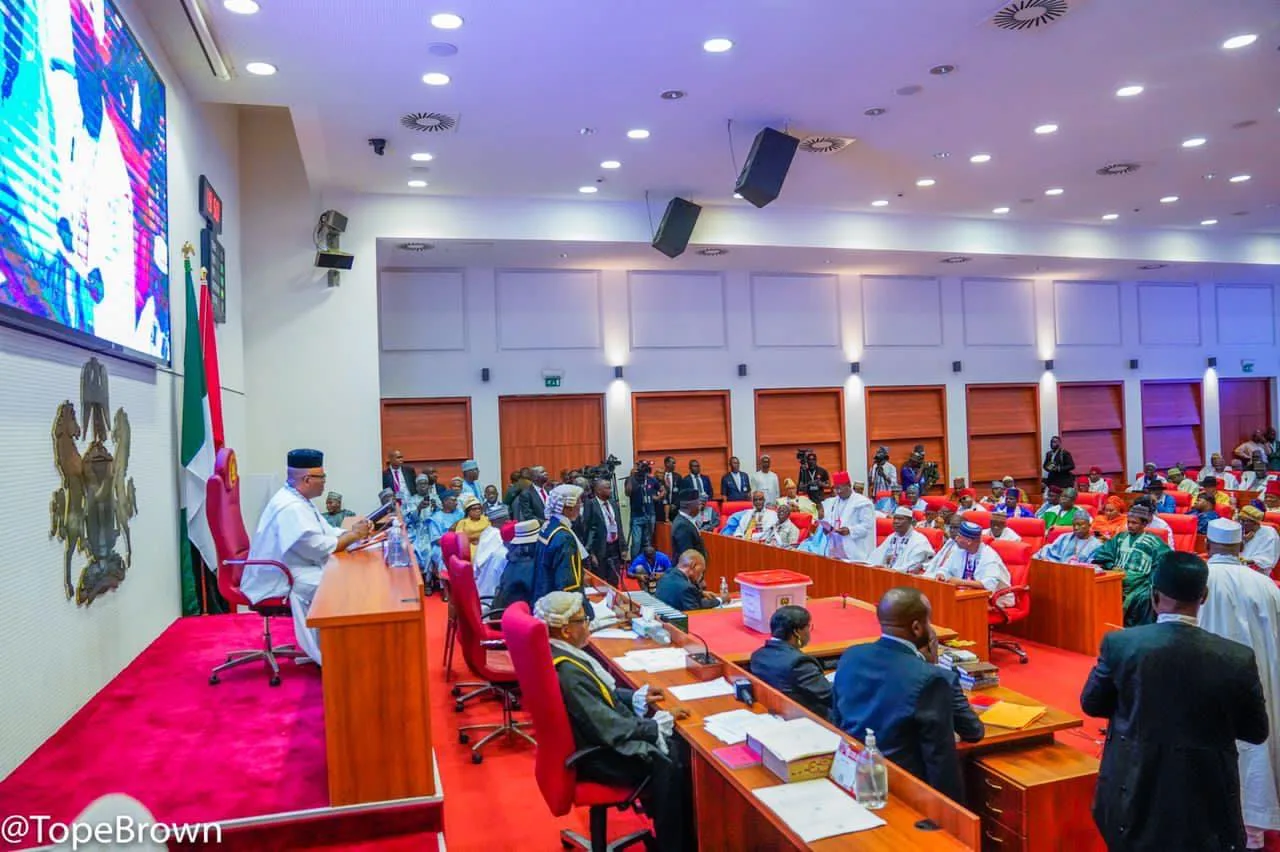
During Tuesday’s plenary, Senator Adetokunbo Abiru presented the report of the Senate Committee on Local and Foreign Debts.
The committee recommended approval of both the withdrawn borrowing plan and the revised $7.7 billion request.
Abiru explained that the earlier proposal sought legislative approval to facilitate negotiations with prospective creditors, development finance institutions and other external lenders.
He said the revised $7.7 billion request served a different purpose. It sought approval to implement external borrowing provisions already contained in the 2026 Appropriation Act.
However, the Senate’s consideration of the withdrawn proposal remains difficult to reconcile with the president’s earlier communication.
During the debate, lawmakers did not address why the committee recommended approval of a request Tinubu had withdrawn.
The Senate President, however, offered a broader explanation. Akpabio maintained that the three requests did not represent entirely new borrowing obligations. He said they formed part of the government’s effort to implement the borrowing framework in the 2026 budget.
The Senate subsequently approved the requests through separate voice votes.
Neither the committee’s explanation nor Akpabio’s comments fully clarified why the earlier proposal required approval after its withdrawal had been formally communicated to the National Assembly.
The $7.7 billion request is tied to the 2026 budget
The revised borrowing proposal is connected to the government’s financing plan for the 2026 budget.
In his November 4 communication, Tinubu said the 2026 Appropriation Act provided for N29.2 trillion in new borrowing to help finance a budget deficit of approximately N31.4 trillion.
The borrowing requirement comprised N18.4 trillion in domestic borrowing and N10.79 trillion in external borrowing.
The proposed $7.7 billion facility was intended to cover part of the external borrowing component.
This distinction is important. The government presented the revised request as a way to implement an existing budget provision, rather than create an entirely new borrowing requirement outside the approved framework.
Tinubu also said the proposed external financing would support projects in infrastructure, defence, agriculture, healthcare, power and education.
Read also: Why Is FG Seeking Another $1.5bn in World Bank Loans? See How Nigeria’s Debt Has Risen
Senate approval does not mean Nigeria has received the money
One important distinction is the difference between approving a borrowing request and actually accessing the funds.
The Senate’s approval provides legislative backing for the borrowing arrangements described in the requests. It does not establish that the Federal Government has already secured the full amounts or received the money.
For the earlier $20.5 billion and €1.05 billion proposal, Abiru said the approval would facilitate negotiations with prospective lenders.
The government would still need to pursue the relevant financing arrangements and agree on the applicable terms.
The revised $7.7 billion proposal also requires the government to secure financing through its proposed sources.
For Nigerians, this means the approved figures should not automatically be treated as money already added to the country’s debt stock.
The actual impact will depend on how much the government eventually borrows, the exchange rates involved, interest costs and repayment conditions.
Nigeria’s debt stood at ₦166.79 trillion before the latest approvals
The new approvals come as Nigeria continues to manage a substantial public debt burden.
The Debt Management Office reported that Nigeria’s total public debt stood at ₦166.79 trillion as of June 30, 2026.
The figure covered the Federal Government, the 36 states and the Federal Capital Territory.
External debt accounted for ₦75.20 trillion, while domestic debt stood at ₦91.59 trillion.
These figures provide the country’s debt position before the latest borrowing approvals. They should not be confused with the proposed loan amounts, which have not automatically become disbursed debt.
The government’s argument is that external borrowing can help finance infrastructure and other projects that support economic development.
However, borrowing also creates repayment obligations. The cost will depend on the interest rates, currency movements, repayment periods and the returns generated by the funded projects.
Read also: Like Senate, Reps Okay Buhari’s $22.7bn Loan Request
What happens next?
The Senate’s approval has advanced the legislative process for the borrowing proposals. The Federal Government must still pursue the relevant financing arrangements before it can access the funds.
The immediate question is why lawmakers approved the earlier $20.5 billion and €1.05 billion request after Tinubu withdrew it and presented a replacement.
The Senate has maintained that the requests fall within the government’s existing borrowing framework. However, the public explanation has not fully resolved the apparent contradiction.
Ultimately, the financial implications will depend on the facilities the government negotiates and the amounts it eventually draws down.
For Nigerians, the important issues will be the cost of the borrowing, the projects it finances and whether the government can demonstrate that the money delivers value.