

Why is FG seeking another $1.5bn in World Bank loans? See how Nigeria’s debt has risen

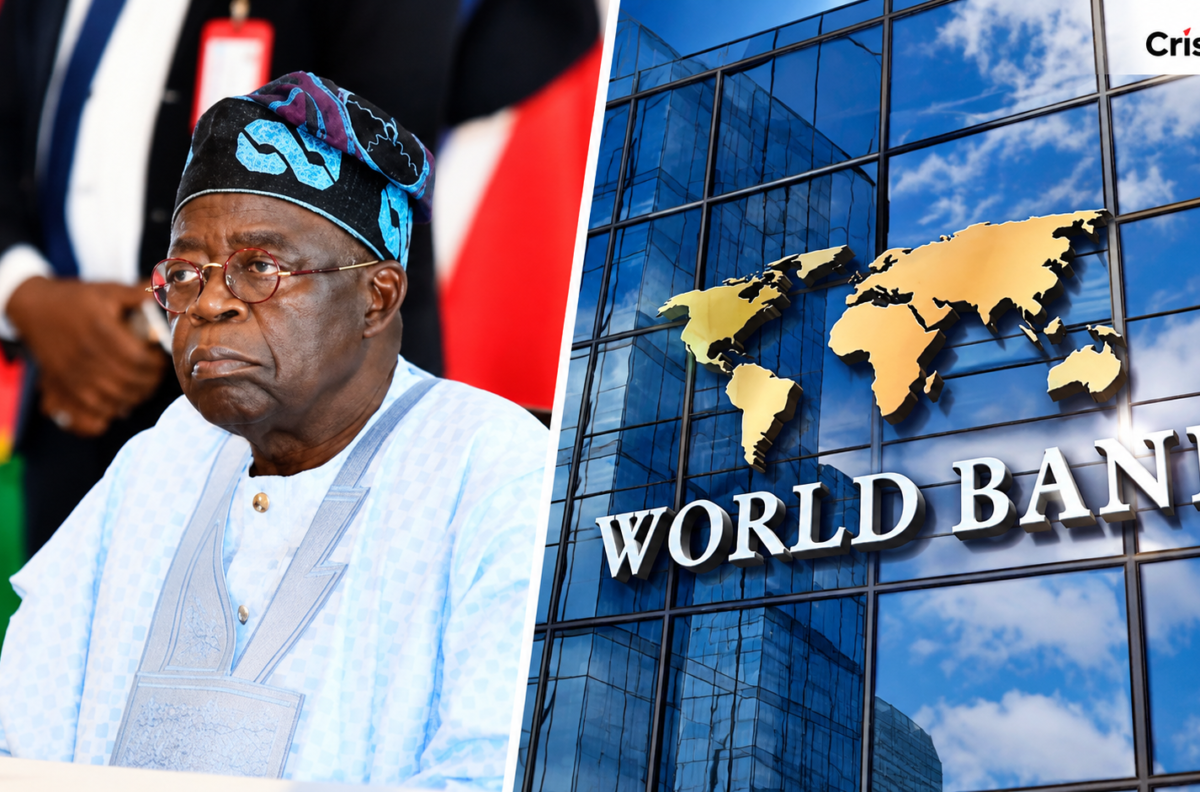
The Federal Government is discussing another $1.5 billion in loans from the World Bank, with the proposed financing coming as Nigeria’s public debt climbs to N166.79 trillion.
The new financing is not one single loan. It consists of three proposed $500 million facilities targeting climate resilience, social protection and early childhood development. The Federal Government has not yet received the money, as the facilities are still at different stages of consideration by the World Bank.
But the proposal raises a bigger question: how much has Nigeria’s public debt changed since President Bola Tinubu took office in 2023?
The answer becomes clearer when the latest figure is compared with the debt position recorded shortly after he assumed office.
Nigeria’s debt stood at N87.38tn in June 2023
The Debt Management Office (DMO) recorded Nigeria’s total public debt at N87.38 trillion as of June 30, 2023.
This was the first quarterly debt position published after Tinubu assumed office on May 29, 2023.
The figure covered the debts of the Federal Government, the 36 states and the Federal Capital Territory.
The DMO said the June 2023 figure included N22.71 trillion in securitised Ways and Means advances, alongside new borrowings by the Federal Government and sub-national governments.
This N87.38 trillion figure provides a useful starting point for tracking how the country’s public debt has changed since 2023.
Debt rose by 11.4% by the end of 2023
By December 2023, Nigeria’s total public debt had risen to about N97.34 trillion.
That represented an increase of approximately N9.96 trillion, or 11.4%, from the N87.38 trillion recorded six months earlier.
The increase came partly from new domestic borrowing by the Federal Government to finance the 2024 budget deficit, as well as disbursements from multilateral and bilateral lenders.
2024 brought a 48.6% increase
The debt stock recorded a much larger increase in 2024.
By December 31, 2024, Nigeria’s total public debt had reached N144.67 trillion, according to the DMO.
Compared with N97.34 trillion at the end of 2023, this was an increase of approximately N47.32 trillion, or 48.6%.
The debt was made up of about N74.38 trillion in domestic obligations and N70.29 trillion in external debt.
However, changes in the exchange rate are important when comparing the naira value of Nigeria’s external debt across different periods. A change in the naira exchange rate can increase or reduce the naira value of dollar-denominated obligations even without an equivalent amount of new borrowing.
Debt increased another 10.1% in 2025
Nigeria’s public debt continued to rise in 2025.
The DMO put total public debt at N159.28 trillion as of December 31, 2025.
That was an increase of approximately N14.61 trillion, or 10.1%, from the N144.67 trillion recorded at the end of 2024.
Domestic debt accounted for N84.85 trillion, while external debt stood at N74.43 trillion.
Latest figure: N166.79tn
The latest DMO data puts Nigeria’s total public debt at N166.79 trillion as of June 30, 2026. The DMO published the latest debt position on September 25, 2026.
The figure represents an increase of N7.44 trillion, or 4.67%, from the N159.35 trillion recorded in March 2026.
Compared with June 2025, when public debt stood at N152.40 trillion, the latest figure represents a 9.44% increase in one year.
The June 2026 debt stock comprised N91.59 trillion in domestic debt and N75.20 trillion in external debt.
How much has debt increased since 2023?
Looking at the June 2023 figure and the latest position gives a clearer picture.
| Period | Public debt | Change |
|---|---|---|
| June 2023 | N87.38tn | Baseline |
| December 2023 | N97.34tn | +11.4% |
| December 2024 | N144.67tn | +48.6% |
| December 2025 | N159.28tn | +10.1% |
| June 2026 | N166.79tn | +90.9% from June 2023 |
From N87.38 trillion in June 2023 to N166.79 trillion in June 2026, Nigeria’s public debt increased by approximately N79.41 trillion.
That represents an overall increase of 90.9% in three years.
In simple terms, the country’s public debt was almost twice the June 2023 level by June 2026.
Why is the Federal Government seeking another $1.5bn?
The proposed $1.5 billion is divided into three separate $500 million World Bank facilities.
The first is an additional $500 million for the Agro-Climatic Resilience in Semi-Arid Landscapes project, known as ACReSAL. The proposed financing would increase the project’s total financing from $700 million to $1.2 billion.
The second is a proposed $500 million Household Prosperity and Empowerment-Social Protection Project, designed to support social assistance for poor and vulnerable households.
The third is another $500 million for Nigeria’s Early Childhood Development programme, covering areas including health, nutrition, early learning, childcare, water and sanitation.
The proposed ACReSAL financing is scheduled for consideration by the World Bank board on October 29, 2026, while the other two facilities are at earlier stages, with proposed approval dates in March 2027.
World Bank already holds a major share of Nigeria’s external debt
The proposed borrowing would also add to Nigeria’s existing obligations to the World Bank Group.
As of June 2026, Nigeria owed the World Bank Group about $20.73 billion, comprising $19.12 billion owed to the International Development Association and $1.61 billion to the International Bank for Reconstruction and Development.
The World Bank Group’s exposure represented about 38% of Nigeria’s $54.52 billion external debt at the end of June 2026.
Therefore, while the proposed $1.5 billion has not yet been added to Nigeria’s debt stock, the discussions come against a backdrop of a public debt that has risen by 90.9% since June 2023.
The figures also show why the debt trajectory cannot be explained by new borrowing alone. Exchange-rate movements affect the naira value of Nigeria’s foreign-currency debt, while the composition of domestic and external borrowing has also changed over the period.