

Tinubu Seeks Fresh Loans: How Much Does Nigeria Owe Already?

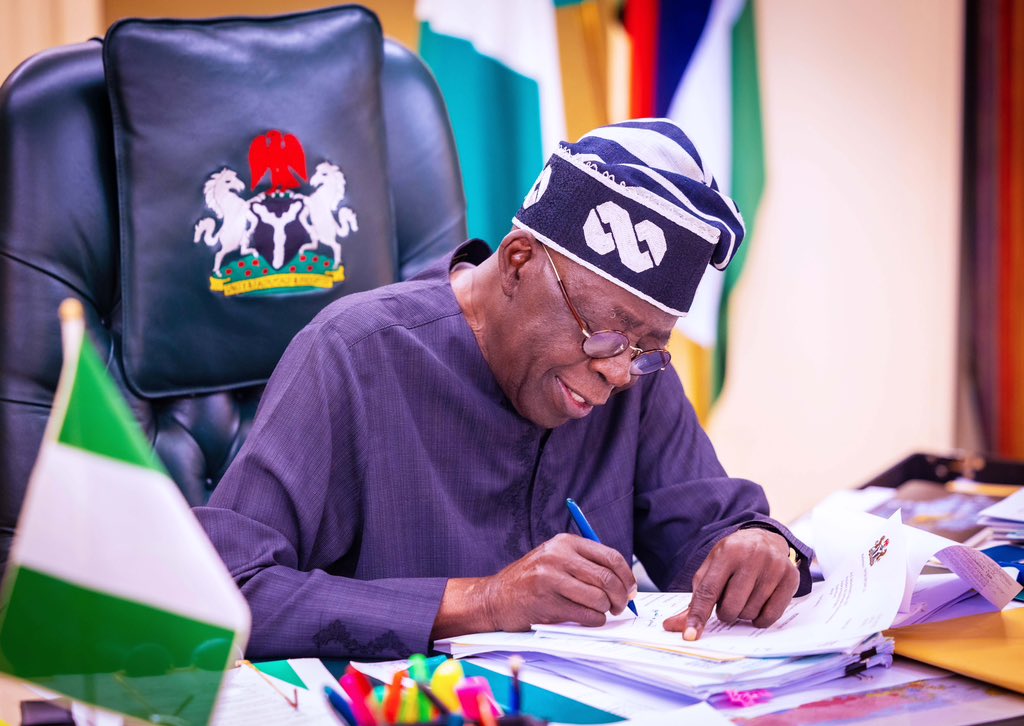
Nigeria already owes ₦166.79 trillion in public debt, and President Bola Tinubu has asked the National Assembly to consider another major external borrowing plan. The request raises questions about the country’s debt burden, the projects expected to benefit and the government’s ability to repay its obligations.
President Bola Tinubu has asked the National Assembly to approve a supplementary external borrowing plan worth $20.52 billion and €1.045 billion for the 2026–2027 fiscal period.
The request, conveyed in a letter read by Senate President Godswill Akpabio on Tuesday, October 27, covers projects in infrastructure, agriculture, healthcare, education, water supply, security and other sectors.
However, the proposal comes as Nigeria’s public debt continues to rise. Data from the Debt Management Office (DMO) show that the country’s total public debt stood at ₦166.79 trillion as of June 30, 2026.
The new borrowing request has therefore renewed questions about how much Nigeria owes, what additional loans could mean for public finances and whether the proposed projects will deliver enough economic benefits to justify the cost.
How much does Nigeria owe?
Nigeria’s public debt reached ₦166.79 trillion at the end of June 2026, according to the DMO.
The figure represented an increase of ₦7.44 trillion from ₦159.35 trillion recorded at the end of March 2026. It was also ₦14.39 trillion higher than the ₦152.40 trillion recorded in June 2025.
The debt comprises domestic and external obligations owed by the federal and state governments, including the Federal Capital Territory.
Of the total, domestic debt accounted for ₦91.59 trillion, while external debt stood at ₦75.20 trillion.
The Federal Government accounted for ₦152.77 trillion of the total, while state governments and the FCT owed approximately ₦14.01 trillion.
These figures provide a picture of Nigeria’s existing debt position before the latest borrowing request. However, the proposed dollar and euro facilities cannot simply be added to the naira debt stock without accounting for exchange rates, approval status and actual disbursements.
Why is Tinubu seeking more loans?
In his letter to the National Assembly, Tinubu said the proposed borrowing would help address Nigeria’s infrastructure funding gap and support economic growth.
The plan covers power, transportation, healthcare, agriculture, education, water supply, security, employment generation and financial management reforms.
The president said the projects had undergone technical and economic evaluations and were expected to create jobs, promote skills acquisition, encourage entrepreneurship, reduce poverty and improve food security.
He also said most of the projects would be implemented across Nigeria’s 36 states and the Federal Capital Territory.
External borrowing can provide governments with funds for major infrastructure projects that would otherwise be difficult to finance through annual revenue alone. However, the benefits depend on the quality of the projects, the terms of the loans and whether the investments generate sufficient economic returns.
The government will also need to meet the repayment obligations associated with the facilities.
Has the National Assembly approved the loans?
No final approval had been reported when the request was presented on Tuesday.
After reading Tinubu’s letter, Akpabio referred the proposal to the Senate Committee on Local and Foreign Debts, with input from the relevant appropriations committee, for further examination.
He directed the committee to report back within one week.
The review is important because lawmakers need to examine the borrowing plan and its relationship with previous approvals before deciding on the request.
The latest development also follows earlier external borrowing approvals, including a $516.3 million facility for the Sokoto–Badagry Superhighway and a $6 billion external borrowing plan approved in March 2026.
The existence of previous approvals makes it important to establish which projects and facilities are covered by the new request and whether any components overlap with earlier borrowing arrangements.
What does the growing debt mean for Nigerians?
A rising debt stock does not, by itself, establish whether a country can comfortably repay its obligations. Revenue, interest rates, repayment schedules, economic growth and the productivity of borrowed funds also matter.
For Nigeria, one major concern is the government’s ability to generate enough revenue to meet its obligations while funding essential public services.
When debt servicing absorbs a large share of government revenue, fewer resources may remain available for healthcare, education, infrastructure and other public needs.
The government, meanwhile, maintains that borrowing can help close infrastructure gaps and support development when the funds finance productive projects.
The outcome will depend on how the loans are structured, how transparently the money is spent and whether the projects deliver measurable benefits.
For now, Nigeria’s ₦166.79 trillion public debt stock provides the starting point for assessing Tinubu’s latest request. The National Assembly’s review and the eventual terms of any approved facilities will help determine their implications for the country’s public finances.