

Nigeria police election training begins for 10,000 officers


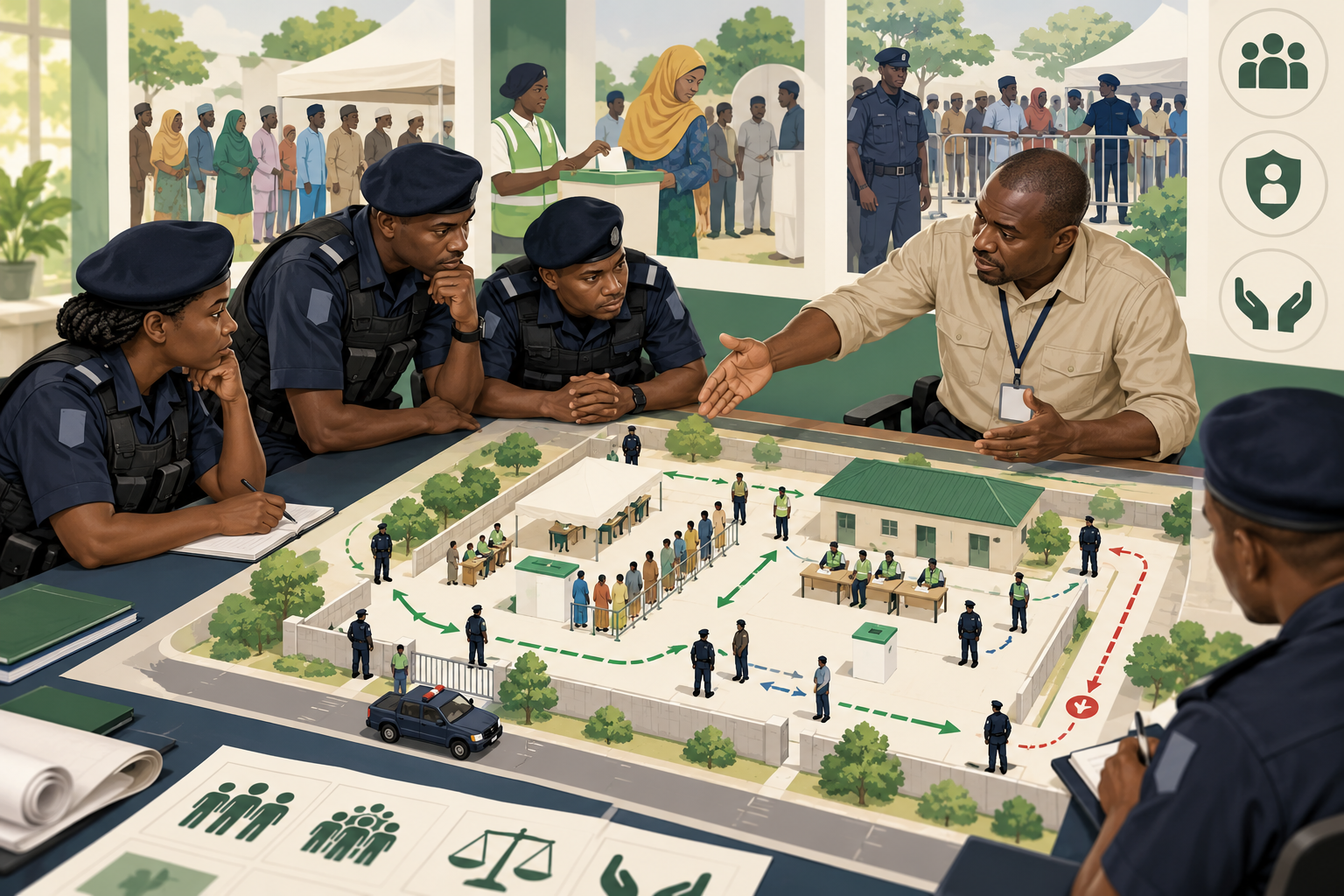
Illustration; not a photograph of the actual training.
Nigeria police election training has begun, with a five-day programme intended to prepare 10,000 officers for duties in 2027, with the first phase covering personnel from 18 states and the Federal Capital Territory. The training opened on October 22 and is designed to set common standards for security operations ahead of the presidential, National Assembly, governorship and state assembly polls.
The target is a training figure, not a published breakdown of how many officers will be deployed to each state or polling area. Reports from the opening say the programme is being run with the Nigeria Police Trust Fund and will cover election security, crowd management, conflict prevention and lawful responses to incidents.
Nigeria police election training: course content
The five-day course is expected to address practical responsibilities officers may face before, during and after voting. Topics reported at the launch include intelligence gathering, rules of engagement, human rights, conflict prevention and crowd control. Those subjects point to a programme focused both on responding to security threats and on setting limits for police conduct around voters, party agents and election staff.
Inspector-General of Police Olatunji Disu said the force must remain neutral and accountable while carrying out election assignments, according to a Police statement reported by Punch. The report also says the police plan a dedicated 24-hour line for complaints during the elections. The Force Public Relations Officer described the training as a nationwide initiative, while the opening phase brings together officers from 18 states and the FCT.
Voice of Nigeria’s account of the launch likewise describes the course as a five-day first phase and says it is intended to establish operational standards for officers. A VON report also cites the planned round-the-clock complaint channel. The two accounts support the central facts about the training, although operational details such as the eventual state-by-state allocation have not been published in the reports reviewed for this article.
Nigeria police election training ahead of 2027 polls
The dates give the training a clear lead-in to the national election calendar. The Independent National Electoral Commission lists January 16, 2027, for the presidential and National Assembly elections, followed by February 6 for governorship and state assembly elections. The course opened 86 days before the first date on that schedule. The INEC calendar is the official reference for those dates.
That gap leaves time for further preparation, but the launch reports do not specify how many additional training rounds are planned, when the remaining officers will attend, or whether all 10,000 are expected to finish before the January poll. The number should therefore be read as the force’s stated target for the programme rather than evidence that 10,000 officers have already completed training.
The initiative also comes amid wider debate about the structure and accountability of policing in Nigeria. CrispNG has previously examined the legislative progress and outstanding questions around the state police bill. The election course addresses near-term operational readiness; it does not by itself resolve broader questions about oversight, public confidence or how complaints will be investigated.
What we don’t know yet
The published accounts do not name the 18 states in the first phase or give a timetable for the rest of the country. They also do not explain how officers will be selected, what assessment will show that trainees have met the course standard, or how the force will monitor compliance with human-rights and neutrality requirements during election duties.
The proposed complaint line could give voters a direct channel during a tense period, but its number, operator, escalation process and public launch date have not been announced in the reports reviewed. Those details will matter: a hotline is most useful when people know how to reach it and what happens after a report is made. The police have also not published the staffing or response arrangements that would allow the public to assess how quickly complaints can be handled.
For now, the confirmed development is the start of a five-day first phase for officers from 18 states and the FCT, within a wider 10,000-officer target. The next useful updates would be a published training timetable, a breakdown of participating states and the complaint line’s operating details. Until then, the course marks a preparation step, while its reach and accountability measures remain to be demonstrated.
Sources
- Police statement (Punch)
- VON report
- INEC calendar