

What England’s £432m rough-sleeping pledge actually promises

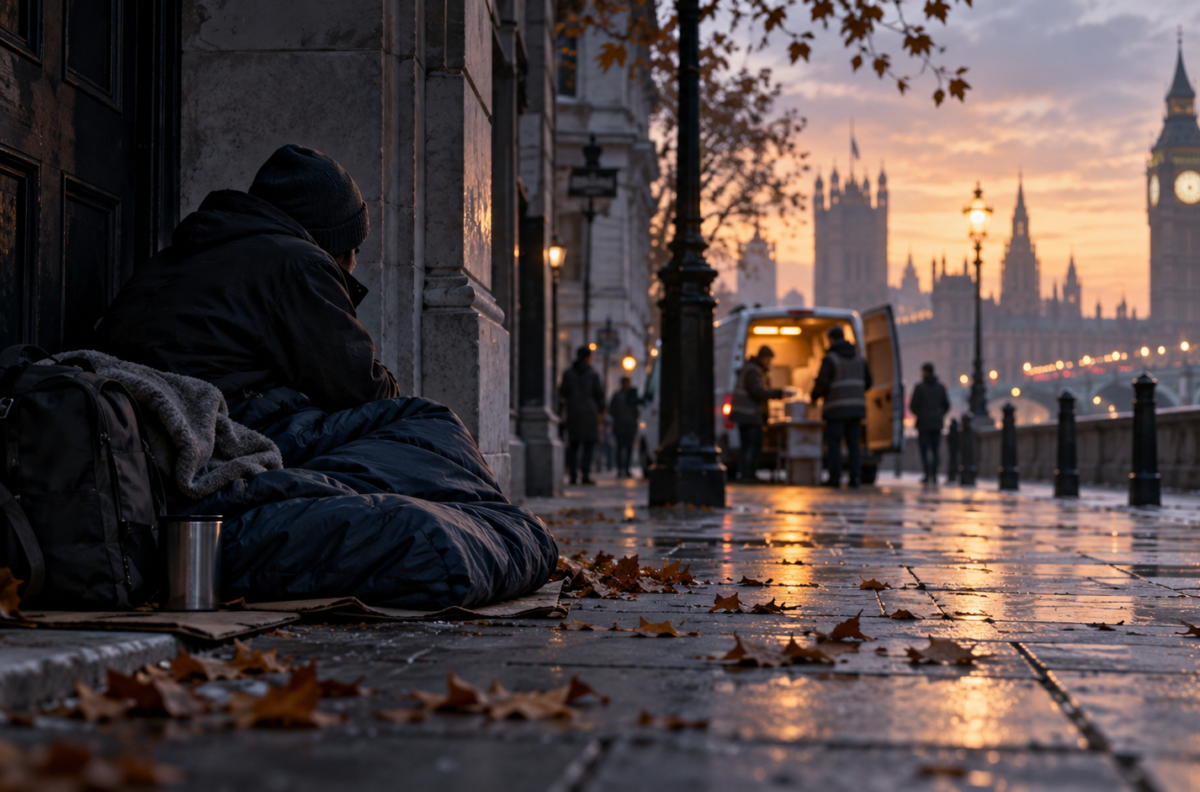
Clearly labelled illustration. It does not depict a real person or event.
England’s latest rough-sleeping announcement doubles the government’s stated investment to £874 million, but the Christmas goal is framed as an offer of a route off the street or wider support. It is not a confirmed count of people already moved into permanent homes.
What the £432 million changes
The government says the additional £432 million will extend support beyond March 2027 and through to the end of the current Parliament. It adds to an initial £442 million package announced in August. The new money is still to be confirmed in Wednesday’s Budget, so the announcement sets out a commitment and direction, while the final funding details are pending.
That distinction matters: the headline total describes planned public investment, not a published breakdown of how much will go to each council, service or type of accommodation. The announcement says specialist outreach teams and new bedspaces are already operating in Coventry, with further provision planned in Plymouth and Camden.
The Christmas promise is about an offer of help
The government’s wording is that everyone sleeping rough will be offered a route off the street or wider support before Christmas. The announcement does not say that every person will have moved into settled housing by then, nor does it publish a measure showing how many offers have already been made. That makes the precise test for success an open question as the plan is rolled out.

Why the latest rough-sleeping figure matters
The latest annual one-night snapshot for England estimated 4,793 people were sleeping rough on a night in autumn 2025. The official figure was a record high, up 3% from 2024 and 171% above the first comparable snapshot in 2010. It is a point-in-time estimate, not a count of everyone who experienced rough sleeping over the year; government data also shows the numbers of people moving onto and off the street are higher across a month.
The figure gives the pledge a clear baseline, but it cannot by itself show whether the new programme is succeeding. A later snapshot, alongside published information on offers, placements and sustained accommodation, will be needed to assess progress.
What remains to be clarified
The announcement points to a National Housing Federation effort to identify at least 2,000 potential homes and bedspaces. “Potential” is important: identifying options is not the same as those places being ready, available in the right locations or suitable for people with different support needs.
The next useful detail is therefore not only the final budget figure. Readers will need to see how the money is allocated, what councils are expected to provide, how an offer of support will be recorded, and how the government will track whether people can remain in accommodation after the winter period. The pledge is a substantial funding commitment; its practical test will be whether support leads to safe, sustained housing.

Sources: UK government announcement on the additional funding; official rough-sleeping snapshot for autumn 2025; the original £442 million package announced in August; and Reuters’ report on the announcement.