

Niger replaces Army Chief after Niamey Mutiny: things to know

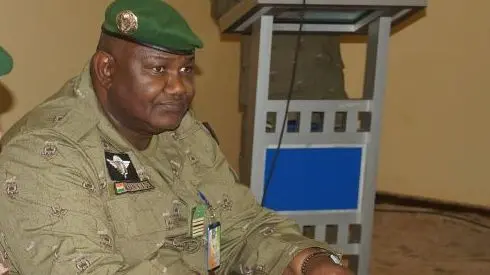
Niger replaces army chief Moussa Salaou Barmou after the Base 101 mutiny in Niamey, as insurgent attacks, military tensions and foreign support reshape the country’s security strategy.
Brigadier General Mamane Sani Kiaou has replaced Major General Moussa Salaou Barmou as Niger’s army chief, less than two weeks after soldiers seized the strategic Base 101 in Niamey.
The leadership change, announced on state television, highlights growing tensions within Niger’s armed forces and the difficult security environment facing the country’s military government.
General Abdourahmane Abou Zataka was also appointed army chief of staff, according to the decree. Barmou had been a senior figure in the junta that took power after President Mohamed Bazoum was removed in July 2023.
What happened at Base 101?
The reshuffle followed a 24-hour confrontation at Base 101, a major military facility near Diori Hamani International Airport. Young soldiers reportedly detained fellow service members and opened fire at sensitive locations in the capital.
Residents reported heavy gunfire and explosions near the airport, the military base and the presidential palace. Government officials described the incident as an attempted coup and said the situation was eventually brought under control.
Russia’s Africa Corps reportedly provided ground and air support during efforts to retake the facility. Dozens of mutineers were reportedly killed or detained, although Nigerien authorities have not released a final figure. Three presidential guards were also reported dead.
READ ALSO:
Insecurity is Keeping Children Out of School Along Nigeria-Benin Border
The incident was one of the most serious internal challenges to Niger’s military rulers since the 2023 coup.
Why the army chief’s replacement matters
The appointment of Kiaou appears intended to restore discipline and confidence within the military. It also reflects pressure on the junta to improve command structures as insurgent violence continues across parts of the country.
Niger faces attacks from jihadist groups linked to al-Qaeda and Islamic State. Militants operate particularly in areas near the borders with Mali, Burkina Faso and Nigeria, where security forces face difficult terrain, long distances and limited transport and air support.
The mutiny also raised questions about military morale, working conditions and the growing role of foreign forces in Niger’s security operations.
Niger’s military capacity
Niger’s armed forces rely heavily on ground troops. The country has an estimated military force of about 30,000 personnel, including approximately 25,000 active soldiers and 5,000 members of other security agencies.
Its air force is relatively small, with an estimated 26 aircraft, including transport planes, helicopters and attack helicopters. Niger has no specialised fighter jets, aerial refuelling aircraft or navy because it is landlocked.
The country also has around 1,550 armoured vehicles but no battle tanks, self-propelled artillery or large-scale rocket systems. These limitations make it difficult to respond rapidly to attacks across Niger’s vast territory.
Foreign military support
Niger’s security strategy has changed significantly since the junta ended military cooperation with France and the United States. The country has strengthened ties with Russia and coordinated more closely with Mali and Burkina Faso through their Sahel alliance.
RE
Russian personnel are reportedly stationed near the airport in Niamey, where Base 101 is located. Their involvement in the response to the mutiny demonstrates Niger’s increasing reliance on foreign support to protect strategic military and political sites.
Weapons found after the mutiny
Niger’s army later reported recovering heavy weapons, rockets, explosives and large quantities of ammunition from Base 101. State broadcaster Tele Sahel described the discovery as a serious threat to Niamey and other military facilities.
The weapons raised concerns about how they were obtained and why they were stored at a sensitive base near the international airport.
Key takeaway: Replacing the army chief may help Niger’s junta tighten military control, but it will not by itself resolve insurgent violence, limited military capacity or divisions within the security forces.
Frequently Asked Questions
Why did Niger replace its army chief?
The replacement followed the mutiny at Base 101 in Niamey. It is widely viewed as an effort to strengthen military discipline and restore confidence in the chain of command.
Who is Niger’s new army chief?
Brigadier General Mamane Sani Kiaou was appointed army chief. General Abdourahmane Abou Zataka was also named army chief of staff.
What happened at Base 101?
Soldiers reportedly detained colleagues and attacked strategic locations near the international airport. Government forces later regained control, reportedly with assistance from Russia’s Africa Corps.
How strong is Niger’s military?
READ ALSO:
Military coups in Nigeria: History, 2025 plot, and democratic stability
Niger has an estimated 30,000 military and security personnel. Its forces rely mainly on ground operations and have limited air power, heavy weapons and logistical capacity.
Does Niger have foreign military support?
Yes. Since ending defence cooperation with France and the United States, Niger has expanded security ties with Russia and neighbouring military-led governments in Mali and Burkina Faso.
Is Niger facing an insurgency?
Yes. Jihadist groups linked to al-Qaeda and Islamic State continue to carry out attacks, especially in border regions and rural areas.