

Insecurity is Keeping Children Out of School Along Nigeria-Benin Border

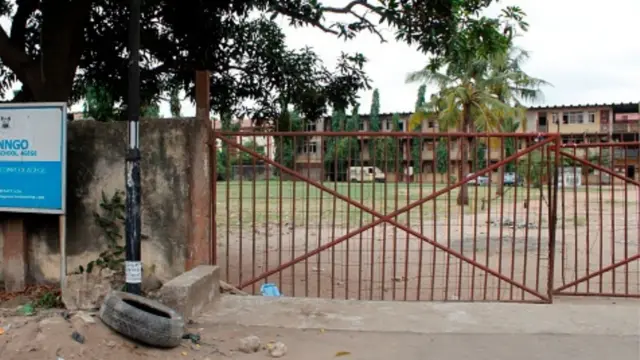
As Nigerian schools prepare to reopen for the 2026/2027 academic session, some children living along the country’s border with Benin Republic will not be returning to their classrooms.
Their absence is not because of a teachers’ strike, a disease outbreak or a lack of school facilities.
They are staying away because the communities where they live are considered too dangerous.
In Niger State, schools in several communities around the Kainji forest corridor have remained closed as armed groups continue to threaten residents.
Mukadas Dindey, a zonal education officer in Borgu Local Government Area, told PREMIUM TIMES that virtually all schools in terrorised villages in the area have been closed since 2025.
Only schools in the garrison towns of Wawa and New Bussa are expected to resume when the new academic session begins on September 14.
An official of the Niger State Ministry of Education also confirmed that the affected schools would remain closed for security reasons.
The situation means that for some Nigerian children, the new academic year will begin without the familiar routine of returning to school.
Why schools are staying closed
The affected communities lie around the Kainji forest corridors stretching through Niger and Kwara states and sharing a frontier with Benin Republic.
The area has increasingly become part of a wider security challenge involving jihadist groups and other armed organisations operating across the Sahel and West African borderlands.
The danger is no longer limited to attacks on residents.
Schools themselves have become targets.
In June, Dekera Central Primary School in Niger State was reportedly set ablaze after residents had been forced to pay a N10 million levy.
According to a displaced resident, the attackers later returned to the community and abducted the school’s headmaster.
The violence has made it difficult for communities to maintain basic services, with residents reporting difficulties accessing schools, farms, markets and roads. Teachers have also become targets.
For education authorities, reopening a school in such an environment could expose pupils and teachers to serious danger.
That is why schools in some communities will remain closed until security agencies determine that they are safe.
It is not only Nigeria
The security problem extends across the border.
In neighbouring Benin Republic, schools in 10 northern communes have remained closed at the beginning of the new academic year because of concerns about possible terrorist attacks.
Authorities have instead directed pupils from the affected communities to schools in areas considered safer.
Benin’s government said the affected areas face security threats linked to armed groups operating near its borders with Burkina Faso and Niger.
The developments on both sides of the frontier show how insecurity in the Sahel is increasingly affecting ordinary services that communities depend on.
A school may be several kilometres away from an active conflict zone, but if the roads leading to it are unsafe or armed groups can reach the community, education can quickly become impossible.
A growing regional security problem
The situation around the Nigeria-Benin border is part of a wider expansion of jihadist activity across the region.
An analysis by the Armed Conflict Location & Event Data project found that violent events involving jihadist groups in Benin’s Alibori and Borgou departments, Niger’s Dosso region, and Nigeria’s Sokoto, Kebbi, Niger and Kwara states increased by 86 per cent in 2025 compared with 2024.
The associated number of fatalities increased by 262 per cent over the same period.
ACLED attributed the expansion partly to limited state presence, weak border controls and declining regional security cooperation.
The changing security landscape has also brought more armed groups into areas that were previously not considered major theatres of jihadist violence.
The Kainji axis has recorded attacks involving groups with different affiliations, including Boko Haram, Ansaru, Lakurawa, bandits and the al-Qaeda-linked Jama’at Nusrat al-Islam wal-Muslimin, or JNIM.
In October 2025, JNIM claimed its first attack in Nigeria, further complicating an already difficult security environment around the Kainji area.
The cost goes beyond a closed classroom
Closing a school may protect children from an immediate attack, but it creates another problem.
The longer schools remain closed, the further children fall behind their peers.
For children in rural communities, losing access to school can mean losing an entire academic year.
It can also increase the risk of child labour, early marriage, displacement and other forms of vulnerability.
The problem becomes even more serious when teachers are also forced to leave.
A school cannot function simply because a building remains standing. It needs teachers, pupils and a community that feels safe enough to support regular attendance.
That is increasingly difficult in communities where residents are fleeing violence or paying levies to armed groups simply to remain alive.
Nigeria’s school security problem is getting wider
The situation along the Benin frontier also fits into a larger national pattern.
Nigeria has experienced repeated mass abductions from schools since the Chibok kidnapping in 2014.
But the geography of the problem has changed.
Data compiled by PREMIUM TIMES show that Nigeria recorded 13 mass school kidnapping incidents involving 674 students and staff during the first three years of President Bola Tinubu’s administration.
The newspaper’s analysis compared that with three incidents involving at least 120 victims during the first three years of former President Muhammadu Buhari’s administration.
The figures underline the fact that attacks on schools are no longer confined to one part of Nigeria.
The November 2025 attack on St Mary’s Catholic School in Papiri, Niger State, in which more than 300 students were reportedly kidnapped, demonstrated how far the threat had moved from the traditional Northeast and Northwest theatres of insurgency and banditry.
What happens to the children?
For now, the immediate solution is relocation.
Authorities in Benin have moved pupils from affected communities to safer areas, while Nigerian officials say schools can only reopen when security assessments show that it is safe to do so.
But relocation is not always simple.
Children may have to travel farther to reach school, while displaced families may lack the money or means to transport them.
Some may simply stop attending.
That is why the closure of schools should not be treated as an ordinary consequence of insecurity.
It is a measure of how deeply violence has penetrated everyday life.
When armed groups can determine whether a child attends school, whether a teacher reports for work or whether a community can use its roads and markets, the security crisis has moved beyond isolated attacks.
It has begun to shape the basic functioning of society.
The bigger challenge
The Federal Government has repeatedly emphasised the need to make schools safe, while security agencies have increased preparations ahead of the new academic session.
The Federal Ministry of Education has said all Federal Unity Colleges will reopen on September 14, with security agencies maintaining heightened vigilance around the schools.
But communities along the Kainji corridor face a different reality.
For them, the question is not simply whether schools should reopen.
It is whether children can travel to school and return home without becoming targets.
Until that question has a convincing answer, classrooms in some of Nigeria’s border communities may remain empty.
And every empty classroom represents more than a school closure.
It is another sign of how insecurity is steadily taking away ordinary opportunities from children who have done nothing wrong except grow up in a dangerous part of the country.