

France protests: arrests halve as unions call for more action

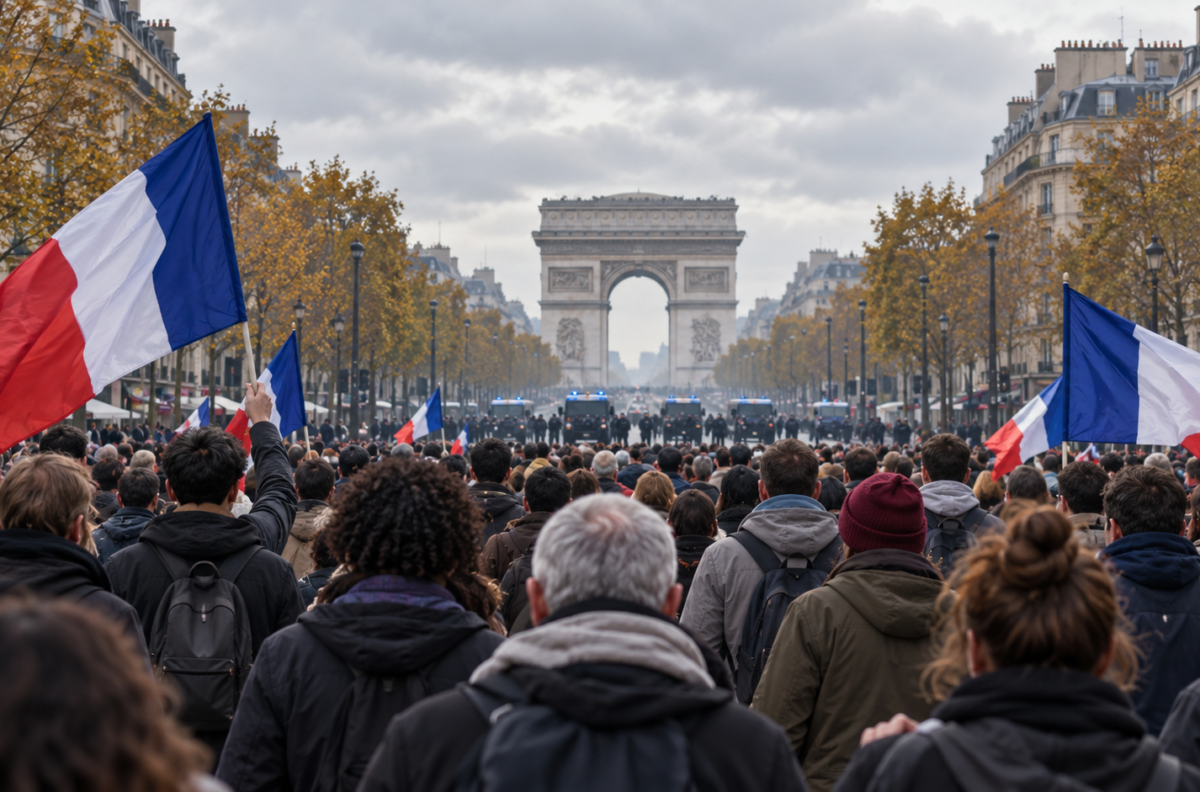
AI-generated illustration; not a photograph of the 24 October demonstrations.
France protests on 24 October drew hundreds of thousands of people, but the Interior Ministry’s provisional figures show a sharp drop in arrests, injuries to officers and fires compared with the previous Saturday. The government counted 410,000 demonstrators; the CGT union estimated nearly 800,000. The figures explain why the scale remains contested—and why unions say they will keep up pressure.
What the latest official tally says
In a statement published on Sunday, France’s Interior Ministry counted 289 public actions and 410,000 participants nationwide, including 110,000 in Paris. It said 1,314 people had been arrested by 7:30 a.m. Sunday, 53 members of the security forces were injured and firefighters responded to 75 fires. The ministry also reported 24 shops looted. It called the balance provisional, with investigations continuing.
The ministry’s same-day comparison with 17 October was 550,000 participants, 2,628 arrests, 1,144 officers injured and 2,025 fire interventions. Its wording describes 1,522 shops as “affected” last week, while this week’s figure counts shops looted; those categories are not directly equivalent. These are the ministry’s figures, not an independent audit.
Why do turnout estimates differ?
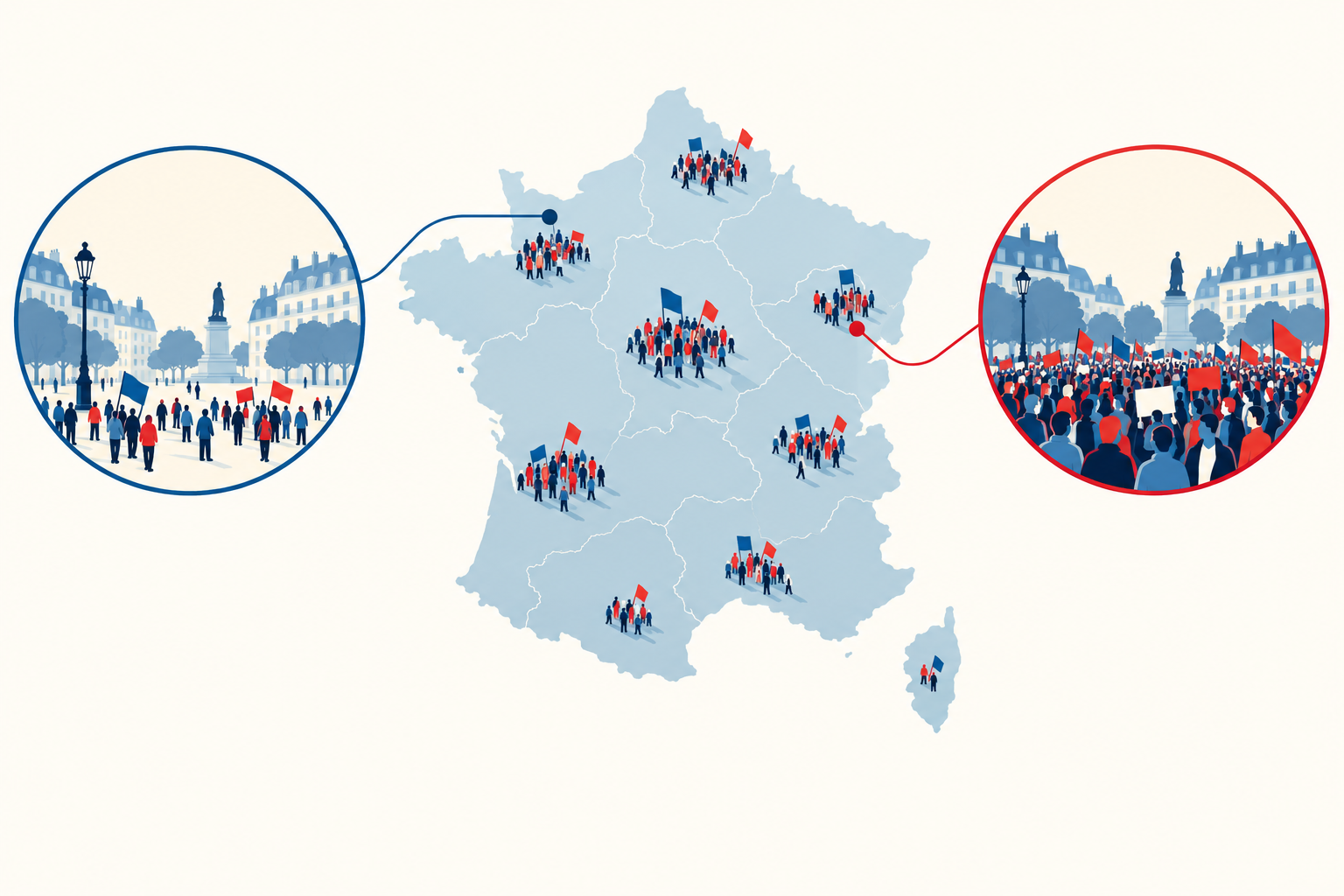
The Interior Ministry counted 410,000 marchers. The CGT union put the total close to 800,000 and its Paris estimate at 250,000, compared with the ministry’s 110,000. The estimates come from groups with different methods and interests; no single independent headcount settles the gap. They show a large mobilisation, but should not be used as a precise poll of public opinion.
Saturday’s demonstrations followed weeks of student action over staff shortages, crowded classrooms and deteriorating school buildings. Labour unions and other groups broadened the focus to wages, living costs and public services. CrispNG previously explained why school protests spread across France.
What happens next after France protests?
Reuters reported Sunday that unions and protest groups called for further marches next Saturday and a nationwide strike on 5 November. The government has begun talks with union and student representatives, but protest leaders say its response has not addressed their concerns. The next test is whether turnout holds as the coalition broadens and whether talks produce specific commitments.
The latest arrest and injury totals were lower than the Interior Ministry’s figures for the previous Saturday, after about 70,000 police and gendarmes were deployed. That decline does not establish that tensions have ended: the ministry said incidents occurred in several cities, and its Sunday balance was still provisional. Nor does the size of the crowd answer what policy changes the government will make.
Sources: France Interior Ministry: provisional 24 October balance and comparison with 17 October; Associated Press: turnout estimates and demonstrations; Reuters: calls for further marches and a 5 November strike.