

Kenya bus crash kills 22 on highway stretch flagged as a black spot


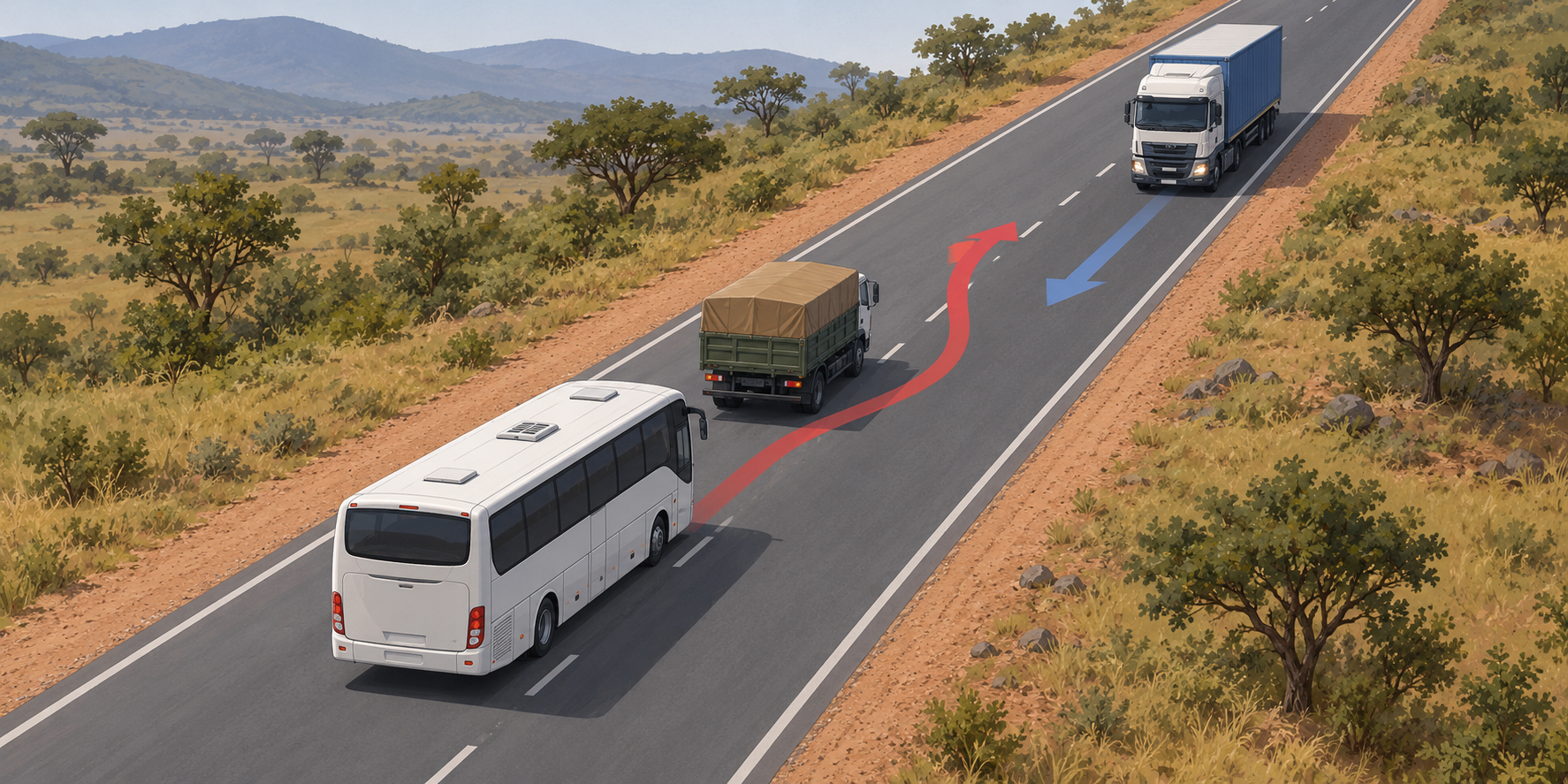
Illustration: generic rural Kenyan highway traffic; this does not depict the Kanga crash.
A collision between a passenger bus and a lorry at Kanga in Makueni County has left 22 people dead, according to police and local officials cited by the Associated Press. The crash happened on the Nairobi–Mombasa highway, a route where another fatal collision was reported only weeks earlier.
The immediate question is what investigators know about this crash. The broader one is whether known danger points on the highway have received the safety changes authorities previously recommended.
What is confirmed about the Kanga crash
Kenya’s National Transport and Safety Authority (NTSA) said the collision occurred near Kanga on Sunday morning. The Standard reported that Makueni officials confirmed 22 deaths, including people who died after being taken to hospital. Early reports gave a lower toll; the figure rose as officials updated their accounts.
The Associated Press reported that the crash involved a bus and a truck and that the road links Nairobi with the port city of Mombasa. It also noted that 17 people were killed in a separate crash on the highway about three weeks earlier. The two incidents are distinct; the confirmed toll from one should not be confused with a corridor-wide annual total.
Why the location is drawing renewed scrutiny
AP reported that NTSA had designated the stretch as an accident black spot and had made safety recommendations. A designation flags a location for attention; it does not, by itself, establish what caused this particular collision or prove that every recommended measure was absent.
Kenyan newspaper Daily Nation has also documented a series of serious crashes on parts of the Nairobi–Mombasa road. Its reported totals cover specified incidents and periods, not every road death in the region. That distinction matters: the available figures show repeated major incidents, but they do not establish a single common cause.
What investigators have not established
NTSA’s preliminary account said improper overtaking may have contributed. That is an early assessment, not a final finding. The authority said investigations were continuing with police. The precise sequence, any vehicle or driver responsibility, and the role of road design or traffic controls remain unresolved in the material publicly reported so far.
For readers asking what happens next, the key test is whether the investigation publishes a supported account and whether authorities explain the status of earlier black-spot recommendations. The repeat crashes make that a practical safety question, while the evidence does not yet justify assigning a definitive cause.
Sources: Associated Press reporting; The Standard’s report citing Makueni officials; People Daily’s report on the NTSA preliminary statement; Daily Nation’s highway crash reporting.