

Why Sri Lanka brought 40 Iranian sailors ashore while tankers wait offshore

AI-generated editorial illustration; it does not depict the 40 Iranian sailors, their vessels or the actual operation.
Sri Lanka has coordinated the transfer of about 40 Iranian sailors from vessels off its southern coast for urgent medical care, then helped them return to Iran. The operation was humanitarian, but it took place amid a wider standoff over Iranian commercial ships waiting offshore as U.S. sanctions and the war at sea disrupt routes. The key distinction: medical evacuation is not the same as permission to supply or move the vessels.
What happened to the Iranian sailors off Galle?
Sri Lanka’s Foreign Ministry said the sailors were brought ashore through Galle after a request for urgent medical help. Ministry spokesman Thushara Rodrigo told reporters the Iranian Embassy arranged the transfer and covered its costs. The sailors received treatment and left for Iran by Sunday, according to the ministry’s account reported by The Associated Press and Reuters.
Officials have not publicly identified the vessels or explained the specific medical emergencies. Reuters and AFP reporting described commercial ships and said some were U.S.-sanctioned Iranian tankers; the available accounts do not establish which ship carried each sailor. That leaves an important detail unresolved even though the transfer and repatriation are confirmed.
Why the ships are waiting offshore
Iranian commercial vessels have been unable to return to port amid U.S. sanctions and the U.S. naval blockade of Iranian shipping, according to AP and Reuters. Sri Lankan officials previously said multiple Iranian vessels were anchored outside the country’s territorial sea. The latest reports differ on the fleet count and describe different snapshots, so those figures should not be treated as one live tally.
The Foreign Ministry told Sri Lankan media that the sailors’ vessels were about 24 nautical miles from Galle. Under Article 3 of the UN Convention on the Law of the Sea, a coastal state may establish a territorial sea up to 12 nautical miles from its baselines. The ministry’s distance places the ships beyond that limit, but it does not by itself settle every legal question about their position or status.
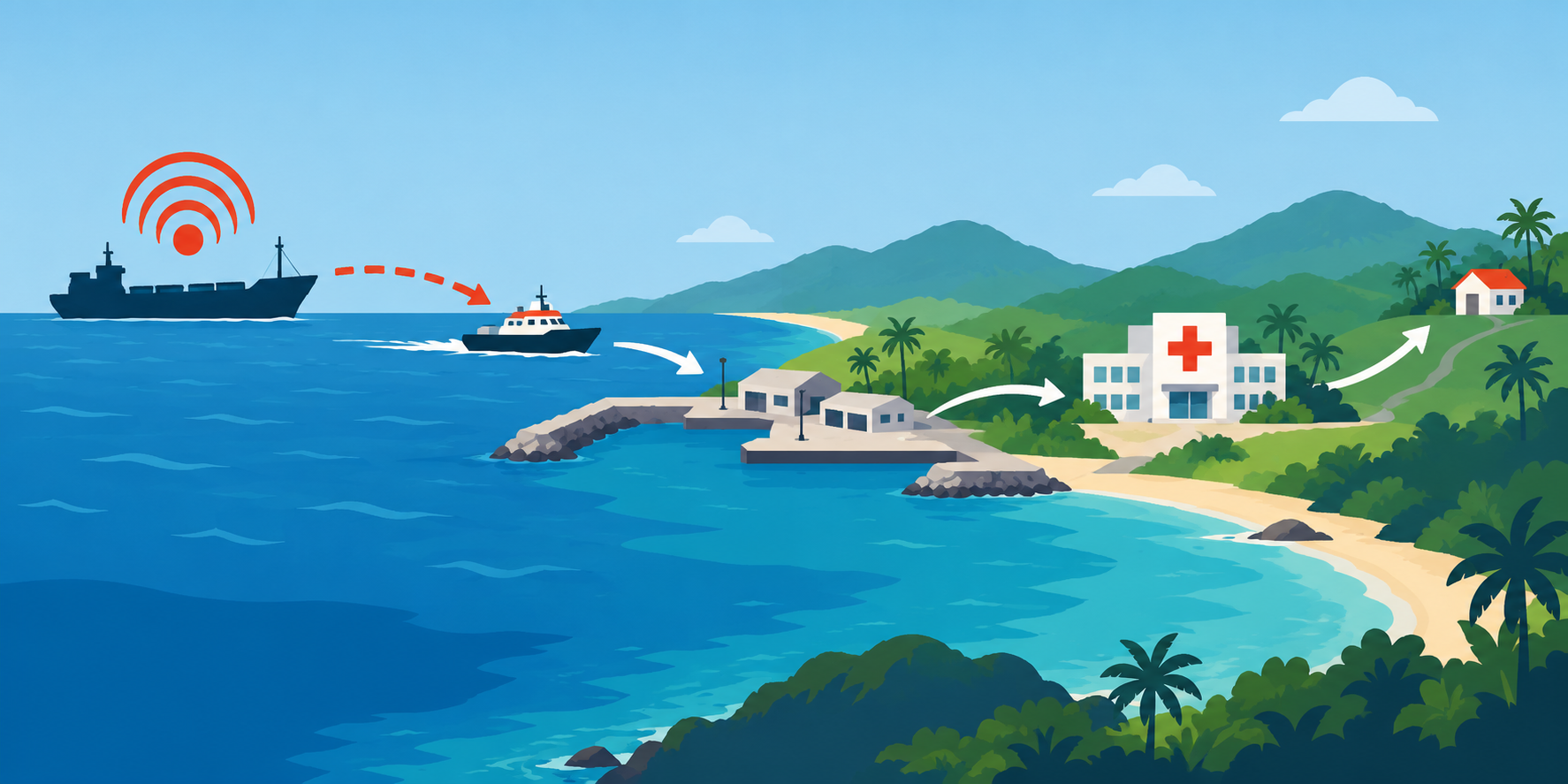
Medical care is separate from resupplying ships
Two weeks before the evacuation, Sri Lanka said it had no immediate plan to provide supplies or other facilities to Iranian ships, citing national interests and the risk of secondary U.S. sanctions, AP reported. In this case, the ministry described a medical response after a distress request, with the Iranian Embassy paying for the transfer. No broader port access, refuelling arrangement or commercial deal was announced.
That distinction matters for Sri Lanka, which has stressed that the vessels are outside its territorial sea while balancing ties with both Washington and Tehran. The government’s public account frames the operation as humanitarian assistance, not a change in its position on the vessels or sanctions.
What remains unknown
Neither the ship names nor the sailors’ diagnoses have been disclosed in the reports reviewed. It is also unclear whether other crews still offshore need urgent treatment or what will happen to the remaining vessels. The 40 sailors’ return to Iran closes this medical transfer; it does not resolve the wider maritime standoff.
The episode is separate from the March sinking of the Iranian warship IRIS Dena near Sri Lanka, when the Sri Lankan Navy rescued survivors. CrispNG’s earlier report explains that incident, which involved a naval vessel and a U.S. submarine attack rather than the current medical evacuation from commercial ships.
Sources
- Associated Press: Sri Lanka provides medical help and repatriates 40 Iranian sailors
- Reuters: Sri Lanka rescues 40 Iranian sailors
- Sri Lanka Foreign Ministry statement reported by Daily Mirror
- UN Convention on the Law of the Sea, Article 3