

France student protests: Why hundreds of schools have closed as unrest spreads

Hundreds of schools have closed across France as high school students protest over classroom conditions, teacher shortages and concerns about funding for education.
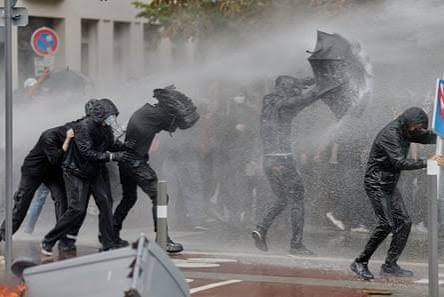
The demonstrations, which began around schools in the Paris region in September, have spread to several parts of the country and have increasingly turned violent, with students clashing with police and some protesters setting fires or throwing fireworks.
About 400 of France’s roughly 3,700 high schools were closed on Friday, October 2, while hundreds more reported protests or other disruptions, according to the education ministry.
The unrest has also resulted in arrests and injuries as authorities struggle to contain the movement.
Here is what to know about the protests.
France student protests: Why are students protesting?
The protests are largely centred on conditions in French secondary schools.
Students have complained about overcrowded classrooms, shortages of teachers, staff absences, deteriorating school buildings and lengthy school days.
Some students have also raised concerns about the condition of classrooms during recent periods of extreme heat, while others have criticised the country’s university admissions system and what they see as inadequate government investment in education.
Students in some schools have reported having classes with around 35 to 40 pupils, while others say teachers are frequently absent without adequate replacements.
The protests therefore began largely as demonstrations over education conditions before spreading into a broader movement.
France student protests: How did the unrest become violent?
The demonstrations initially involved students blocking access to schools.
However, some protests later escalated into clashes with police and incidents of vandalism.
Authorities reported fires, fireworks being directed at police and other acts of violence in cities including Strasbourg, Marseille, Rennes and areas around Paris.
In some locations, rubbish bins and other objects were set on fire, while police used tear gas to disperse protesters.
The government has said the protests have moved beyond peaceful demonstrations in some areas and described the violence as a serious security concern.
Students and rights groups, however, have raised concerns about police tactics, including the use of tear gas and other crowd-control measures. France’s interior ministry has said investigations have been opened into allegations of police violence.
France student protests: How many schools have been affected?
The scale of the disruption has increased rapidly.
France has about 3,700 high schools, known as lycées. By Friday, the education ministry said about 400 had been closed, while 560 had experienced protests or disruptions since the start of the day.
The number represents a significant disruption to secondary education across the country.
The protests have spread beyond Paris to cities including Marseille, Strasbourg, Rennes, Nantes, Bordeaux and Lyon.
Some schools have been blocked by students, while others have been closed as authorities respond to security concerns.
France student protests: How many people have been arrested?
French authorities have made a large number of arrests since the protests began.
Justice Minister Gérald Darmanin said about 2,000 people had been arrested since the demonstrations started, with most of those detained being teenagers.
Le Monde, citing the interior ministry, reported that 1,949 people had been arrested as of Thursday, mainly over offences involving public officials, violence and unlawful assembly.
The unrest has also resulted in injuries.
Education Minister Édouard Geffray said 65 education workers had been injured, including 40 school principals. Police and other emergency personnel have also suffered injuries during confrontations.
France student protests: What does the government say?
The French government has acknowledged that some of the students’ concerns are legitimate but has strongly condemned the violence accompanying some demonstrations.
Officials have argued that peaceful protest is different from attacks on police, damage to property and fires around schools.
Government ministers have also suggested that people from outside the student movement may have contributed to the violence.
Justice Minister Darmanin said the movement had been hijacked by outsiders and called for parents to pay for damage caused by their children.
The government has also been holding discussions with student and parent organisations as it seeks to reduce tensions.
France student protests: Is education funding part of the problem?
Education funding is one of the major issues behind the current unrest.
The government’s draft 2027 budget proposes increasing education spending by 1.7% to €65.53 billion, excluding teacher pensions. The proposed increase is below the rate of inflation.
Students and education unions argue that schools already face shortages of teachers and resources.
The funding debate is also taking place within a wider discussion about France’s public finances.
Under the draft budget, debt-servicing costs are expected to reach €74.5 billion, meaning they would become larger than education spending.
This has added pressure to the government’s plans as it attempts to control public spending while responding to demands for better public services.
France student protests: Will teachers join the protests?
The unrest has also spread to the teaching profession.
Education unions have announced a nationwide teachers’ strike for Tuesday as the dispute over working conditions, funding and public spending continues.
Teachers and students have some shared complaints, particularly over staff shortages and classroom conditions.
The development could increase pressure on the government if school protests and industrial action continue at the same time.
France student protests: Could the unrest spread beyond France?
The movement has already shown signs of crossing France’s borders.
High school students in Liège, Belgium, also began protesting, with schools in the city reportedly affected by the unrest.
However, the main demonstrations and the largest disruption remain in France.
For now, the French government is facing pressure from students, teachers and unions while authorities attempt to prevent further violence.
The protests began with complaints about everyday conditions inside schools, but the movement has grown into a wider confrontation over education funding, public services and the government’s approach to spending.
With hundreds of schools closed and further industrial action planned, the coming days will determine whether the unrest subsides or develops into a broader national movement.