
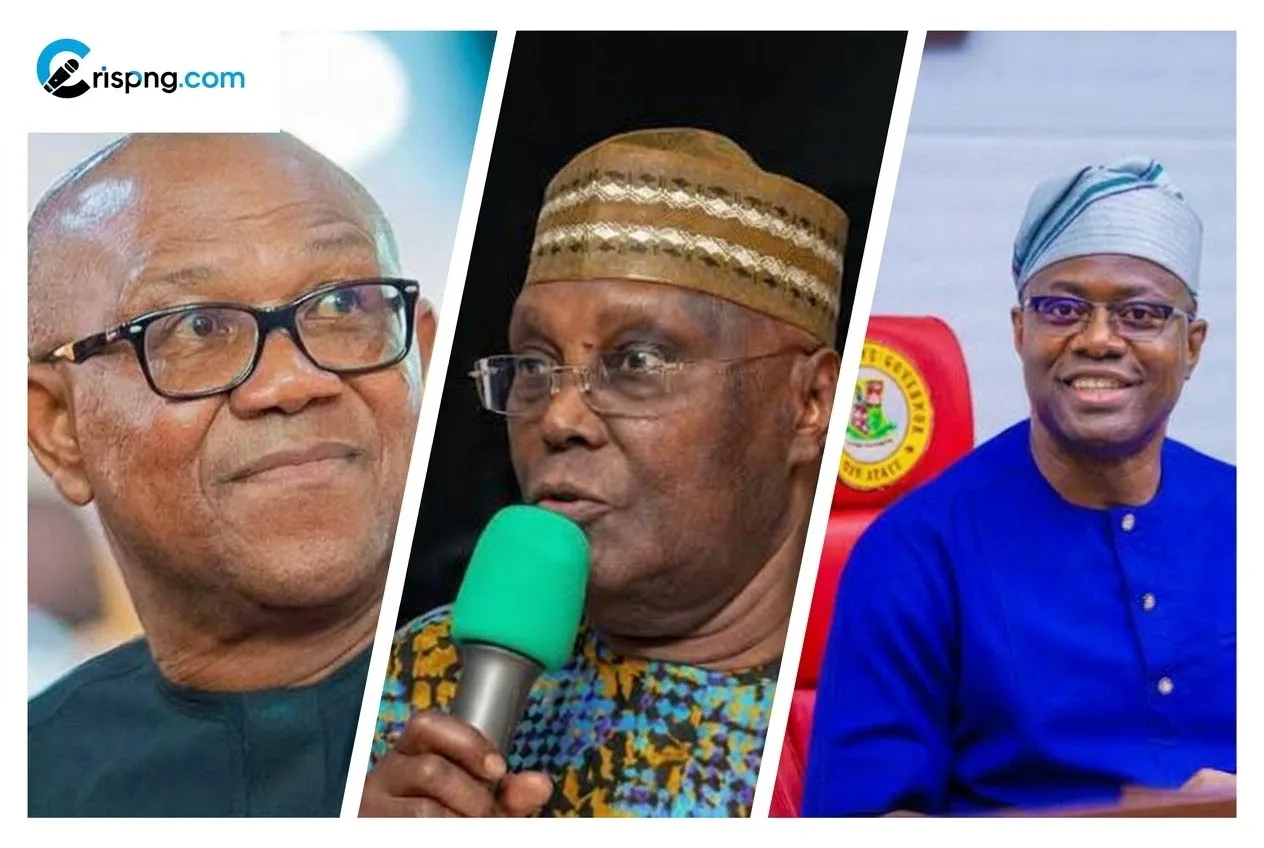
As Atiku Abubakar, Peter Obi and Seyi Makinde prepare for another round of opposition coalition talks, Nigeria’s electoral law has already closed the ordinary window for candidates to formally withdraw from the January 2027 presidential election.
The planned meeting between the three opposition politicians in Abuja on November 30 has renewed questions about whether they can agree to support one presidential candidate.
Atiku is the African Democratic Congress (ADC) candidate, Obi represents the Nigeria Democratic Congress (NDC), while Makinde is the candidate of the Allied Peoples Movement (APM).
Their discussions come as six opposition parties prepare to sign a cooperation agreement at the second Opposition Summit. The parties want to develop a common strategy ahead of the January 16, 2027 presidential election.
However, their separate presidential ambitions present a major challenge. If they eventually agree to support one candidate, can the others legally withdraw?
The answer is complicated because the Electoral Act has already set a deadline for voluntary withdrawal.
The deadline for withdrawing from the presidential race has passed
Section 31 of the Electoral Act 2026 allows a candidate to withdraw by submitting a personally signed written notice and sworn affidavit to the political party that nominated him.
The party must then forward the documents to the Independent National Electoral Commission (INEC) not later than 90 days before the election.
With the presidential election scheduled for January 16, 2027, the deadline fell on October 18, 2026.
That date has passed. Consequently, Atiku, Obi and Makinde can no longer rely on the ordinary statutory procedure to withdraw their nominations.
The provision is important because announcing support for another candidate is not the same as formally withdrawing from an election.
A politician may abandon his campaign, stop seeking votes and endorse another contender. However, such a political decision does not automatically remove his name from INEC’s candidate list.
The distinction also means that an opposition agreement cannot, by itself, produce a single candidate on the ballot.
Read also: Will Electoral Act 2026 Guarantee Credible Elections in 2027?
Can their political parties replace them?
Section 33 of the Electoral Act addresses the replacement of nominated candidates.
It states that a political party cannot change or substitute a candidate whose name has been submitted to INEC, except in cases of death or withdrawal.
Where a candidate dies or withdraws, the affected party must conduct another primary within 14 days and submit a replacement to the Commission.
However, this provision must be read alongside Section 31, which establishes the 90-day deadline for communicating a withdrawal.
The two provisions do not give political parties an unrestricted opportunity to replace candidates whenever they reach a new political agreement.
Therefore, the parties cannot simply announce a new presidential candidate because their original nominees have agreed to support someone else.
The legal question becomes even more complicated if a candidate announces a late withdrawal and the party attempts to invoke Section 33. The Electoral Act does not expressly provide a routine post-deadline exception for a voluntary withdrawal made to accommodate a coalition agreement.
Any attempt to pursue such a route could face legal challenges.
Read also: ADC Court Judgment: Can David Mark Save Atiku’s 2027 Ticket?
Atiku has already rejected claims that he will step down
The coalition discussions have already generated speculation about which politician might abandon his presidential ambition.
On November 22, Atiku dismissed reports that he was withdrawing from the presidential race after some support groups endorsed Obi.
In a statement issued through his campaign communication team, the former vice-president maintained that he remained in the contest.
He also said no organisation claiming to represent his supporters had the authority to withdraw him from the election.
The statement came after a coalition of groups previously associated with Atiku announced support for Obi’s presidential ambition.
Meanwhile, Makinde has confirmed discussions with both Atiku and Obi. In a November 13 interview with Arise News, he said the opposition could become rivals or collaborators, depending on the outcome of their consultations.
He declined to endorse either politician, saying the parties should consider candidates’ manifestos, previous performance and public sentiment before reaching a decision.
Read also: Atiku Abubakar at 80: 10 Things to Know About His Life
A coalition does not necessarily require a merger
Another important distinction concerns the nature of the proposed opposition arrangement.
The parties could cooperate without merging into a new political party. They could also agree to endorse one candidate while retaining their individual structures and identities.
Section 81 of the Electoral Act provides that political parties intending to merge must give INEC nine months’ notice before a general election and obtain the Commission’s approval.
The statutory merger process is therefore different from an electoral alliance or cooperation agreement.
The Coalition for Democracy, which includes the ADC, APM, NDC, PRP, SDP and a faction of the PDP, has said its November 30 summit will consider three documents.
These include the National Covenant for Democratic Renewal, the Framework for Opposition Unity and the National Reform Programme.
The documents are expected to provide a framework for cooperation. However, the coalition has not publicly announced a final formula for selecting one presidential candidate.
Read also: 2027 Elections: Seven Things Nigerians Should Know Before Voting
What happens if they agree to support one candidate?
If the politicians agree to support one contender, the others could endorse that candidate and direct their supporters towards the agreed platform.
Their parties could also coordinate campaign activities, mobilise voters and cooperate on election monitoring.
However, unless a legally recognised process changes their nominations, their names could remain on the ballot alongside the candidate they have endorsed.
This creates a difficult political situation. Supporters of different opposition parties may receive instructions to vote for one candidate while their original parties still have presidential nominees listed by INEC.
The November 30 summit could therefore produce an agreement on cooperation without resolving the question of a single presidential candidate.
For Atiku, Obi and Makinde, the challenge is no longer simply deciding who should lead the opposition. They must also determine how any agreement can operate within an electoral process that has already moved beyond the ordinary deadline for withdrawing and replacing candidates.