Ahead of the 2027 elections, ANJOLAOLUWA OGUNPITAN, in this report for CrispNG, examines several key issues driving conversations, particularly the amended Electoral Act 2026, signed into law by President Bola Tinubu.
Another election cycle is here again, and as expected, the political landscape is buzzing. From social media platforms to the streets, tongues are wagging as Nigerians debate various election-related issues.
A major bone of contention is the amended Electoral Act 2026, signed into law by the President Bola Tinubu-led administration.
BACKGROUND
In February 2026, the National Assembly passed an updated electoral framework known as the Electoral Act 2026.
The development had followed the controversies that trailed the 2023 general elections and the need for a more credible system in future polls across the country.
The composition of the bill initially triggered several arguments among its proponents and critics. In spite of this, President Bola Tinubu eventually signed it into law.
The new law replaced the previous Electoral Act (2022) with the intention of reforming Nigeria’s election system ahead of the 2027 general elections.
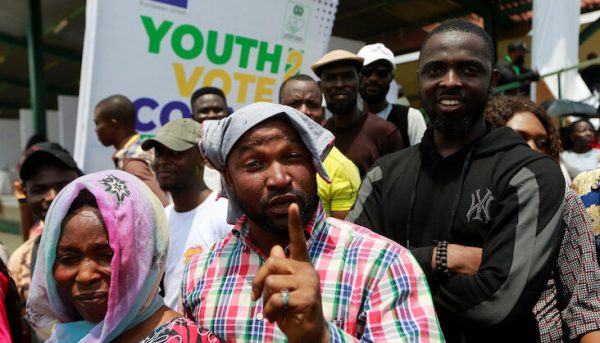
People wait to get registered during the INEC voters registration exercise at the Area 10 centre in Abuja, Nigeria June 23, 2022. REUTERS/Afolabi Sotunde
EXPLAINED: WHAT IS THE ELECTORAL ACT 2026 ALL ABOUT?
The amended Electoral Act 2026 is unique because of key changes introduced. The first of such is making electronic transmission of results mandatory.
A major controversy around the 2023 general elections was over the transmission of results from polling units to the final collation centres.
The 2022 Act used words like “may,” which led to conflicting interpretations and allowed some results to be manually collated without being digitally uploaded first.
What has changed?
The amended 2026 Act, however, makes the electronic transmission of results from every polling unit to the INEC Result Viewing (IREV) portal as a primary method.
Section 60(3) of the Act stated:
The Presiding Officer shall electronically transmit the results from each polling unit to IREV portal, and such transmission shall be done after the prescribed Form EC8A has been signed and stamped by the Presiding officer and/or countersigned by the candidates or Polling agents where available at the Polling Unit.
It, however, stipulated that manual collation via Form EC8A should be considered as a mandatory fallback if electronic transmission fails due to network issues
This new law severely limits the opportunity for anyone to alter results between the polling unit and the final collation center.
Proper party primaries
Over the years, eyebrows have always been raised regarding how candidates emerge from a party-political primary. The idea of “party delegates” (often loyal to powerful “godfathers” or influenced by money) has been blamed for the emergence of less popular and weak candidates.
But the Electoral Act 2026 has changed the narrative.
The new law shifts strongly away from indirect primaries (delegate systems). While consensus is allowed under stricter guidelines, the law allows only direct primaries or consensus.
According to Section 84(1) of the Act, “a political party seeking to nominate candidates for elections under this law shall hold primarily for aspirants to all elective positions which shall be monitored by the Commission.”
This form of primaries allows every registered member of a political party the right to vote to choose the party’s flag bearer. Parties must also submit digital registers of their members to INEC before primaries.
The law also stated inSection 87(1) that in the case of a consensus, “A political party that adopts a consensus candidate shall secure the written consent of all cleared aspirants for the position, indicating their voluntary withdrawal from the race and their endorsement of the consensus candidate.”
It also included a clause, which explained that when a political party is unable to secure the written consent of all cleared aspirants for the purpose of a consensus candidate, it shall revert to the choice of direct primaries for the nomination of candidates for the elective positions.
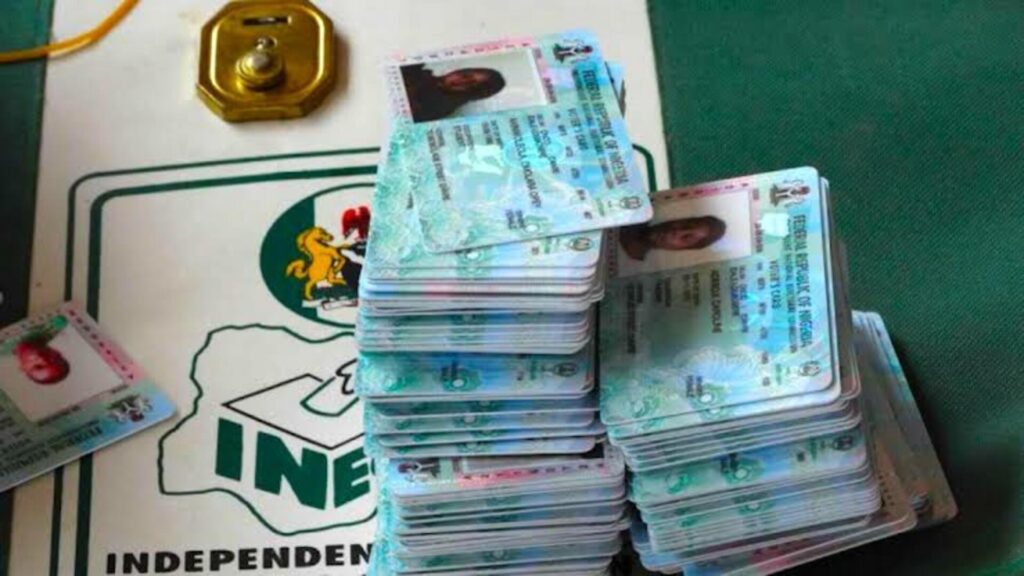
INEC CVR 2026: Has PVC registration ended? Image Credit: INEC
A win for Nigerians? The new law decentralises power within political parties and limits the power of godfatherism and money in the country’s politics. It makes it harder for wealthy individuals to “buy” delegates and easier for party members to select the candidates they genuinely believe in.
Illegal disqualification of qualified aspirants
In recent years, many qualified Nigerians have been affected by internal party politics of major political parties in the country. Candidates who often refuse to succumb or do the bidding of “godfathers” are often dealt with by getting them disqualified from the party primaries.
This seemed to have happened with the disqualification of Governor Godwin Obaseki from the primaries of the APC in Edo State after his fallout with the leader of the party in the state, Sen. Adams Oshiomhole.
According to Section 85 of the new law, “A political party shall not impose nomination, qualification, or disqualification criteria, measures, or conditions on any aspirant or candidate for any election in its constitution, guidelines, or rules for nomination of candidates for elections, except as prescribed under sections 65, 66, 106, 107, 131, 137, 177 and 187 of the Constitution.”
The development gives equal chances to all potential aspirants and further strengthens the democratic system in the country.
Settling election disputes before inauguration
One of the biggest criticisms that trailed Nigeria’s previous electoral system was the prolonged legal uncertainty that often followed elections. Under the old framework, elected officials could be sworn into office while their victories were still being contested in court, creating situations where governors and lawmakers governed for months — and in some cases years — before judicial rulings eventually overturned their elections.
The political tension that followed some off-cycle governorship elections in states like Osun State, Kogi State and Ekiti State exposed the instability such prolonged disputes could create. In several instances, governance itself became entangled in legal battles, while citizens were left uncertain about the legitimacy and permanence of those occupying public office.
To address this, the new Electoral Act 2026 introduces a major shift in Nigeria’s electoral timeline by ensuring that election petitions and legal disputes are concluded before elected officials are inaugurated on May 29. The reform effectively changes the pace of the country’s election calendar, giving the Independent National Electoral Commission (INEC) room to conduct elections much earlier than usual.
Under the revised timetable already unveiled by INEC, Presidential and National Assembly elections will now hold on January 16, 2027, while governorship and State Houses of Assembly elections are scheduled for February 6, 2027 — several weeks earlier than the traditional February and March schedule Nigerians have become accustomed to.
The adjustment may appear administrative on the surface, but experts say it could fundamentally reshape electoral accountability in the country. By concluding litigation before inauguration, the law seeks to eliminate situations where public officers begin exercising power while their mandates remain under judicial scrutiny. In effect, whoever takes the oath of office on May 29 would already have survived the full weight of legal challenges arising from the election.
Stricter penalties for electoral offences
Beyond election timelines, the law also attempts to confront another longstanding problem in Nigeria’s democracy — electoral offences and the culture of impunity surrounding them. For years, vote buying, intimidation, falsification of results and ethnic-driven campaigns have remained recurring features of elections across the country, often weakening public confidence in the democratic process.
The new law introduces stiffer punishments aimed at discouraging such practices. Campaigns built around religion or ethnicity are now prohibited, political broadcasts are banned within 24 hours of elections, while violence, bribery and voter inducement attract tougher sanctions.
Vote buying and selling, in particular, now carry heavier financial penalties, with fines reportedly rising to as much as N5 million alongside possible jail terms. Electoral officials who deliberately manipulate results or obstruct the electoral process also face stricter criminal sanctions under the revised framework.
Supporters of the reforms believe the tougher penalties could help reduce election-related violence and restore some level of credibility to the system, especially in regions where elections have historically been marred by intimidation and financial inducement.
Proper financial monitoring and transparency
The law also turns its attention to the role of money in politics — an issue many analysts describe as one of the greatest threats to Nigeria’s democracy. Over the years, election campaigns in the country have increasingly become financial contests dominated by wealthy political actors capable of deploying enormous resources to influence outcomes.
Under the new provisions, fresh spending limits have been introduced for candidates seeking public office. Presidential candidates are now prohibited from spending more than N10 billion on campaigns, while governorship candidates are capped at N3 billion. Senate candidates are limited to N500 million, House of Representatives candidates N250 million, while State Assembly and Area Council chairmanship candidates cannot exceed N100 million in campaign expenses.
The law further restricts political donations, stating that no individual or organisation is permitted to donate more than N500 million to any candidate, according to Section 92(8) of the Act.
To reinforce compliance, the legislation prescribes penalties for violators. Candidates found guilty of exceeding spending limits risk fines, imprisonment of up to 12 months, or both, under Section 92(9). Individuals who donate beyond the approved threshold also face sanctions, including fines amounting to five times the excess donation.
Accountants and financial agents are not exempted. Under Section 92(11), any accountant who falsifies financial records, conspires to manipulate campaign expenditure documents or aids the concealment of illegal donations could face imprisonment for up to three years, a fine of not less than N5 million, or both.
A new dawn or same old story?
Taken together, the reforms signal an attempt to tighten Nigeria’s electoral system on multiple fronts — from reducing post-election uncertainty to limiting the influence of money and increasing accountability for electoral misconduct. Whether the changes will succeed in reshaping the country’s democratic culture, however, may ultimately depend on enforcement and the willingness of political actors to comply with the rules.