

Samsung Galaxy A18 launches: 5 things that stand out

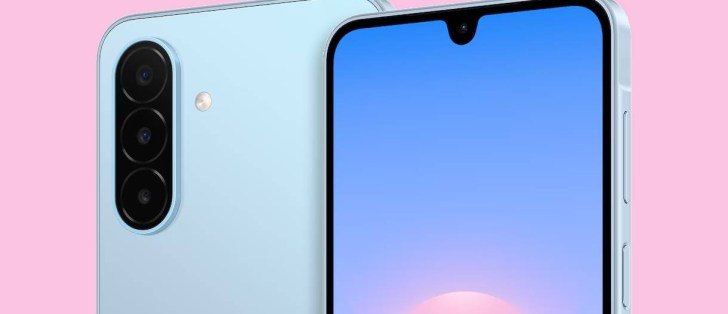
Samsung has quietly launched the Galaxy A18 4G, adding a new entry-level smartphone to its Galaxy A series with a new Exynos chipset, improved dust and water resistance, a 50-megapixel camera and a design that still includes a notch.
The Galaxy A18 succeeds the Galaxy A17 4G and has so far been introduced in European markets, including France, Norway and Sweden. Samsung has positioned it as one of the more affordable phones in its Galaxy lineup, with a focus on everyday use rather than high-end hardware.
While the Galaxy A18 does not completely reinvent Samsung’s budget-phone formula, five features stand out from the new device.
- 1. Samsung has replaced the old chipset
One of the biggest changes is inside the phone.
The Galaxy A18 4G uses Samsung’s Exynos 1610 chipset, replacing the MediaTek Helio G99 used in the Galaxy A17 4G.
That is notable because earlier reports had suggested that Samsung would continue with the Helio G99. The company instead opted for its own Exynos chip in the final product.
Samsung says the new hardware delivers a 32% improvement in single-core CPU performance, 7% in multi-core performance and 7% in GPU performance compared with the previous model.
The improvement is therefore not simply a change in the processor’s name. Samsung is presenting the Galaxy A18 as a faster device for everyday activities such as browsing, streaming, switching between applications and communicating.
However, Samsung has not provided extensive technical details about the Exynos 1610 itself, making independent performance comparisons more difficult for now.
- 2. The phone now has an IP64 rating
The second notable change is durability.
The Galaxy A18 carries an IP64 rating, meaning the device is protected against dust and water splashes.
That is an improvement over the Galaxy A17 4G’s IP54 rating.
For a budget smartphone, the upgrade is significant because users are getting additional protection without moving into Samsung’s more expensive phone categories.
The IP64 rating does not mean the Galaxy A18 is waterproof or designed to be submerged in water. Instead, it indicates dust-tight protection and resistance to water splashes.
That distinction is important for buyers who may assume that an IP rating automatically means a phone can survive being dropped into water.
- 3. Samsung is still using a notch
Perhaps the most noticeable design choice is one Samsung has largely moved away from on more expensive Galaxy phones.
The Galaxy A18 has a waterdrop-style notch at the top of its display for the selfie camera.
The phone comes with a 6.7-inch Super AMOLED display, with a 90Hz refresh rate and 1,080 x 2,340-pixel resolution.
The notch means the A18 does not have the uninterrupted punch-hole display found on many newer smartphones, including Samsung’s higher-end models.
It is an interesting choice for a 2026 smartphone, but it also helps distinguish the A18 as an entry-level device within Samsung’s wider lineup.
For buyers who care more about display quality than the shape of the camera cutout, the Super AMOLED panel and 90Hz refresh rate are arguably more important.
- 4. It gets a 50MP main camera
Samsung has also equipped the Galaxy A18 with a 50-megapixel main rear camera.
The phone uses a triple-camera system, while the front camera handles selfies and video calls.
Samsung says the camera setup is designed to cover everyday photography, with the company highlighting the phone’s ability to capture photos across different situations.
The 50MP sensor also gives Samsung a familiar specification to advertise in a highly competitive budget-phone market.
But megapixel count alone does not determine camera quality.
Image processing, sensor size, lighting and Samsung’s software all influence the final result, so the 50MP figure should not automatically be interpreted as meaning the A18 will outperform every competing phone with a lower-resolution camera.
- 5. Samsung is promising years of software support
One of the less obvious features of the Galaxy A18 could become one of its most useful.
Samsung says the phone will receive six generations of operating-system updates and six years of security updates.
The device launches with Android 17, giving buyers a relatively recent software platform from the beginning.
Long-term software support is particularly relevant in the budget-phone segment, where users have traditionally had to accept shorter update cycles than buyers of flagship smartphones.
It means someone purchasing the Galaxy A18 is not simply buying the hardware available at launch; Samsung is also committing to keeping the device supported for several years.
What else does the Galaxy A18 offer?
The Galaxy A18 has a 5,000mAh battery and supports 25W charging. Samsung’s published specifications also list storage options of 128GB and 256GB, depending on the market and configuration.
The combination puts the phone firmly in the everyday-use category.
It is designed for people who want a large AMOLED display, reasonable camera hardware, long software support and a sizeable battery without moving into Samsung’s more expensive Galaxy models.
The phone is also a 4G-only model for now. There is no Galaxy A18 5G variant included in this launch.
That could matter in markets where 5G availability is expanding, although 4G remains the dominant mobile connection for many users.
Is the Galaxy A18 a major upgrade?
The Galaxy A18 is better understood as an incremental update rather than a complete redesign.
The screen remains familiar, the notch remains, the battery capacity stays at 5,000mAh and the overall concept is still that of an affordable Galaxy A-series smartphone.
The most meaningful changes are the Exynos 1610 chipset, improved IP64 protection and longer-term software support.
Samsung’s own figures suggest that the new processor provides measurable performance gains over the previous generation, while the improved IP rating gives the phone additional physical protection.
The question for buyers will therefore not simply be whether the Galaxy A18 is new.
It will be whether those improvements justify choosing it over the Galaxy A17 or competing budget smartphones.
For Samsung, however, the strategy is clear: take the familiar Galaxy A-series formula, improve some of the areas that matter in everyday use and extend software support so the phone remains relevant for longer.
That makes the Galaxy A18 less of a dramatic reinvention and more of a careful upgrade to Samsung’s affordable-phone lineup.