

US Fed raises interest rates for first time in three years — Here’s what it means

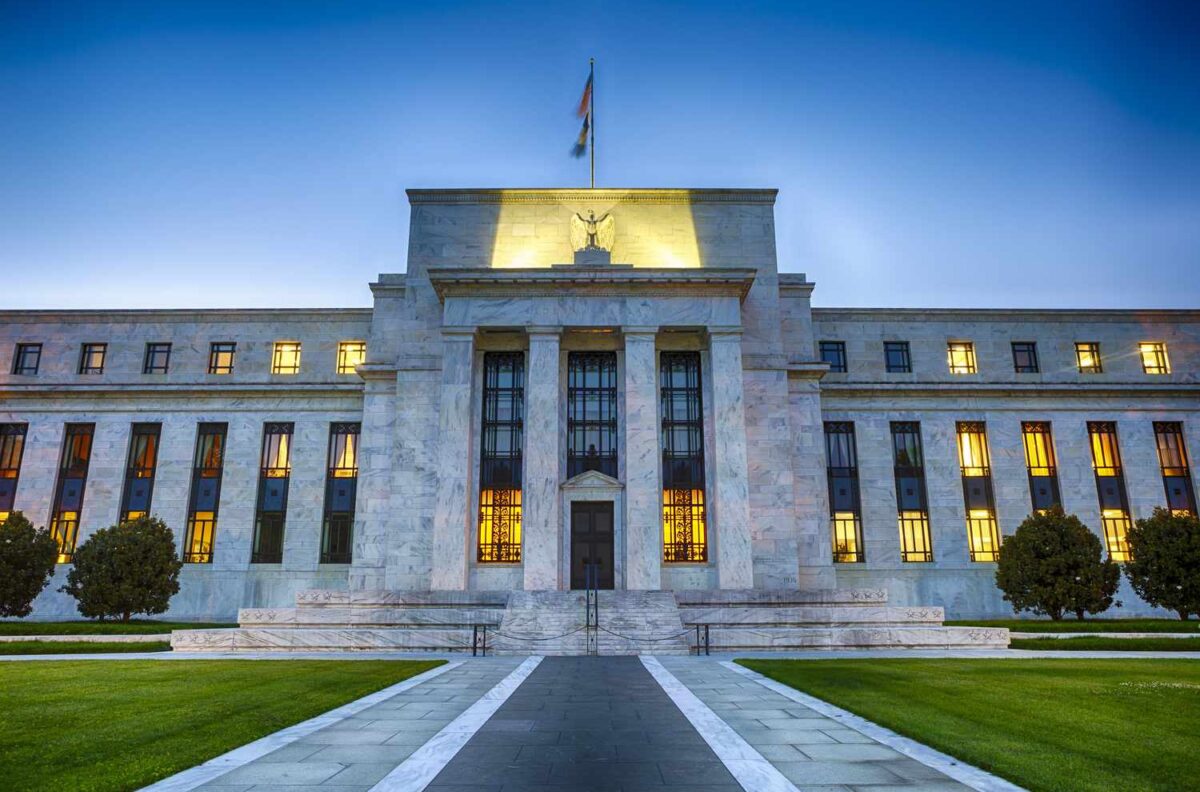
The US Federal Reserve has raised its benchmark interest rate for the first time in more than three years, taking the target range to 3.75%–4% in a move that could have consequences beyond the American economy.
The Federal Open Market Committee approved the quarter-point increase by a unanimous 12–0 vote on September 16, saying inflation remains elevated and the move would support a return towards its 2% inflation target.
For Americans, the immediate effect is likely to be higher borrowing costs. But for countries such as Nigeria, the bigger concern is what a stronger US interest-rate environment could mean for the dollar, capital flows, the naira and the cost of international borrowing.
Why did the Fed raise interest rates?
The central bank is trying to bring inflation under control.
The Fed said economic activity in the US is expanding at a solid pace, while domestic spending remains resilient, productivity growth is strong and capital investment is robust.
At the same time, inflation remains above the Fed’s 2% target.
The Fed’s latest projections put personal consumption expenditure inflation at 3.7% in 2026, before falling to 2.3% in 2027 and 2.1% in 2028.
Higher interest rates are one of the main tools available to a central bank when inflation is proving persistent.
When borrowing becomes more expensive, households and businesses tend to have less incentive to take new loans and spend. Lower demand can eventually reduce pressure on prices.
The latest decision therefore signals that the Fed is prepared to accept some pressure on borrowing and economic activity in its effort to bring inflation down.
What does the rate hike mean for Americans?
The first impact will be felt through borrowing and saving.
Interest rates on some credit cards, adjustable-rate loans and other forms of consumer credit can rise when the Fed increases its benchmark rate.
That means Americans carrying variable-rate debt could face higher financing costs.
Savers, however, can benefit from higher interest rates because banks and other financial institutions may offer better returns on some savings products.
The effect on mortgages is more complicated because fixed mortgage rates are influenced heavily by longer-term Treasury yields rather than moving directly with the Fed’s overnight policy rate.
In simple terms, the rate hike makes borrowing more expensive while potentially making saving more attractive.
What does it mean for the dollar?
One of the most important international effects could be through the US dollar.
Higher US interest rates can make dollar-denominated investments more attractive because investors can earn higher returns on US assets.
That can encourage some global investors to move money towards US financial markets.
Reuters reported that the dollar strengthened after the Fed’s latest decision, while US stocks came under pressure.
For emerging economies, this matters because changes in global investment flows can affect exchange rates and the availability and cost of foreign capital.
What does it mean for Nigeria?
This is where the Fed’s decision becomes particularly relevant to Nigerians.
Nigeria is deeply connected to the global dollar market through oil exports, imports, foreign investment, external debt and international trade.
If higher US interest rates increase demand for dollar assets, some investors may reduce exposure to emerging-market assets.
That can put pressure on emerging-market currencies and financial markets.
For Nigeria, one possible channel is the naira.
A stronger dollar environment can make it more difficult for emerging-market currencies to maintain their value, although the effect on the naira is not automatic.
Nigeria’s exchange rate is also influenced by domestic factors, including foreign-exchange supply, oil earnings, investor confidence, monetary policy and demand for dollars.
So, the Fed’s decision should not be interpreted as meaning the naira will automatically fall because of the US rate hike.
Could Nigeria’s borrowing become more expensive?
Yes, potentially.
When global interest rates rise, the cost of raising money internationally can increase, particularly for borrowers considered riskier than the US government.
That matters for countries such as Nigeria because international investors compare the returns available in emerging markets with those available on relatively safer US assets.
If US assets offer higher returns, Nigerian government and corporate borrowers may need to offer more attractive yields to compete for international capital.
That can increase financing costs.
It can also affect Nigerian businesses that depend on foreign loans or dollar-denominated financing.
Could this affect inflation in Nigeria?
It can, although the relationship is indirect.
If global dollar conditions contribute to pressure on the naira, imported goods and inputs priced in dollars can become more expensive in naira terms.
Nigeria imports a wide range of products and industrial inputs, so exchange-rate movements can eventually feed into domestic prices.
The International Monetary Fund has previously highlighted the way US monetary-policy shocks can transmit to Nigeria through capital flows, exchange rates and inflation.
That means the Fed’s decision is not simply an American story. Changes in US monetary policy can travel through global financial markets before eventually reaching economies such as Nigeria.
Does it mean Nigeria’s interest rates will rise too?
Not necessarily.
The Central Bank of Nigeria makes its own monetary-policy decisions based on Nigeria’s economic conditions.
The Fed’s decision can influence the environment in which the CBN operates, particularly through exchange rates, inflation and capital flows, but it does not dictate what the Nigerian central bank must do.
Nigeria can therefore respond differently depending on its own inflation, exchange-rate conditions, economic growth and financial-market situation.
There could be another US rate hike
The September increase may not be the last.
The Fed’s latest projections show a median federal funds rate of 4.1% at the end of 2026, suggesting that policymakers see room for another increase this year.
Reuters also reported that Fed policymakers’ projections point to one more rate increase in 2026.
That makes the direction of US monetary policy particularly important for emerging markets.
If US rates remain high for longer, global investors could continue to favour dollar assets, keeping pressure on countries that rely heavily on foreign capital.
If inflation falls faster than expected, however, the Fed could eventually have more room to ease monetary policy.
The bigger picture
The Federal Reserve’s latest decision is therefore about much more than a 0.25 percentage-point increase.
For Americans, it means borrowing costs are likely to remain under pressure as the central bank fights inflation.
For investors, it changes the relative attractiveness of US assets.
For emerging economies, it could affect capital flows, exchange rates and access to international financing.
And for Nigeria, the most important transmission channel is likely to be the interaction between US interest rates, the dollar and the naira.
The Fed has made clear that inflation remains its immediate concern. Whether the rate hike eventually strengthens the dollar, attracts more capital into US assets or puts pressure on emerging-market currencies will depend on how investors respond and how the US and global economies develop.
For Nigerians, therefore, the key issue is not simply that America has raised its interest rate.
It is what that decision does to the dollar, global capital and ultimately the cost of doing business in Nigeria.