

Niger Miners’ Deaths: Panel Reveals What Killed 33 Detainees, Recommends Officers’ Dismissal

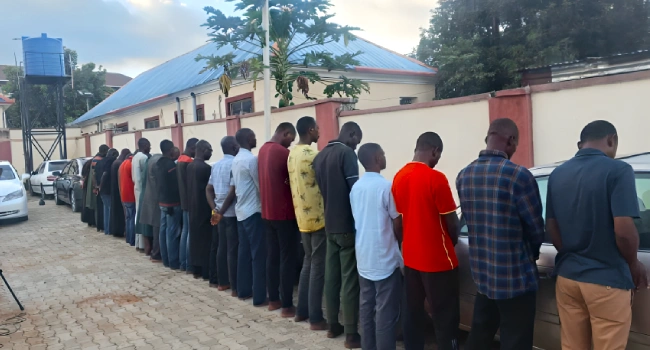
An investigative committee has blamed the deaths of 33 suspected miners in Niger State on acute respiratory failure aggravated by overcrowding, extreme heat and dehydration, describing the incident as preventable.
The Federal Government’s investigative committee into the deaths of suspected illegal miners in the custody of the Nigeria Security and Civil Defence Corps (NSCDC) has recommended the dismissal of the Niger State commandant and other officers directly involved in the incident.
The committee, chaired by Jonathan Kure, presented its findings to the Minister of Interior, Olubunmi Tunji-Ojo, in Abuja on Tuesday, October 27, 2026.
According to the report, 33 detainees died after spending the night in an overcrowded, poorly ventilated cell. The committee also recommended ₦1.4 billion in compensation for the families of the deceased and 44 survivors.
Read Also: 37 Miners Die in Niger Custody: What Happened?
What caused the Niger miners’ deaths?
The committee identified acute respiratory failure consistent with environmental asphyxia as the cause of the deaths.
It explained that severe overcrowding, extreme heat, poor ventilation and dehydration contributed to the fatal conditions inside the detention facility.
Investigators also found that the male cell lacked a functional toilet and adequate ventilation. These conditions exposed detainees to severe discomfort and increased the risk to their lives.
The report further established that detainees repeatedly banged on the cell door and called for assistance, including requests for drinking water. However, officers responsible for their custody failed to respond adequately to their distress.
The committee consequently described the deaths as preventable, citing failures in the duty of care, inadequate supervision and unsuitable detention conditions.
Its findings also contradicted the earlier explanation that a disease outbreak caused the deaths. The panel said the medical and forensic evidence did not support that claim.
Read Also: How Did 37 People Die in One Day Inside a Minna Cell?
Committee recommends dismissal of NSCDC officers
Beyond identifying the cause of death, the committee recommended the summary dismissal of Niger State NSCDC Commandant and all other officers directly involved in the detention and deaths of the miners.
It also called for institutional reforms within the corps to strengthen leadership, improve supervision and prevent similar incidents.
The Minister of Interior, Olubunmi Tunji-Ojo, promised to implement the committee’s recommendations to ensure justice for the affected families and survivors.
He also directed the immediate suspension of officers accused of cleaning up the detention centre in what the committee described as an attempt to destroy evidence.
The report’s recommendations place responsibility on the authorities to address both the conduct of individual officers and the institutional failures that allowed the incident to occur.
14 minors among the deceased
The committee verified the deaths of 33 detainees and identified 44 survivors for the purpose of its compensation recommendation.
It also disclosed that 14 of the deceased were minors, raising further concerns about the detention of children alongside adults.
Another finding concerned a victim who had reportedly been arrested over a debt-related issue, highlighting questions about the circumstances in which some individuals were taken into custody.
The deaths occurred between September 16 and 17, 2026, following operations against suspected illegal mining activities in Niger State.
The Federal Government established the investigative committee after the incident to determine the circumstances surrounding the arrests, detention conditions and deaths.
The panel’s recommendations now place the focus on accountability, compensation for affected families and reforms to prevent a recurrence.