

How did 37 people die in one day inside a Minna cell?

On September 17, 2026, what began as an enforcement operation against suspected illegal mining in Minna, Niger State, ended with 37 detainees dead inside the custody of the Nigeria Security and Civil Defence Corps (NSCDC).
The victims were among scores of people arrested around the M.I. Wushishi and Lukoto areas of Minna during operations against illegal mining on September 15 and 16.
But the circumstances surrounding their deaths have raised questions that remain unanswered.
Survivors have described a small, overcrowded and poorly ventilated cell where detainees struggled to breathe, begged for water and, at one point, allegedly encountered an unidentified substance sprayed inside the room.
Nearly two weeks later, investigations are still trying to establish exactly what happened.
What happened inside the Minna cell?
According to Premium Times’ investigation, 19-year-old Adamu Isah was among those arrested and detained at an NSCDC facility around the PDP Secretariat in the Bloodson Hospital area of Minna.
He said about 20 detainees were initially held there, although some were later released on bail.
As more suspects were brought in, the detention conditions became increasingly difficult.
The cells were reportedly small, poorly ventilated and overcrowded.
Another survivor, 16-year-old Khadija Mohammed, gave an even more disturbing account.
She said as many as 65 men were packed into one small room.
According to her, the men began banging on the door around 8 p.m. and asking for water.
Some reportedly tried to squeeze into a toilet to get closer to a small opening where they could find air.
She said the detainees even lifted children towards the opening so they could get some air.
By the time the door was opened, she said, the men were lying on top of one another, dead.
Did the detainees suffocate?
This is one of the major questions surrounding the deaths.
A survivor separately told Al Jazeera that about 65 detainees had been packed into a poorly ventilated cell and described a sudden struggle for air.
An intelligence report cited by AFP also suggested that overcrowding and inadequate ventilation may have contributed to the deaths.
But suffocation has not been established as the official cause of death.
The NSCDC initially said the detainees died following a suspected disease outbreak, while stressing that medical examinations were required to determine the actual cause.
The bodies were subsequently deposited at the General Hospital in Minna for examination.
What was sprayed inside the cell?
This is another unresolved part of the story.
Isah told Premium Times that officials sprayed a substance around the entrance of the cell on the third day of detention.
He said it smelled like perfume or fragrance but felt damp, after which detainees began desperately seeking fresh air.
According to his account, one inmate soon began struggling, foaming at the mouth and eventually passing out.
He said other detainees subsequently began dying, with some becoming violently agitated, biting others and banging their heads against the wall.
A second survivor, Zuwayra Aliyu, also said she heard detainees asking an officer what was being sprayed.
She said they were told it was mosquito repellent.
However, Premium Times noted that there is currently no publicly established forensic evidence showing that the substance caused the deaths.
That distinction is important because the substance has not been publicly identified as the cause of the tragedy.
Were the victims asking for help?
Survivors say they were.
Isah said detainees repeatedly called for the cell to be opened as people began collapsing.
He alleged that their pleas were ignored.
He said about 17 people eventually managed to get out, while 11 survivors were taken to hospital for treatment.
He himself suffered what he described as lingering health effects and still had bite marks on his arm from a detainee who was reportedly gasping during the incident.
The accounts have not been independently established as a complete reconstruction of what happened, which is why the ongoing investigation is significant.
Could poisoning have been involved?
Possible exposure to hazardous substances has also been raised.
Niger State Governor Mohammed Umaru Bago said preliminary observations involving some of the bodies included foam mixed with blood around the mouths and peeling skin.
He said investigators therefore could not rule out exposure to substances such as methane, cyanide or lead, although he stressed that the actual cause still needed to be established through proper investigation and forensic examination.
This remains a possibility under investigation, rather than a confirmed explanation for the deaths.
Why were so many people detained together?
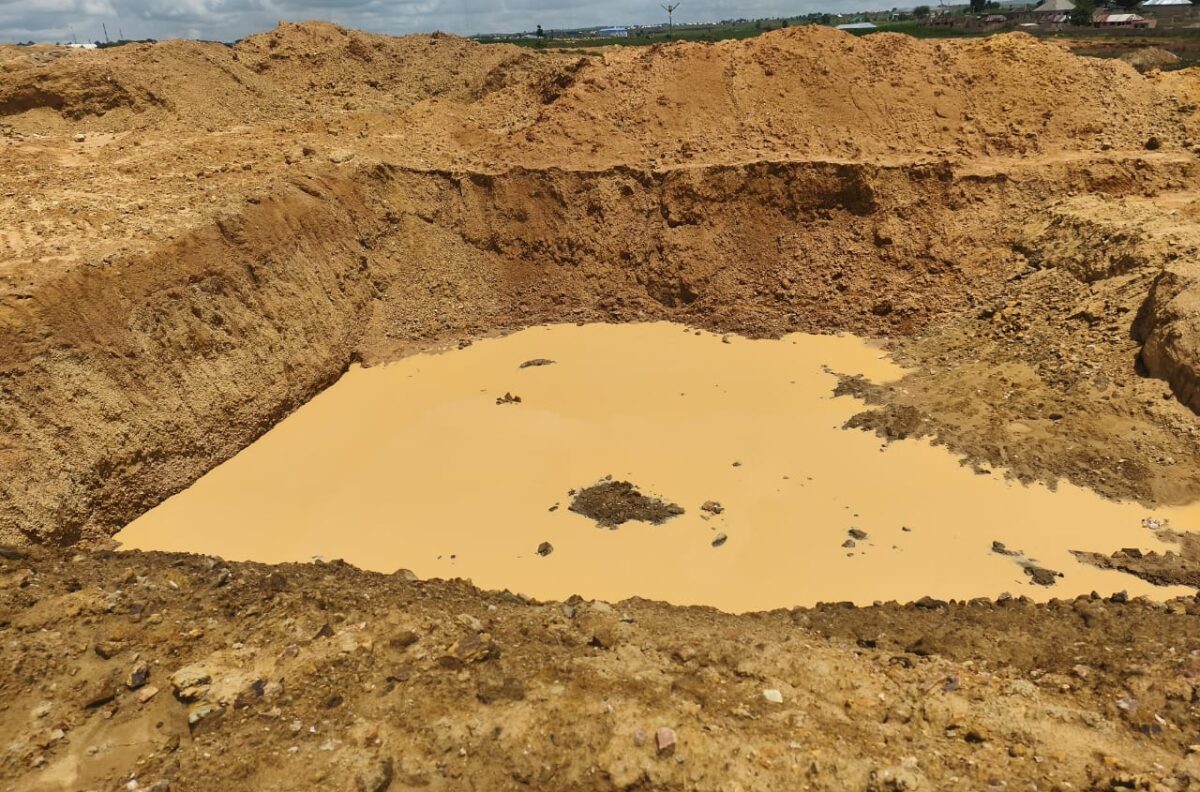
The detainees were arrested during an NSCDC enforcement operation targeting suspected illegal mining around M.I. Wushishi and Lukoto.
The operation followed concerns about the effects of artisanal mining on farmland and residential areas.
Premium Times reported that residents had complained that miners were expanding mining activities into residential areas and digging around people’s homes.
But the tragedy has also drawn attention to the circumstances in which suspects were held after their arrests.
Regardless of the allegations against them, the people in the cell were in government custody when they died.
What happened after the 37 deaths?
The deaths triggered protests and unrest in Minna, forcing the Niger State Government to impose a 24-hour curfew.
The government also constituted a committee of inquiry and ordered forensic examinations and autopsies.
The Federal Government subsequently stepped in.
President Bola Tinubu directed a comprehensive investigation, while Interior Minister Olubunmi Tunji-Ojo inaugurated a 10-member independent committee on September 22.
The committee was given two weeks to investigate the incident.
Its mandate includes examining the arrests and detention of the victims, determining the circumstances and cause of death, identifying possible responsibility or negligence, and recommending appropriate action and compensation where applicable.
The NSCDC also suspended its Niger State commandant and other officers connected with the operation. Premium Times reported that 20 officers were suspended, including arresting officers, investigators, intelligence personnel, legal personnel and station guards.
So, how did 37 people die in one day?
The final answer is still pending.
The available accounts point to a combination of troubling circumstances: a heavily overcrowded cell, poor ventilation, extreme heat, reports of inadequate access to water, a substance reportedly sprayed inside the cell and an apparent delay in getting emergency assistance.
Suffocation and exposure to hazardous substances have both been raised as possibilities, while the NSCDC initially cited a suspected disease outbreak.
But none of those explanations should yet be presented as the definitive cause.
The Federal Government’s investigation, alongside forensic examinations and autopsies, is expected to determine what actually caused the deaths and whether they could have been prevented.
What is already clear is that 37 people who were in government custody died within a matter of hours, leaving families demanding answers about what happened inside the Minna detention facility.