

What Nigel Farage promised at Reform UK’s conference, and what could stop him

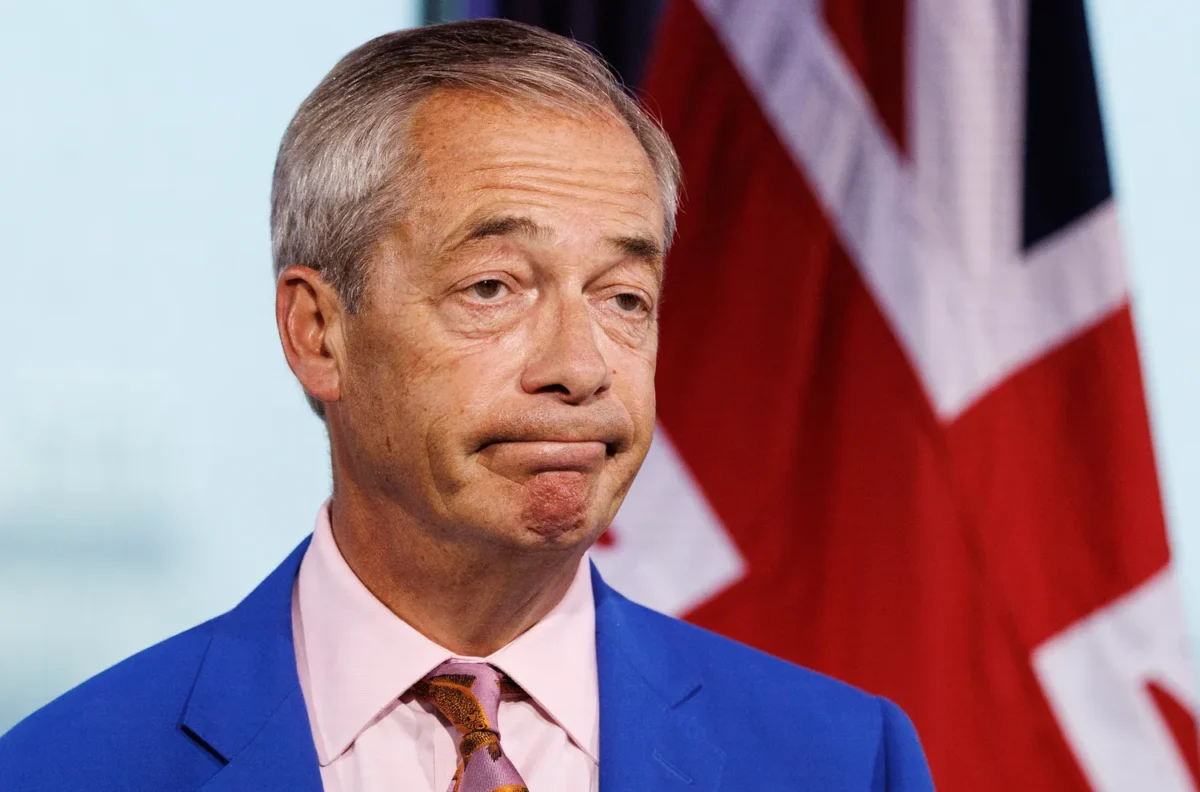
Nigel Farage. Credit: Dan Kitwood/Getty Images
Nigel Farage left Reform UK’s conference in Birmingham with a message aimed far beyond the next opinion poll: he wants to turn the party from an insurgent political force into Britain’s next government.
Closing the conference on Saturday, Farage warned that Britain faced “terminal decline” without major political change and described the next general election as potentially the country’s “last chance” to change direction.
His speech came after two days in which Reform UK unveiled a string of aggressive 100-day pledges on immigration, taxation, energy, defence and public services.
Yet the conference was overshadowed by something Farage could not fully control: renewed scrutiny of Reform’s finances.
Two senior party figures stepped down after an undercover investigation raised allegations about attempts to circumvent rules governing foreign political donations. Reform denies breaking the law, while the Electoral Commission and police are assessing information surrounding the claims.
That leaves Farage facing a more complicated challenge than simply winning support. He now has to convince voters that Reform UK can deliver the sweeping changes it promises while surviving the scrutiny that comes with looking increasingly like a potential governing party.
What Nigel Farage promised at the Reform UK conference
Farage’s central promise was political transformation.
He told Reform supporters that he wanted to win the next general election and lead what he described as a fundamental change of direction for Britain.
The party’s conference programme was built around the idea that a Reform government would move rapidly once in office, with senior figures repeatedly attaching major policies to a first 100 days in government.
That approach is deliberate. Reform is attempting to distinguish itself from established parties by promising immediate action rather than gradual policy implementation.
But the scale of those pledges also creates a clear test for Farage: the more Reform promises to accomplish quickly, the easier it becomes for opponents to judge the party against specific targets.
Reform UK’s 100-day pledge on immigration
Immigration was one of the most prominent themes at the conference.
Reform said it would declare a national emergency over small-boat crossings within its first 100 days in government.
Zia Yusuf also promised sweeping immigration measures, including deporting foreign nationals without a legal right to remain and foreign nationals in prison, alongside plans to prevent early prison releases.
The party also signed an agreement with France’s National Rally proposing that asylum seekers arriving in Britain by small boats could be returned to France if both parties eventually held government power.
The political appeal is obvious for Reform, which has made immigration one of the defining issues of its identity.
The harder question is how quickly those proposals could actually be implemented.
Any government would face legal, diplomatic and administrative constraints, particularly when dealing with asylum claims, deportations and agreements with other countries.
Robert Jenrick put his own job on the line
One of the conference’s most striking pledges came from Robert Jenrick, Reform’s Treasury spokesperson.
He promised to increase the personal income tax allowance from £12,570 to £15,000 within the first 100 days of a Reform government.
Jenrick went further by saying he would resign if he failed to deliver it.
Farage later joked that he would not need to sack Jenrick because Jenrick already had his resignation letter prepared.
The pledge gives voters a straightforward measure against which to judge Reform, but it also creates pressure.
Raising the tax-free allowance would have significant consequences for government revenues and the wider tax system. Reform would need to explain how the policy fits alongside its other spending commitments and promises to reduce taxes.
Reform promises lower energy bills
Richard Tice also made a first-100-days pledge, promising to cut the average annual household energy bill by £250.
Like Jenrick, Tice said he would resign if he failed to deliver.
The promise is designed to connect Reform’s broader economic message with something households can easily understand: a lower bill.
But energy prices are affected by wholesale markets, regulation, network costs, taxation and government policy.
That makes the pledge particularly vulnerable to circumstances outside a minister’s direct control.
If Reform enters government, voters will not simply ask whether energy bills fell. They will ask whether they fell because of Reform’s policies and whether the reduction was sustainable.
Suella Braverman targets the NHS and student loans
Suella Braverman used the conference to promise changes to medical training and student finance.
She said a Reform government would scrap the cap on homegrown British doctors within its first 100 days.
She also promised to remove interest payments on student loans for British nurses.
The proposals fit Reform’s wider argument that Britain should invest more heavily in domestic workers rather than relying on immigration to fill shortages.
But again, implementation would be the challenge.
Training more doctors is not simply a question of removing a cap. Medical education requires university places, clinical training capacity, hospitals, funding and a long-term workforce strategy.
That gap between announcing a policy and producing measurable results could become one of the biggest tests of a future Reform government.
READ ALSO
Nigel Farage’s Reform UK faces fresh questions over its money: Here’s what’s going on
Farage is already preparing voters for mistakes
Perhaps the most revealing part of Farage’s closing speech was not one of his headline policies.
It was his admission that Reform would sometimes get things wrong.
Farage told supporters that there would be difficult days and mistakes and that the party would have to recover from them.
That may sound like routine political rhetoric, but it carries particular significance for Reform.
The party has spent years positioning itself as an alternative to the political establishment. Its supporters have been attracted to the argument that established parties repeatedly fail to deliver.
Once Reform becomes a serious contender for government, however, voters can apply the same standard to Farage.
The question will shift from “Can Reform expose the failures of the establishment?” to “Can Reform govern better?”
The donations controversy is Farage’s biggest immediate problem
The most obvious obstacle facing Farage is the continuing controversy over Reform UK’s finances.
Two senior figures, Dan Jukes and James Orr, stepped down after undercover footage appeared to show discussions about ways of handling foreign donations. Reform has insisted that it broke no laws and has characterised the operation as a form of entrapment. The Electoral Commission is reviewing the information, while police are also assessing the allegations.
The issue is particularly awkward because Reform wants to present itself as a credible alternative government.
Political parties can survive controversy while they are outsiders. The calculation becomes different when voters are deciding whether those same politicians should control government departments, public money and national institutions.
The financial controversy also comes on top of previous questions surrounding Reform’s major donors. Reuters reported that Reform received £4m from crypto entrepreneur Ben Delo during the April-to-June quarter, accounting for 75% of its fundraising in that period.
For Farage, the danger is not necessarily that every allegation will be proven. It is that repeated controversies could reinforce doubts among voters who are interested in Reform’s policies but remain uncertain about the party’s ability to govern.
Reform also has to broaden its appeal
Another obstacle is electoral reach.
Farage has built a powerful political movement around immigration, Brexit, national identity and dissatisfaction with mainstream parties.
That has helped Reform become a major force in British politics.
But winning enough support to form a government requires more than energising its existing base.
The party needs voters who may agree with some of its policies but are uncomfortable with its harder-edged rhetoric or concerned about its candidates, finances and ability to manage government.
That tension was visible at the Birmingham conference, where Reform simultaneously sought broader support while giving prominent space to figures and groups associated with its harder-right flank.
The party’s relationship with climate policy is another example. Reform leadership has continued to challenge mainstream climate policy, even as some supporters express concerns about extreme weather and infrastructure.
The wider Reform challenge is finding out whether it can retain its core voters while persuading more cautious voters that it is ready for government.
The first 100 days could become Farage’s biggest test
Reform has effectively created its own scorecard.
Raise the tax-free allowance.
Cut energy bills.
Change immigration policy.
Increase domestic medical training.
Reform prisons.
Address small-boat crossings.
Rearm Britain.
Reshape the economy.
The advantage of this approach is political clarity. Voters know what Reform is promising.
The risk is equally obvious.
If Reform fails to deliver, the party cannot simply argue that the system prevented change. It will have made specific promises and attached them to specific deadlines.
Farage’s pledge to sack ministers who fail to deliver makes that pressure even greater.
What could stop Nigel Farage from winning the next election?
The biggest threat to Farage may not be one scandal or one rival party.
It could be the gap between political momentum and governing credibility.
Reform currently has the advantage of being able to promise radical change without having to implement it. Once in government, every promise would encounter Treasury calculations, civil service processes, courts, Parliament, international agreements and economic realities.
The donations controversy could also continue to consume political oxygen if investigations produce further findings. Farage himself has predicted that Reform will face more investigations in the months ahead.
Then there is the question of internal discipline.
A growing political party attracts more candidates, donors, activists and prominent personalities. Maintaining a consistent message becomes harder as the organisation expands.
Farage’s conference performance showed that he remains firmly in control of Reform’s political direction. The next test is whether that control can survive the pressures that come with becoming a genuine contender for Downing Street.
Reform UK leaves its conference with momentum, and a long list of promises
Farage ended the conference by presenting Reform as a resilient movement that could withstand controversy and criticism.
His supporters appeared to accept that message.
But the conference also exposed the challenge ahead.
Reform UK is no longer simply campaigning against the political establishment. It is asking voters to imagine Farage running the country.
That changes the question surrounding the party.
The important issue is no longer only what Nigel Farage says he will do.
It is whether he can build a party capable of doing it.
And with Reform’s first-100-days promises now clearly laid out, voters will have plenty of specific commitments against which to measure him.
Frequently Asked Questions
What did Nigel Farage promise at the Reform UK conference?
Farage promised to pursue a major change in Britain’s political direction and said he wants Reform UK to win the next general election. Senior Reform figures also announced specific 100-day commitments on tax, energy, immigration, healthcare and other areas.
What is Reform UK’s 100-day plan?
The plan includes declaring a national emergency over small boats, tougher immigration measures, raising the tax-free personal allowance, cutting household energy bills and expanding opportunities for British-trained doctors.
What is Robert Jenrick’s Reform UK tax promise?
Robert Jenrick pledged to raise the personal income tax allowance from £12,570 to £15,000 within the first 100 days of a Reform government. He said he would resign if he failed to deliver the promise.
What did Reform UK promise on energy bills?
Richard Tice pledged to reduce the average annual household energy bill by £250 during Reform’s first 100 days in government and said he would resign if he failed to achieve it.
What did Suella Braverman promise at the Reform conference?
Braverman said a Reform government would scrap the cap on homegrown British doctors and remove interest payments on student loans for British nurses.
What could stop Nigel Farage becoming prime minister?
Potential obstacles include continued scrutiny of Reform’s finances, difficulties delivering its ambitious policies, internal party discipline, legal and parliamentary constraints and the challenge of persuading voters beyond Reform’s core support.
What is the Reform UK donations scandal?
The controversy centres on undercover footage involving senior Reform figures and discussions about foreign political donations. Two senior officials stepped down, while Reform denies breaking electoral law. Police and the Electoral Commission are assessing the allegations.
Is Reform UK likely to win the next general election?
It is too early to know. Reform’s electoral prospects will depend on its support levels, rival parties, candidate quality, campaign performance and whether current controversies damage or strengthen its appeal.
When is the next UK general election?
The exact timing of the next general election remains a political question rather than something determined by Reform UK. Farage has said he believes an election could take place in spring, but that is his expectation rather than a confirmed election date.
Why is Nigel Farage talking about ‘terminal decline’?
Farage used the phrase to argue that Britain needs a major political change and that the next election could be a crucial opportunity for Reform UK to alter the country’s direction.