

Grey wolves are still endangered, so why does Trump want them dead?

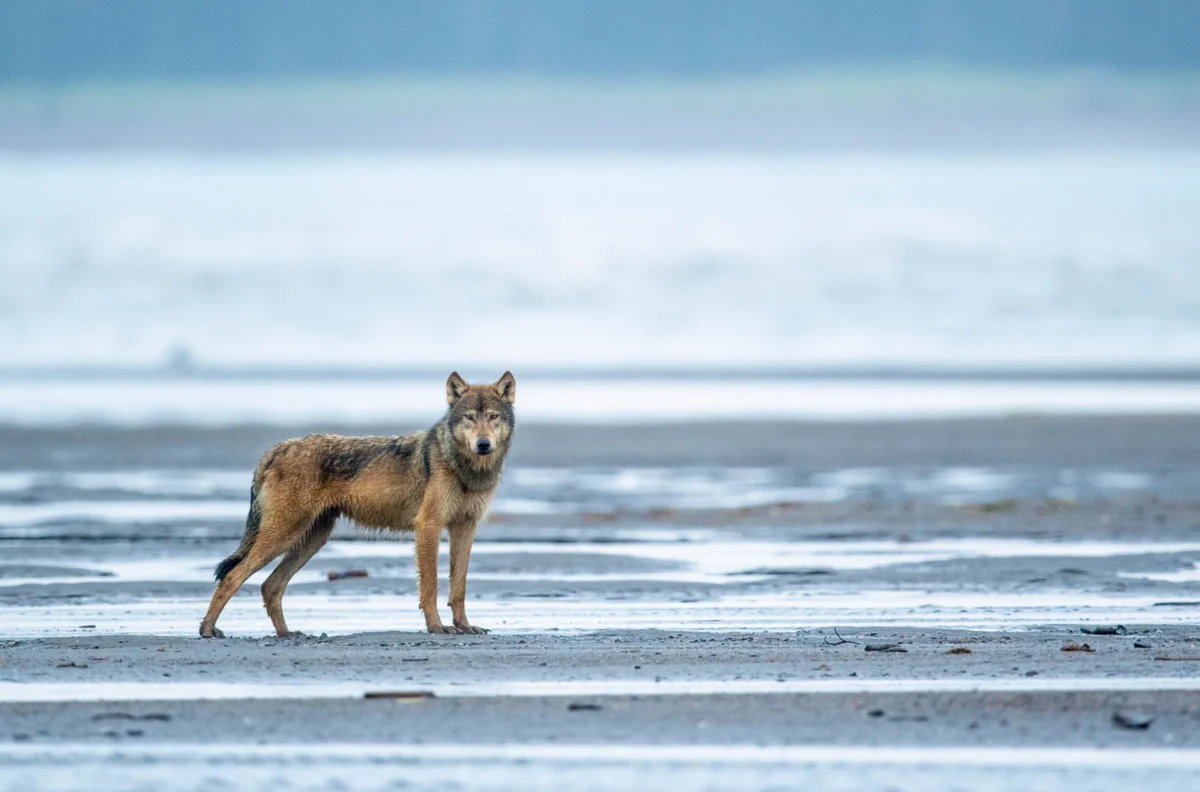
A grey wolf. Credit: Getty Images
Donald Trump has moved to reopen one of America’s oldest wildlife battles: whether grey wolves should remain protected under federal endangered species law.
The US president has signed an executive order directing the Department of the Interior to examine whether grey wolves and the Mexican wolf have recovered enough to be removed from the endangered species list. The move could eventually make it easier for states and ranchers to kill wolves blamed for attacking livestock, but it does not immediately give ranchers permission to shoot protected wolves.
The order gives Interior Secretary Doug Burgum 90 days to determine whether the populations have recovered sufficiently to justify removing federal protections.
The decision has placed a complicated question back at the centre of US politics: if wolf numbers have increased dramatically in some areas, does that mean the species has recovered, or does it mean decades of conservation work are finally beginning to pay off?
What are grey wolves?
Grey wolves are large wild canines scientifically known as Canis lupus. They are highly social animals that typically live and hunt in packs, communicating through vocalisations, body language and scent marking.
Historically, grey wolves occupied huge areas of North America, including much of the United States. Their numbers fell sharply as humans expanded agriculture, ranching and settlements.
Wolves were frequently viewed as predators that threatened livestock and game animals. Government programmes, hunters, farmers and landowners killed large numbers of them through shooting, trapping and poisoning.
By the early 20th Century, wolves had disappeared from much of their former US range.
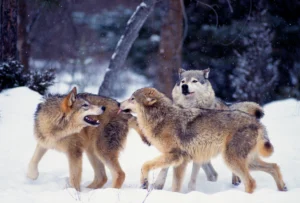
The animal’s ecological role also makes the debate bigger than the question of livestock. Wolves are apex predators, meaning they can influence populations and behaviour of other animals and contribute to the balance of ecosystems where they live.
Why are grey wolves endangered?
Grey wolves became endangered largely because of deliberate human persecution and the loss of habitat.
The US government itself ran campaigns aimed at eliminating wolves toward the end of the 19th Century. Ranchers and landowners also killed wolves they regarded as threats to livestock.
The population collapse was so severe that wolves disappeared from large parts of the lower 48 states.
Federal protection later helped reverse that decline. Wolves began returning to parts of their former territory through natural expansion and reintroduction programmes.
Yet recovery has not been uniform across the United States.
There are now roughly 18,000 grey wolves across the US, according to figures cited by the BBC. That number can make the word “endangered” appear confusing, but endangered-species protection is not based simply on whether an animal is rare everywhere.
A species can have thousands of animals while still facing serious threats to parts of its range, particularly when suitable habitat has been lost or populations remain fragmented.
The Mexican wolf tells a different story
The Mexican wolf is a subspecies of grey wolf and provides one of the strongest arguments from conservation groups against weakening federal protection.
Only four Mexican wolves were in the wild in the US when the animals were reintroduced in 1998.
By 2025, the US Fish and Wildlife Service counted 319 Mexican wolves in the wild.
That is a dramatic recovery, but conservationists argue that 319 animals is still a small population vulnerable to setbacks.
The increase is also a reminder of what federal protection can achieve. The Mexican wolf went from the edge of disappearing in the wild to establishing a growing population again.
Critics of Trump’s order argue that removing protections while the population remains relatively small could reverse that progress.
Why does Trump want wolves removed from the endangered list?
Trump’s order frames the issue around America’s ranching industry and livestock production.
The executive order describes ranchers as playing a vital role in the country’s food supply and cultural heritage. It also points to pressure on the US beef industry, including historically low cattle numbers and rising consumer demand.
The administration is simultaneously trying to address high beef prices.
The order says US livestock herds are at a 75-year low, while demand for beef has increased by about 10% over the past decade.
For ranchers, wolves can represent a direct threat when animals attack cattle, sheep or other livestock.
Trump’s move could eventually give states greater authority over wolf management if federal protections are removed.
That distinction matters: the executive order itself does not immediately make it legal for ranchers to kill wolves.
The Interior Department must first assess whether the populations meet the requirements for delisting.
READ ALSO
Do wolves really kill large numbers of livestock?
This is one of the most disputed parts of the debate.
Ranchers and livestock producers have long argued that wolves can cause serious economic losses, particularly in areas where wolf populations overlap with cattle and sheep operations.
Conservation groups, however, say the scale of livestock losses is often overstated.
The Wolf Conservation Center has also pointed out that ranchers can receive compensation for confirmed wolf-related livestock losses under existing programmes, with states providing additional measures designed to deter attacks.
That does not mean wolf attacks never happen. They do.
The disagreement is over how significant those attacks are compared with the broader economic pressures facing ranchers.
Some environmental organisations argue that wolves have become a political target at a time when US cattle producers are already dealing with drought, disease, low herd numbers and other challenges.
What happens if grey wolves lose federal protection?
If grey wolves are removed from the federal endangered species list, control of their management could shift significantly toward individual states.
That could mean different rules in different parts of the country.
Some states could adopt more aggressive population-control policies, while others could continue pursuing conservation and non-lethal methods of managing conflicts with livestock.
The legal process is also likely to matter.
A previous federal attempt to remove protections from grey wolves in 2022 became tied up in litigation. Conservation organisations have already indicated that Trump’s latest move could face legal challenges if the Interior Department proceeds with delisting.
That means the 90-day review is unlikely to be the end of the story.
Why conservationists are worried about Trump’s wolf order
Wildlife groups say the growth in wolf numbers should be viewed as evidence that conservation programmes are working, rather than proof that protection is no longer necessary.
Claire Musser of the Grand Canyon Wolf Recovery Project argued that the Mexican wolf should not be considered fully recovered simply because its population has grown.
The concern is particularly strong for smaller and geographically isolated populations.
Removing federal protections can change how quickly wolves are allowed to be killed and who has authority to manage them. Conservationists fear that a sharp increase in lethal control could undo years of population growth.
There is also an ecological argument.
When wolves disappear, their prey populations and behaviour can change. Reintroducing or protecting wolves can alter predator-prey relationships and, in some ecosystems, influence vegetation and other wildlife.
The precise effects vary by ecosystem, making wolf management far more complicated than simply counting animals.
Is Trump’s wolf policy really about endangered species?
That is the question likely to drive the next phase of the fight.
Trump’s order presents the issue as a combination of conservation, ranching and food production. But opponents see a broader political conflict over who should control America’s public lands and wildlife.
For ranchers, the issue is about protecting livestock and maintaining viable businesses.
For conservationists, it is about preventing a predator that was once nearly eliminated from being pushed backwards again.
And for the federal government, the immediate question is whether existing wolf populations have recovered enough to justify ending federal protection.
The numbers provide ammunition for both sides: roughly 18,000 grey wolves nationwide looks very different from the four Mexican wolves recorded in the wild in 1998, yet 319 Mexican wolves in 2025 is also a long way from a secure population spread across its historic range.
That is why Trump’s order could become less about whether wolves are “endangered” in the everyday sense and more about how America defines recovery.
What happens next to the grey wolves?
The next major step is the Interior Department’s 90-day review.
Secretary Doug Burgum is expected to determine whether the grey wolf and Mexican wolf populations have recovered sufficiently for federal protections to be removed.
If the administration moves toward delisting, conservation groups could challenge the decision in court.
The outcome could determine how wolves are managed across parts of the United States for years.
For an animal once targeted by government extermination programmes, the debate has come full circle: America is now arguing not about how to eliminate wolves, but about how much protection a recovered, yet still vulnerable, population needs.
Frequently Asked Questions About Grey Wolves
Are grey wolves still endangered in the US?
Grey wolves remain protected under the federal Endangered Species Act in areas where federal protection applies. Trump’s executive order begins a review of whether their status should change; it does not immediately remove their protection.
How many grey wolves are there in the United States?
There are roughly 18,000 grey wolves across the US, according to figures cited by the BBC. Their distribution and legal status vary by region.
How many Mexican wolves are left?
The US Fish and Wildlife Service recorded 319 Mexican wolves in the wild in the US in 2025, compared with just four when the population was reintroduced in 1998.
Why were grey wolves almost extinct?
Grey wolves were deliberately hunted, trapped and poisoned for decades. Government extermination programmes, livestock conflicts and habitat loss pushed them out of much of their historic range.
Why does Trump want wolves removed from the endangered species list?
Trump’s order argues that ranchers need greater protection from wolves and points to pressure on the US livestock and beef industries. It asks the Interior Department to determine whether wolf populations have recovered enough for federal protections to end.
Can ranchers legally shoot grey wolves now?
Not simply because of Trump’s executive order. The order directs the Interior Department to conduct a 90-day review. Wolves that remain federally protected continue to be covered by endangered-species rules.
Do wolves attack livestock?
Yes. Wolves can prey on cattle, sheep and other livestock. The dispute is over how widespread and economically significant those attacks are compared with other pressures facing ranchers.
What happens if wolves are removed from the endangered species list?
Management authority could shift more heavily to individual states, potentially allowing greater lethal control depending on state laws and management plans.
Could Trump’s wolf decision be challenged in court?
Yes. A previous federal attempt to delist grey wolves became involved in litigation, and conservation groups have indicated that another legal challenge is possible if the administration moves ahead.
Why are grey wolves important to ecosystems?
Grey wolves are apex predators that can influence prey populations and animal behaviour. Their presence can affect wider ecological relationships, though the exact effects depend on the ecosystem and local conditions.
Are grey wolves and Mexican wolves the same animal?
The Mexican wolf is a subspecies of the grey wolf. It is one of the most endangered wolf populations in the United States and has been the subject of a long-running recovery programme.