

US strikes Iranian oil tankers: Could this send global oil prices even higher?

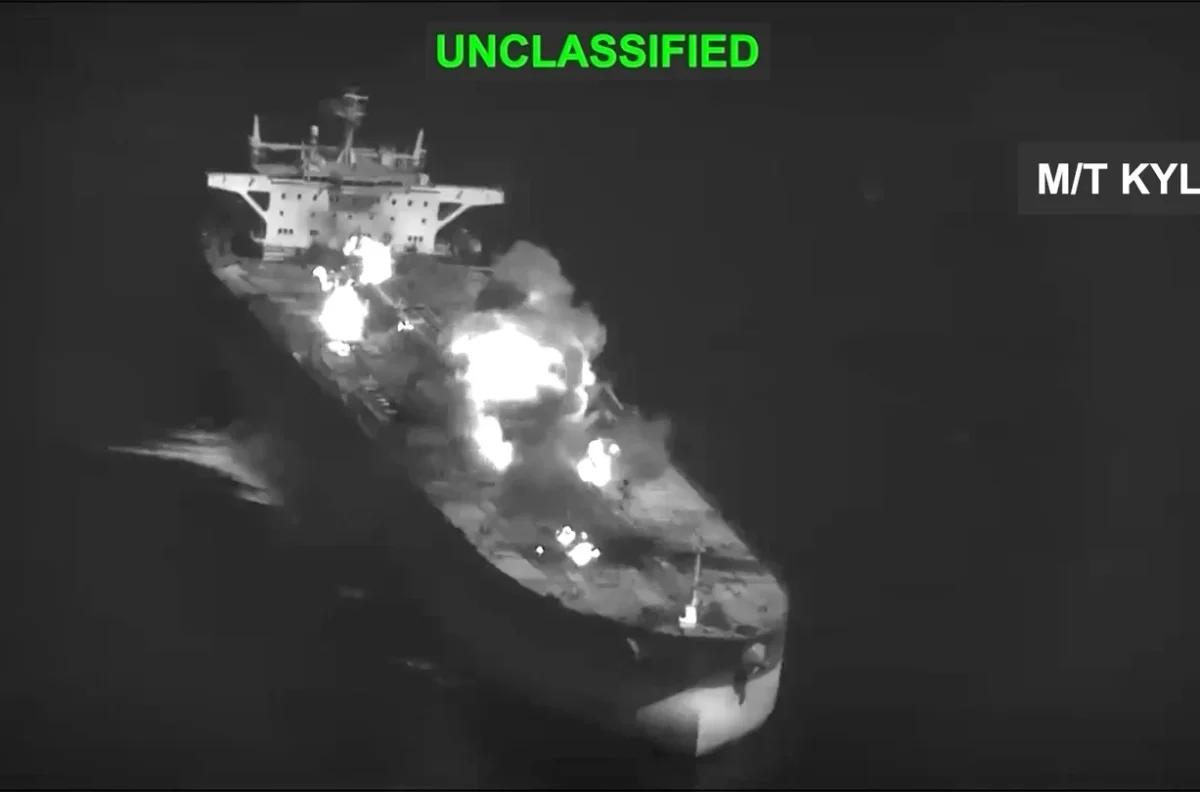
US strikes three Iranian oil tankers. Credit: RTE
The US military has struck three Iran-linked oil tankers after saying Iranian forces targeted two American Navy warships, escalating a conflict that is already putting pressure on global energy markets.
US Central Command said on Saturday that it had “permanently disabled” two tankers and completely destroyed a third. The vessels were targeted near Kharg Island and in the Gulf of Oman.
US Defence Secretary Pete Hegseth issued a blunt warning that further attacks on American ships would trigger more strikes against Iranian oil vessels.
The immediate military exchange is significant, but the bigger economic concern is what happens to oil prices if the conflict spreads further around Iran’s energy infrastructure or the Strait of Hormuz.
That waterway has become one of the most important pressure points in the conflict. Before the current crisis, roughly 20% of the world’s oil and liquefied natural gas supplies passed through the Strait of Hormuz.
With the route already disrupted by the conflict, additional attacks on tankers could make traders even more nervous about the availability and cost of crude oil.
Why did the US strike Iranian oil tankers?
According to US Central Command, the strikes came after Iran’s Islamic Revolutionary Guard Corps attempted to attack an American aircraft carrier and a guided-missile destroyer.
Centcom said the US vessels successfully evaded multiple attacks and that no American troops were injured.
The US military described the targeted tankers as part of an Iranian “shadow network” that it says generates billions of dollars to support the IRGC and its regional allies.
Admiral Brad Cooper, the commander of Centcom, said the strikes were intended to impose a greater economic cost on Iran after the alleged attacks on US ships.
Iranian state media confirmed that three Iranian oil tankers had been struck. One vessel near Kharg Island reportedly suffered a fire that was extinguished within about an hour, while crews from two vessels in the Gulf of Oman were taken ashore in lifeboats.
Iran had not immediately acknowledged carrying out the attacks on the American ships when the BBC report was published.
Why is Kharg Island so important to oil markets?
Kharg Island is small, but its importance to Iran’s oil industry is enormous.
The island sits about 24 kilometres off Iran’s coast and contains a major oil export terminal.
Around 90% of Iran’s crude oil exports pass through the terminal, making Kharg one of the most strategically important pieces of infrastructure in the country’s energy system.
That creates a major risk for oil markets.
Any sustained disruption around Kharg could reduce Iran’s ability to export crude. If traders begin pricing in the possibility of a prolonged supply interruption, oil prices can rise even before a significant amount of physical supply disappears from the market.
The tanker strikes therefore carry significance beyond the individual vessels.
They signal that Iran’s oil-export network is increasingly exposed to direct military action.
Could the tanker strikes push oil prices higher?
Yes, but the size and duration of any increase will depend on what happens next.
Oil prices are driven by expectations as much as by current supply.
If traders believe the attacks will remain limited to a handful of vessels, the market could absorb the disruption relatively quickly.
A much bigger reaction could occur if attacks expand to major export terminals, tankers, shipping lanes or energy infrastructure.
The Strait of Hormuz is particularly important.
Before the conflict, it was one of the world’s busiest oil-shipping routes. Around one-fifth of global oil and LNG supplies normally passed through the waterway.
Any prolonged disruption could force buyers to compete for alternative supplies, while shipping companies could demand higher insurance premiums for entering dangerous waters.
That combination could raise the price of crude and the cost of transporting it.
What does the Strait of Hormuz have to do with the oil price?
The Strait of Hormuz connects the Persian Gulf with the Gulf of Oman and the wider Arabian Sea.
Several major oil producers depend on the route to reach international markets.
That includes Gulf producers such as Saudi Arabia, Iraq, Kuwait, Qatar and the United Arab Emirates.
Iran’s ability to threaten or restrict shipping through the strait gives the conflict a global economic dimension.
The problem is not simply how much Iranian oil is available.
It is how much oil from the wider Gulf region can reach customers safely.
If shipping through Hormuz becomes unreliable, buyers may start paying more for crude from other regions. Shipping costs could also rise as vessels face greater risks.
That is why an escalation involving the strait could have a much larger effect on global oil prices than an isolated tanker strike.
US fuel prices are already under pressure
American consumers are already feeling the effects of the conflict through higher fuel costs.
According to the American Automobile Association figures cited by the BBC, the average US diesel price reached $5.85 per gallon on Friday, compared with $3.71 a year earlier.
That is particularly significant for the Trump administration as it heads toward the US midterm elections in November.
Higher diesel prices can affect more than motorists.
Diesel is widely used by trucks, agricultural machinery, construction equipment and other commercial vehicles. When transportation costs increase, businesses can face higher operating expenses that may eventually feed into consumer prices.
A prolonged oil shock could therefore become a political problem as well as an energy problem.
READ ALSO
Why the oil market is watching Iran’s next move
The strikes have created another difficult calculation for Tehran.
Iran has already demonstrated its ability to threaten US interests and shipping routes in the region. The US, meanwhile, has shown that it is willing to target Iranian oil assets when it believes American forces are under attack.
That creates the possibility of a cycle in which military attacks trigger economic retaliation, which then produces further military escalation.
For oil traders, that is the scenario to watch.
A single tanker being destroyed does not remove enough crude from the global market to determine prices on its own.
A pattern of attacks is different.
If tankers stop sailing, insurers raise premiums, ports are damaged or major export facilities become unusable, the market could begin pricing in a much larger supply shock.
Could Iran’s oil exports be disrupted further?
They could, particularly if attacks move closer to major production or export infrastructure.
Kharg Island is already a major vulnerability because of its role in Iran’s crude exports.
Iran also depends on a network of tankers and maritime routes to move oil to international customers.
The US has previously accused Iran of using a shadow shipping network to evade sanctions and continue selling oil.
If that network comes under sustained attack, Iran could find it harder to export crude even without a complete shutdown of its production.
That distinction matters.
Oil can remain underground and still fail to reach international buyers.
Why this could become a global inflation problem
A prolonged rise in oil prices would not stop at petrol stations.
Crude oil is a fundamental input into transportation and industry. Higher energy costs can increase the price of moving food, manufactured goods and raw materials.
Airlines, shipping companies, trucking firms and manufacturers could face higher costs.
Central banks could also face a difficult choice if an oil shock contributes to inflation while simultaneously weakening economic growth.
That is why geopolitical oil shocks are closely watched by governments and financial markets.
The concern is not simply that petrol becomes more expensive.
It is that a sustained energy shock can spread through the wider economy.
Will oil prices definitely rise after the US strikes?
Not necessarily.
Markets can react to military news in both directions.
If traders conclude that the strikes are contained and that shipping through Hormuz will remain stable, the initial price increase could fade.
There are also other factors affecting oil prices, including global demand, production from major oil producers, inventories, economic growth and expectations about future supply.
The biggest unknown is the conflict’s trajectory.
If the tanker strikes remain isolated, the effect could be relatively limited.
If they become the beginning of a wider campaign against Iran’s oil infrastructure or shipping network, the consequences could be much greater.
What could cause a major oil price spike?
Several developments would be particularly important.
A prolonged closure or severe disruption of the Strait of Hormuz would be one of the biggest risks.
A sustained attack on Kharg Island could also remove Iranian exports from the international market.
Large-scale attacks on tankers could discourage shipping companies from operating in the region.
A wider conflict involving other Gulf oil-producing states could create an even larger supply threat.
The combination of those factors could push traders to price in a significant shortage, potentially sending crude prices sharply higher.
What happens next?
The immediate focus will be on whether Iran retaliates against US forces, whether Washington carries out further attacks on Iranian oil vessels and whether commercial shipping through the Strait of Hormuz remains disrupted.
The US has already made clear that it considers Iranian attacks on American warships a red line.
Iran, meanwhile, has repeatedly demonstrated that it can threaten US interests and regional infrastructure.
That leaves oil markets watching the military situation almost minute by minute.
The most important question is no longer whether the US-Iran conflict can affect oil prices. It already has.
The bigger question is whether the latest tanker strikes remain a limited military exchange or become another step toward a wider energy shock.
If the latter happens, consumers around the world could feel the consequences well beyond the Persian Gulf.
Frequently Asked Questions
Will the US strikes on Iranian oil tankers increase oil prices?
They could, particularly if the strikes lead to further disruptions to Iranian oil exports or shipping through the Strait of Hormuz. The impact will depend heavily on whether the conflict escalates.
Why did the US attack Iranian oil tankers?
The US military said the strikes followed Iranian attacks targeting two American Navy ships. Washington also said the tankers were connected to a shadow network that finances Iran’s Islamic Revolutionary Guard Corps and regional proxies.
How much oil passes through the Strait of Hormuz?
Before the current conflict, roughly 20% of the world’s oil and LNG supplies passed through the Strait of Hormuz, making it one of the most important energy shipping routes in the world.
Why is Kharg Island important to Iran?
Kharg Island hosts a major Iranian oil export terminal. Around 90% of Iran’s crude oil exports pass through the facility, making it critical to the country’s ability to sell oil internationally.
What happens if the Strait of Hormuz closes?
A prolonged closure could disrupt a major share of global oil and LNG shipments. That could push crude prices higher, increase shipping and insurance costs and add pressure to fuel prices worldwide.
Will petrol prices rise because of the US-Iran conflict?
They could if crude oil prices remain elevated. Retail fuel prices also depend on taxes, refining costs, distribution expenses, exchange rates and local market conditions.
How high could oil prices go?
There is no reliable way to predict a specific price from the tanker strikes alone. The eventual level would depend on the amount of oil removed from the market, the duration of the disruption and whether other producers can compensate for lost supply.
Why does Iran’s oil matter to the global economy?
Iran is a major oil producer, but the bigger concern is its location near the Persian Gulf and the Strait of Hormuz. A conflict that disrupts regional shipping could affect supplies from several major oil-producing countries.
Could the US-Iran war cause inflation?
A sustained oil-price increase could contribute to inflation by raising transportation and production costs. The effect would depend on how long energy prices remained elevated.
What should oil traders watch now?
Traders will be watching shipping activity through the Strait of Hormuz, further attacks on tankers, damage to Iranian oil infrastructure, retaliation against US forces and any signs that other Gulf energy producers are being drawn deeper into the conflict.