

Nigel Farage’s Reform UK faces fresh questions over its money: Here’s what’s going on

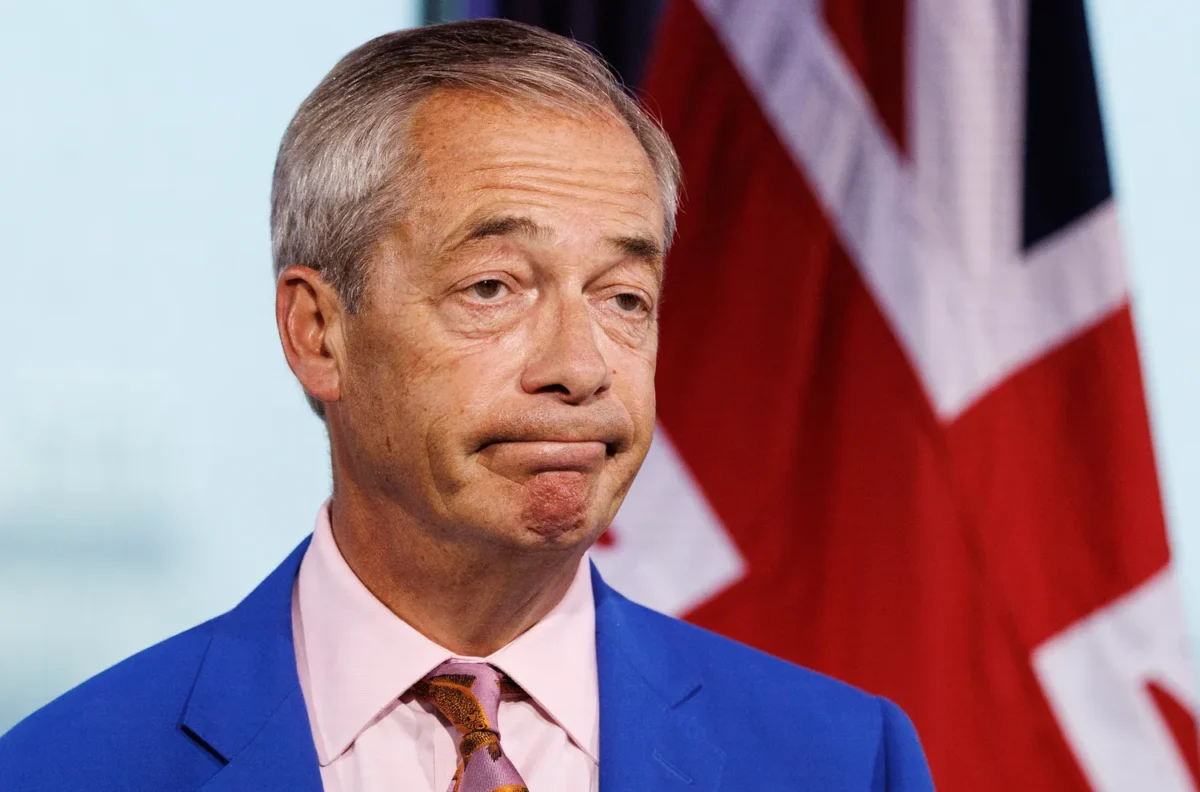
Nigel Farage. Credit: Dan Kitwood/Getty Images
Nigel Farage was supposed to be using Reform UK’s annual conference to sell voters on what the party would do in its first 100 days in government.
Instead, the conference has been dominated by questions about money.
Two senior Reform UK figures have stepped down after an undercover report raised questions about a proposed £500,000 foreign donation and the funding of opinion polling. The party has launched an internal investigation, while the Electoral Commission says it is considering the relevant information and is in contact with the Metropolitan Police.
Reform UK insists it has done nothing wrong.
Farage has also said the recordings “don’t look good”, while maintaining that the party itself did not break the law.
That combination has put the controversy in a politically awkward place for Reform. There is no finding that the party broke electoral law, and police have not, at this stage, opened an investigation. Yet the allegations have created precisely the kind of scrutiny that could test Reform’s claims that it is ready to move from protest politics into government.
What is the Reform UK donations controversy about?
The controversy follows an undercover investigation broadcast by Channel 4 News.
Reporters posing as potential donors recorded discussions involving Farage’s senior aide Dan Jukes and Reform UK head of policy James Orr. The report examined proposals surrounding a potential £500,000 donation from a US-based source.
Under UK electoral law, political parties cannot simply accept donations from anyone overseas. The Electoral Commission says parties must ensure that donations come from permissible sources, while donations and other forms of financial support above specified thresholds are subject to reporting requirements.
According to the BBC’s account of the footage, the undercover reporter presented himself as the UK-based son of an American potential donor. The discussion reportedly involved the son being registered as the donor while his American father supplied the money.
That is now one of the central questions facing Reform UK.
The party says no illegal donation was received and maintains that no law was broken.
Why did two senior Reform officials step down?
Dan Jukes, described as one of Farage’s senior aides, and James Orr, Reform’s head of policy, have both stepped down while the party investigates the allegations.
Jukes has denied wrongdoing and described the undercover operation as “entrapment”, arguing that it was conducted over a prolonged period by foreign-funded climate activists.
Reform has similarly accused its critics of targeting the party through what it described as a hoax.
The departures do not amount to an admission of wrongdoing.
Reform said the two officials stepped down so that its internal investigation could proceed independently and without prejudice.
That distinction is important because the investigation is still ongoing. The allegations shown in the report have not been established as criminal offences by a court or regulator.
What did Nigel Farage say about the allegations?
Farage has defended Reform UK while acknowledging that the footage has created a political problem.
Speaking to LBC, he said the party had “done nothing wrong” but accepted that the recordings did not look good.
He said the remarks made by the two officials were statements that should not have been made.
That response highlights the difficult position Farage now faces.
He can argue that the party did not receive the disputed £500,000 and therefore did not illegally accept the money. But the political controversy is broader than whether cash actually changed hands.
Opponents are questioning whether senior Reform figures were willing to entertain arrangements that could have created problems under electoral law.
That is an issue of political judgment as much as legal liability.
The second allegation involves Reform’s polling
The donation controversy is not the only financial issue raised by the undercover report.
Channel 4 News also reported conversations concerning opinion polling.
According to the BBC, Orr suggested that the undercover reporter’s American father could pay for polling that would benefit Reform’s campaigning. The proposed polling was said to cost around £18,000 plus VAT.
The broadcaster reported that Reform commissioned three polls costing a combined £32,500 and that the public was not told who commissioned or funded them.
The legal question is whether such spending and funding arrangements complied with Britain’s political finance rules.
Reform has denied wrongdoing.
The issue matters because political polling can be more than ordinary research. When polling is commissioned to assist campaigning, questions can arise about whether the cost should be treated as regulated political expenditure or a donation.
The Electoral Commission has said political parties are responsible for ensuring their donor-vetting processes and controls are fit for purpose.
What does UK law say about political donations?
The central principle is that political parties cannot accept donations from impermissible sources.
The Electoral Commission says a donation under the Political Parties, Elections and Referendums Act 2000 can include money, goods, services, property and certain forms of financial support. The rules also cover sponsorship and discounted services in particular circumstances.
For political parties, the reporting threshold is also important.
The Electoral Commission says parties must report permissible donations above £11,180 and impermissible donations above £500. Information suggesting an attempt to evade donation controls can become a matter for law enforcement.
That does not mean every questionable conversation automatically constitutes an offence.
The circumstances surrounding any actual payment, who supplied the money, who was legally treated as the donor and what the party knew would all matter.
READ ALSO
“I’ve come home”: Suella Braverman quits Conservatives in shock defection to Reform UK
What has the Electoral Commission said about Reform UK?
The Electoral Commission says it is in contact with the Metropolitan Police and is considering the relevant information within its regulatory remit.
It has also made an important point: the Commission did not approve Reform’s donor-vetting process.
Political parties themselves are responsible for making sure their internal systems comply with electoral law.
The Commission’s involvement therefore does not mean that Reform UK has been found guilty of breaking election law.
The distinction between considering information, opening an investigation and establishing an offence is crucial.
The BBC reported that the Metropolitan Police had not opened an investigation at the time of its latest update, although the force said it was aware of the allegations and would assess the information provided.
How much money does Reform UK receive?
The controversy arrives at a time when Reform UK is already a significant force in British political fundraising.
Electoral Commission figures show Reform accepted £5.33 million in donations in the second quarter of 2026, excluding public funds, with total reported funding of about £5.55 million for the quarter.
Earlier in 2026, Reform accepted more than £9.26 million in donations during the first quarter, according to the Electoral Commission.
Those figures demonstrate why scrutiny of Reform’s financial arrangements is politically significant.
The party is no longer operating on the margins of Westminster politics. Its fundraising machine is now large enough that questions about donor vetting, political spending and transparency can affect its credibility with voters.
Why the timing is particularly damaging for Farage
The timing could hardly be worse for Farage.
Reform’s conference is designed to demonstrate that the party has moved beyond campaigning against the establishment and is preparing to govern.
Farage is trying to present Reform as a serious alternative to Labour and the Conservatives, with senior figures such as Robert Jenrick, Suella Braverman, Richard Tice and Zia Yusuf helping build the party’s policy platform.
The donations controversy changes the conversation.
Instead of concentrating solely on Reform’s proposals for immigration, taxation, defence and public services, journalists and political opponents are asking questions about how the party handles money.
That creates a credibility problem even before any regulator reaches a conclusion.
Why the controversy could matter at the next election
Reform’s political challenge is different from simply attracting protest votes.
The party needs to convince voters who may be considering it as a governing alternative that its organisation, candidates and internal systems can withstand the scrutiny that comes with power.
Funding controversies strike directly at that argument.
Political parties are expected to maintain systems capable of identifying impermissible donations before money is accepted or political benefits are received.
The Electoral Commission’s published figures also show how important Reform’s fundraising has become. In 2025, Reform reported more than £5.47 million in donations accepted during the year covered by the Commission’s figures.
The more financially powerful the party becomes, the greater the importance of robust controls.
Is Reform UK actually under investigation?
Not in the sense of having been found guilty or formally prosecuted.
The Electoral Commission says it is considering relevant information and is in contact with the Metropolitan Police. The BBC reported that police had not opened an investigation at the time of its update.
Reform itself has launched an internal investigation.
That means several processes should be kept separate: the Channel 4 undercover report, Reform’s internal inquiry, the Electoral Commission’s regulatory consideration and any potential police action.
They are not the same thing.
The outcome of those processes will determine whether the current allegations become a formal political finance case or remain a damaging but unproven controversy.
What happens to Nigel Farage now?
For Farage, the immediate task is to prevent the funding row from defining Reform’s conference.
His party wants voters to focus on its plans for government. But the departure of two senior figures and the involvement of the Electoral Commission make the financial controversy difficult to push aside.
Farage has already taken the position that the party itself has done nothing wrong while accepting that the recordings created a serious enough problem to warrant action.
The coming weeks will test whether that defence holds.
If the internal investigation finds no wrongdoing and regulators take no further action, Reform can argue that the controversy was politically motivated and that its systems ultimately worked.
If regulators or police uncover evidence of an attempt to circumvent donation rules, the political consequences could be much more serious.
For now, the most accurate description is that Reform UK is facing serious questions, not a proven finding of illegal donations.
That distinction could become increasingly important as Farage seeks to persuade voters that his party is ready to govern.
Frequently Asked Questions
What is the Reform UK donations scandal about?
The controversy centres on an undercover report that recorded discussions involving senior Reform figures about a proposed £500,000 donation from a foreign source and arrangements involving political polling. Reform denies wrongdoing.
Did Reform UK receive the £500,000 foreign donation?
There is no indication in the information currently available that Reform actually received the proposed £500,000. The controversy concerns discussions about how such funding could potentially be arranged.
Did Nigel Farage break the law over the Reform donation?
There has been no finding that Farage broke electoral law. Farage has denied wrongdoing and said Reform had done nothing wrong.
Why did Dan Jukes leave Reform UK?
Farage aide Dan Jukes stepped down while Reform investigates the allegations. He denies wrongdoing and has described the undercover operation as entrapment.
Who is James Orr?
James Orr is Reform UK’s head of policy. He also stepped down pending the outcome of the party’s internal investigation into the allegations.
Is Reform UK being investigated by the police?
The Metropolitan Police was aware of the allegations and said it would assess the information. The BBC reported that police had not opened an investigation at the time of its latest update.
Is the Electoral Commission investigating Reform UK?
The Electoral Commission said it was considering relevant information and was in contact with the Metropolitan Police. That should not be confused with a finding that Reform broke electoral law.
What are the rules on foreign donations to UK political parties?
UK political parties are subject to rules governing permissible donors. The Electoral Commission says parties must ensure donations comply with the Political Parties, Elections and Referendums Act 2000.
How much money does Reform UK receive?
Electoral Commission figures show Reform accepted more than £5.33 million in donations during the second quarter of 2026 and more than £9.26 million during the first quarter.
Could the Reform UK donations row hurt Nigel Farage?
Potentially. The immediate political damage comes from questions about transparency and internal controls rather than a proven criminal offence. The controversy also arrives as Farage tries to establish Reform as a credible party of government.
What happens if Reform UK is found to have broken electoral law?
The consequences would depend on what regulators or law enforcement establish. Political finance rules provide mechanisms for regulatory action, while alleged criminal conduct can be referred to the police.
Why does the Reform UK funding controversy matter?
It goes beyond one proposed donation. Reform is increasingly presenting itself as a potential governing party, making the strength of its financial controls, donor checks and transparency increasingly important to voters.