

Who is Anthony Kila, the university chief accused of being a fake professor?

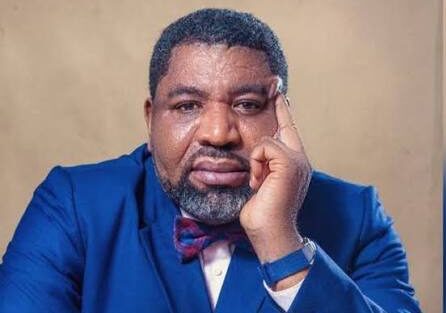
Anthony Kila, the pro-chancellor of Michael and Cecilia Ibru University, has come under scrutiny after a PREMIUM TIMES investigation questioned his claim to be a professor.
Kila has for years been publicly described as a professor and as a “Jean Monnet Professor of Strategy and Development”. His profiles on the websites of Michael and Cecilia Ibru University and the Commonwealth Institute of Advanced and Professional Studies also identify him as “Prof. Anthony Kila”.
However, a recent PREMIUM TIMES investigation found no evidence that a recognised academic institution awarded Kila the rank of professor.
The newspaper also questioned several other claims contained in his public academic profiles, including the existence of an institution Kila identified as the European Centre for Advanced and Professional Studies.
Kila told PREMIUM TIMES that the institution awarded him the professorship in 2016. The investigation, however, found no evidence that the institution exists outside references in his profiles.
So, who is Anthony Kila, and why has his academic title become a subject of controversy?
Who is Anthony Kila?
Anthony Kila is a Nigerian academic, author, public commentator and professional who has appeared regularly in Nigerian media as an analyst.
He is also the pro-chancellor of Michael and Cecilia Ibru University, a position he was appointed to in August 2025.
A pro-chancellor chairs the governing council of a university. The council is responsible for areas including the institution’s administration, policies, finances and assets.
Kila has also been associated with the Commonwealth Institute of Advanced and Professional Studies, or CIAPS.
Over the years, his public profiles have presented him as a widely educated professional with qualifications and experience spanning several countries.
His biographies have described him as a jurist, scholar, professor, author and public commentator.
However, it is his professorial title that has now attracted the most scrutiny.
Why is Anthony Kila being called a ‘fake professor’?
The controversy centres on whether Kila legitimately holds the academic rank of professor.
According to PREMIUM TIMES, its investigation found no evidence that Kila was awarded a professorship by a recognised university.
The newspaper reviewed his public profiles and contacted institutions and organisations connected to his claims.
Kila told the newspaper that the European Centre for Advanced and Professional Studies awarded him the professorship in 2016.
PREMIUM TIMES said searches of the UK Companies House, Nigeria’s Corporate Affairs Commission and online sources did not establish the existence of the institution.
The investigation also reported that the institution appeared only in Kila’s profiles.
These findings led the newspaper to describe his professorial title as fake.
However, Kila has disputed the central finding. He maintained that ECAPS awarded him the professorship.
Michael and Cecilia Ibru University also told PREMIUM TIMES that it had no evidence that Kila was not a professor.
What is a professor in Nigeria?
The controversy is significant because “professor” is not simply an honorary description in the Nigerian university system.
It is the highest academic rank in the university career structure.
According to the National Universities Commission, attaining professorship involves academic qualifications, teaching and research experience, publications, postgraduate supervision and contributions to knowledge.
A typical academic career towards professorship involves progression through several ranks, including Lecturer II, Lecturer I, Senior Lecturer and Associate Professor.
PREMIUM TIMES quoted Ahmad Galadima, a former Deputy Vice-Chancellor of Federal University Gusau, as explaining that candidates for professorship undergo assessment within their universities and are also subjected to external assessment by senior academics.
The process is therefore different from simply receiving an honorary title or professional designation.
What did Kila claim about his education?
Kila’s public biographies list several academic qualifications from institutions in Italy and the United Kingdom.
In information he supplied to PREMIUM TIMES, he said he obtained a Bachelor of Arts degree in Classical Studies from Università per Stranieri in Italy in 1989.
He said he subsequently obtained a master’s degree in European Studies from the same institution in 1991.
He also listed a postgraduate diploma in Media and Communication from the University of Essex, a master’s degree in International Banking and Finance from City University London and a PhD in Political Economy from the University of Perugia.
His list also included an MBA from Aston University, a postgraduate certificate in higher education and a Master of Laws from Cambridge.
However, PREMIUM TIMES found inconsistencies between this list and some of the descriptions contained in his public profiles.
For example, one profile described him as having graduated with a first-class degree in political economy and later specialised in political anthropology.
His account to PREMIUM TIMES instead identified his first degree as Classical Studies from Università per Stranieri.
The newspaper said it is continuing to investigate some of his educational claims because it is still awaiting responses from some institutions.
What is the controversy over the ‘Jean Monnet Professor’ title?
Another major issue concerns Kila’s description as a “Jean Monnet Professor of Strategy and Development”.
Jean Monnet is associated with a European Union programme supporting teaching, research and debate on European integration.
PREMIUM TIMES contacted the European Education and Culture Executive Agency, which administers the Jean Monnet programme.
The agency reportedly said Kila did not appear as a Jean Monnet project coordinator in its publicly available directory.
The newspaper also spoke with Jean-Marc Trouille, a professor and co-chair of the AfriquEurope Jean Monnet Network.
Trouille reportedly said it was highly unlikely that Kila held a Jean Monnet Chair award.
Kila acknowledged to PREMIUM TIMES that he was not associated with the Jean Monnet actions but did not explain how he came to describe himself as a “Jean Monnet professor”.
What about Kila’s academic publications?
The investigation also examined Kila’s academic publication record.
His Google Scholar profile listed 22 works, including books, journal articles and book chapters.
However, PREMIUM TIMES reported that nine of those records were not authored by Kila.
The newspaper also said it could not independently establish any of the works attributed to him as peer-reviewed articles in a reputable academic journal.
His ResearchGate profile reportedly described him as a “full professor” but contained no publications.
These findings formed part of PREMIUM TIMES’ broader questions about how Kila’s academic credentials were presented publicly.
What happens next?
The controversy is not limited to Kila’s professorial title.
PREMIUM TIMES said it is continuing to investigate his claimed educational qualifications and is awaiting responses from some of the institutions he said he attended.
The newspaper also reported that the CIAPS website, which contained some of Kila’s profiles, became unavailable after its reporter confronted him with the findings.
For now, the central dispute remains over whether Kila legitimately holds the title of professor.
PREMIUM TIMES says its investigation established that he does not hold a recognised professorship, while Kila maintains that the European Centre for Advanced and Professional Studies awarded him the title.
The university has also said it has no evidence that he is not a professor.
The controversy therefore raises a wider question about the importance of independently verifying academic titles and qualifications, particularly when they are attached to people occupying senior positions in Nigerian universities.
For Kila, the investigation has placed his academic credentials under intense scrutiny. For the Nigerian university system, it has renewed attention on how academic titles are awarded, verified and presented to the public.