

Trump’s Falklands stance is bigger Than Argentina: What it reveals about the future of the US-UK special relationship

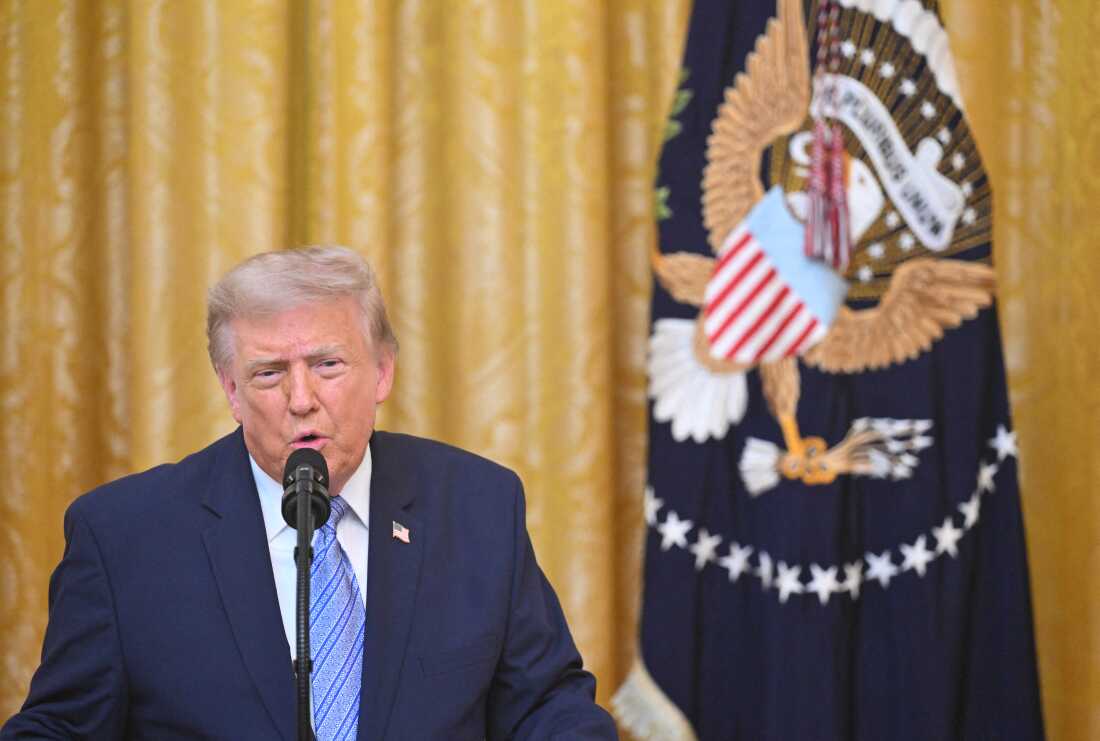
President Trump addresses the nation from the East Room of the White House. Image Credit: Saul Loeb/Pool/AFP via Getty Images
President Donald Trump’s latest comments on the Falkland Islands have turned a decades-old sovereignty dispute into a new test for the relationship between the United States and Britain.
Trump said Washington is reviewing its position on the Falkland Islands, a British-governed territory claimed by Argentina, without saying that the United States had decided to change its policy. The remarks have nonetheless created uncertainty in London and offered a major diplomatic opening to Argentine President Javier Milei, one of Trump’s closest allies in Latin America.
The timing matters. The Falklands issue is arriving amid wider disagreements between Washington and London over defence spending, NATO commitments and Britain’s response to the U.S.-Iran conflict. Reports earlier this year indicated that reviewing U.S. support for Britain’s position on the islands had been considered as one possible way of putting pressure on European allies.
That makes Trump’s Falklands stance bigger than the islands themselves. It raises questions about how far the president is prepared to use longstanding diplomatic positions as bargaining tools with traditional U.S. allies.
What did Trump say about the Falkland Islands?
Trump was asked whether the United States could change its position on the Falkland Islands. His response was that he reviews every position, describing the Falklands as one of many issues under consideration.
He did not announce that Washington would recognise Argentine sovereignty or withdraw support for Britain. Reuters reported that the United States has generally avoided taking sides on the sovereignty dispute since the 1982 Falklands War.
That distinction is important.
A review is not the same as a policy reversal. Yet even the suggestion that Washington could reconsider its longstanding approach has political consequences because Britain considers the sovereignty of the islands settled.
The British government has reaffirmed that position, saying sovereignty rests with the UK and that the islanders’ right to determine their future remains central to London’s policy.
Why the Falklands dispute is back in the spotlight
The Falkland Islands, known as the Islas Malvim since the 19th century, apart from the brief Argentine occupation that triggered the 1982 war

The conflict ended with British forces regaining control. The dispute never disappeared, but it had largely remained a diplomatic issue rather than an immediate military confrontation.
A 2013 referendum provided Britain with another important argument. About 99.8% of participating islanders voted to remain a British overseas territory. Argentina rejected the referendum, arguing that the island population had been established under British rule and therefore could not determine the sovereignty question in the way London argues.
Trump’s comments have now given the dispute a new international dimension.
What Trump’s Falklands stance means for Britain
For the UK, the concern is not simply whether Washington formally changes its position.
The bigger issue is whether Britain can continue assuming that the United States will reliably stand behind its closest European ally when major strategic interests collide.
The two countries remain deeply connected through intelligence sharing, defence cooperation, trade and NATO. British and American officials have continued to describe their relationship as important even during periods of serious disagreement.
But the Falklands controversy exposes a more transactional approach to alliances under Trump.
Reports have linked the potential review of the Falklands position to pressure on Britain to increase defence spending and meet wider NATO expectations. Reuters reported that a Pentagon policy document considered reviewing Washington’s position on the British claim among possible measures against allies viewed as insufficiently supportive of U.S. military operations.
That gives London a difficult calculation.
Britain must defend its sovereignty claim without allowing the dispute to become another source of permanent confrontation with Washington.
READ ALSO
US threatens to rethink Falklands support over UK defence spending: What the new ultimatum means
Why Javier Milei is watching Trump closely
Argentina has the most obvious reason to welcome any weakening of traditional U.S. support for Britain.
President Javier Milei has made the Falklands claim an important part of Argentina’s national political identity. His government has generally favoured diplomatic pressure rather than another military confrontation with Britain.
Trump’s comments provide Buenos Aires with something it has not had in this form for decades: uncertainty about Washington’s traditional approach to the dispute.
Milei has moved quickly to reinforce Argentina’s position. He has described the Malvinas cause as a central national issue and announced a national address on the dispute.
Still, Trump’s support would not automatically change control of the islands.
Any meaningful settlement would ultimately require Britain and Argentina to agree to a diplomatic arrangement. Analysts have noted that Argentina cannot resolve the sovereignty dispute simply by winning American backing.
Could Trump actually hand the Falklands to Argentina?
Not directly.
The United States does not control the Falkland Islands, and a change in American diplomatic policy would not transfer sovereignty from Britain to Argentina.
The immediate significance would be political and diplomatic.
If Washington were to recognise Argentina’s claim, openly oppose British sovereignty or abandon its traditional position, Buenos Aires would gain a major diplomatic boost. Britain, meanwhile, would face pressure from one of its most important allies.
There is also a major difference between questioning Britain’s claim and actually recognising Argentina’s sovereignty. Trump has not announced the latter.
For now, the U.S. position remains under review rather than formally overturned.
The bigger issue: Is the special relationship becoming transactional?
This may be the most important question raised by Trump’s Falklands stance.
The United States and Britain have historically relied on a relationship built around military cooperation, intelligence sharing and a shared approach to major international security issues.
Trump’s approach puts greater emphasis on what allies contribute in return.
That has already created friction with European governments over military support, NATO spending and the Iran conflict. The Falklands issue now appears to be entering the same conversation.
For Britain, the lesson may be that historical alliances no longer guarantee automatic American backing on every sovereignty or security issue.
For Argentina, the opportunity is obvious: use the opening created by tension between Washington and London to push the Malvinas issue higher on the international agenda.
For the United States, the calculation is more complicated. Moving closer to Argentina could strengthen ties with Milei while putting additional pressure on Britain, but a major break with London’s position could also create costs inside a relationship Washington has depended on for decades.
What happens next in the Falklands dispute?
The immediate focus will be on whether Trump’s review produces an actual change in U.S. policy.
Britain is unlikely to compromise on its sovereignty claim, particularly given the islanders’ overwhelming support for remaining British. Argentina, meanwhile, is expected to continue using diplomatic channels to press its claim rather than pursue military action.
Milei’s renewed campaign could keep the issue in international headlines, especially as Argentina looks for ways to turn Trump’s comments into diplomatic momentum.
The most significant development would be an explicit statement from Washington recognising Argentine sovereignty or withdrawing diplomatic support for Britain’s position.
Until that happens, Trump’s comments should be understood as a warning signal rather than a completed foreign-policy reversal.
Frequently Asked Questions
What is Trump’s current stance on the Falkland Islands?
Trump has said the United States is reviewing its position on the Falkland Islands. He has not announced that America recognises Argentine sovereignty or that Washington has formally abandoned its longstanding approach.
Does Trump support Argentina’s claim to the Falklands?
Trump has not formally endorsed Argentina’s sovereignty claim. His decision to say the U.S. position is under review has, however, created an opening for Argentina and raised concerns in Britain.
Why does Argentina claim the Falkland Islands?
Argentina calls the islands the Islas Malvinas and maintains that they are Argentine territory. The sovereignty dispute dates back to the 19th century and remains a major issue of national identity in Argentina.
Why does Britain say the Falklands are British?
Britain has governed the islands for most of the period since 1833 and argues that the islanders have the right to self-determination. In a 2013 referendum, 99.8% of voters backed remaining a British overseas territory.
Could Trump’s decision change who controls the Falklands?
Not by itself. The United States does not control the territory. A change in U.S. diplomatic policy could influence international pressure and the political balance, but it would not automatically transfer sovereignty to Argentina.
Why is Javier Milei interested in Trump’s Falklands position?
Milei has made Argentina’s claim to the islands a major national issue. A more sympathetic U.S. position could give Buenos Aires greater diplomatic leverage in its long-running dispute with Britain.
Could Argentina try to retake the Falklands by force?
There is no indication from the current developments that Argentina is preparing for another war. Milei’s approach has focused on pursuing the claim through diplomacy rather than military action.
Does Trump’s Falklands stance threaten the US-UK special relationship?
It could add significant strain. The dispute comes during broader disagreements over defence spending, NATO and Britain’s support for U.S. military operations. The key issue for London is whether Washington’s position on a longstanding British sovereignty claim is being used as leverage in those wider disputes.
What should people watch for next?
The most important signal will be whether the Trump administration moves beyond a review and formally changes U.S. diplomatic policy toward the Falklands. Any explicit recognition of Argentina’s claim would represent a much more serious break with the traditional U.S. position.