

Amazon cargo plane crash at Miami airport: What investigators have discovered so far

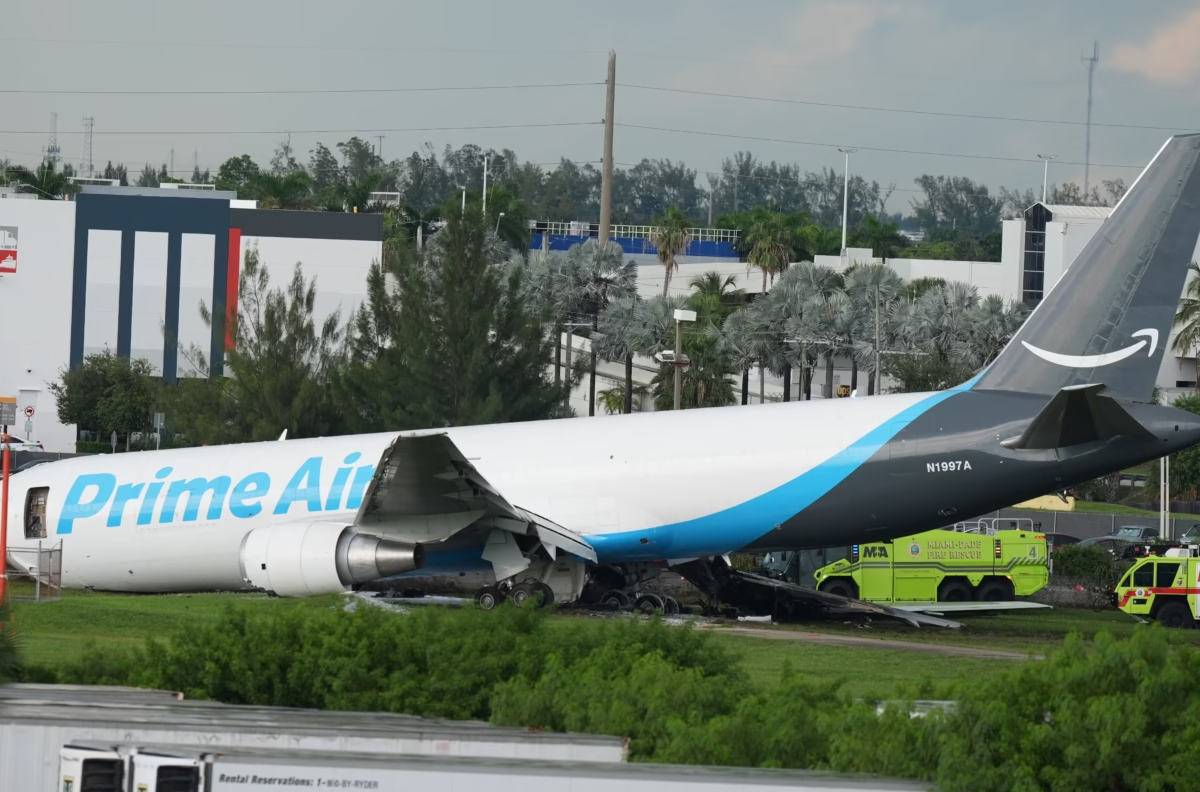
An Amazon cargo plane overshot a Miami runway, struck vehicles and killed five people.
Investigators probing the deadly Amazon Air cargo plane crash at Miami International Airport are now piecing together a troubling sequence in the final moments before the Boeing 767 ran off the runway and struck vehicles, killing five people.
New information from the aircraft’s cockpit voice recorder shows that one of the pilots raised concerns about the plane’s excessive speed as it approached the runway. At the same time, automated warnings repeatedly sounded inside the cockpit.
The National Transportation Safety Board has stressed that its findings remain preliminary, but the newly recovered black-box data is giving investigators a clearer picture of what happened during the final stages of the flight.
The aircraft, operated for Amazon by contractor 21 Air, was carrying more than 32,000 pounds of cargo on a flight from San Juan, Puerto Rico, to Miami when it overran the runway Sunday.
Five people inside a cleaning company’s van were killed after the aircraft left the airport runway and struck the vehicle, an airport fence, concrete barriers and an SUV before coming to a stop and catching fire.
Pilot Warned Plane Was Going Too Fast
One of the most significant discoveries so far comes from the cockpit voice recorder.
According to the NTSB’s investigative update, roughly two minutes after the pilots were cleared to land, one pilot expressed concern that the aircraft was going “too fast.”
The same pilot continued making comments about the aircraft’s excessive speed during the remainder of the recording.
Investigators also noted that there was no consistent verbal response from the other pilot to those warnings.
The NTSB has not said why the second pilot did not consistently respond or whether the exchange reflected a disagreement, workload issue, cockpit communication problem or another factor.
That is expected to be one of the areas investigators examine as they reconstruct the crew’s actions.
Cockpit Alarms Sounded During the Approach
The cockpit voice recording also captured multiple automated warnings from the aircraft’s Ground Proximity Warning System.
The system issued two “sink rate” warnings, indicating that the aircraft’s rate of descent was too high.
It also issued five “too low terrain” warnings.
Such warnings are designed to alert pilots when an aircraft’s flight path creates a potential risk involving terrain or an unsafe descent.
The presence of repeated alerts does not by itself establish what caused the crash. Investigators will need to determine how the crew interpreted the warnings, what actions they took and how the aircraft’s flight path developed during the approach.
The warnings are significant because they occurred alongside the pilot’s comments about excessive speed.
Plane Was Still Traveling at High Speed When It Touched Down
The flight data recorder has provided another crucial piece of the investigation.
About 30 seconds before the recording ended, the aircraft was traveling at more than 180 mph when two sets of landing gear touched the runway.
The rear right and nose landing gear made contact first.
The rear left landing gear touched down approximately nine seconds later.
Aircraft are designed and pilots are trained to land with the rear landing gear first, making the unusual sequence an important part of the NTSB’s reconstruction.
The aircraft then continued down the runway at a speed that left little room for recovery.
Pilots Called for a Go-Around After Touchdown
One of the biggest questions emerging from the investigation is what happened when the crew attempted to abort the landing.
After the aircraft touched down, one of the pilots called for a “go-around,” the standard procedure for abandoning an approach and attempting another landing.
The flight data recorder indicates that the aircraft was traveling at nearly 140 mph when one pilot released the wheel brakes and moved the throttles to full takeoff power.
Those actions are consistent with attempting to initiate a go-around.
But about four seconds later, the throttles were brought back to idle and the brakes were reapplied.
By then, the aircraft was already running out of runway.
The NTSB has said it needs to interview the pilots to understand exactly how the controls were being manipulated and why the sequence unfolded that way.
No Evidence So Far of Speed Brakes or Thrust Reversers
Investigators have also identified another major issue in the aircraft’s deceleration.
The NTSB said there were no indications that the aircraft’s speed brakes or thrust reversers were deployed during the incident.
Both systems are designed to help slow an aircraft after landing.
Speed brakes increase aerodynamic drag, while thrust reversers redirect engine airflow to help reduce forward momentum.
Their apparent non-use does not establish why the aircraft failed to stop. Investigators must determine whether the systems were intentionally not deployed, whether there was a technical or operational reason, or whether the crew’s actions during the attempted go-around affected their use.
READ ALSO
Amazon cargo plane ran out of runway in Miami: Here’s what happened
Investigators Are Examining the Crew’s Actions
The NTSB has made clear that the investigation is moving beyond simply examining what the aircraft did.
Investigators also want to understand what the pilots were seeing, hearing and doing inside the cockpit.
Both the cockpit voice recorder and flight data recorder were recovered from the wreckage and successfully accessed at the NTSB’s laboratory in Washington.
The two sources can be compared to establish a timeline linking cockpit conversations and alarms with the aircraft’s speed, altitude, configuration, throttle movements and braking.
Investigators have also examined the engines and cockpit, taken measurements and collected debris from the crash site.
They visited the air traffic control tower and the facility responsible for guiding aircraft toward Miami International Airport.
The flight’s dispatcher at 21 Air’s Miami operations center has also been interviewed.
Who Were the Pilots?
The Miami-Dade Sheriff’s Office identified the pilots as Captain Joseph Carol and First Officer Jaime Felipe Silva Molina.
Carol, 55, had more than 7,000 hours of flight experience and had been certified to fly Boeing 767 aircraft since May.
Silva Molina, 37, had more than 2,500 hours of flight experience and had been certified on the Boeing 767 since April 2025.
Investigators will examine their experience, training, recent flight history and actions during the approach as part of the wider investigation.
Experience alone, however, does not establish the cause of an accident.
Five Cleaning Workers Were Killed
The crash also devastated a group of airport workers who were inside the van struck by the aircraft.
The five victims were identified as Rolando Aleman Leon, 55; Yoel Rodriguez Naranjo, 53; Julio C. Pineda, 75; Carlos Acosta Fajardo, 53; and Javierkys Reyes Quevedo, 47.
All five worked for Professional Ocean Service Corp., a contract cleaning company serving airlines.
Three other people were hospitalized following the crash. Two were reported to be in critical condition, while another was stable.
The aircraft struck the van on an airport service road before continuing beyond the runway area.
Wrongful Death Lawsuit Filed After Miami Plane Crash
The crash has also moved into the courtroom.
The widow of Yoel Rodriguez Naranjo has filed a wrongful death lawsuit against the aircraft’s pilots, Amazon and 21 Air.
The lawsuit alleges that multiple failures contributed to the crash and describes the incident as a preventable disaster caused by negligence.
The allegations have not been established in court.
Amazon has said it is supporting affected families and cooperating fully with the NTSB and other authorities. 21 Air has also been contacted for comment regarding the lawsuit.
What Investigators Still Need to Find Out
Despite the release of black-box information, the NTSB has not determined the official cause of the crash.
Several major questions remain.
Investigators need to establish why the aircraft approached the runway at such a high speed, why one pilot’s concerns did not produce a consistent response, why the aircraft touched down in an unusual landing-gear sequence and what prompted the brief application of full takeoff power after touchdown.
They also need to determine why the throttles were returned to idle, why braking was reapplied and why there were no recorded indications of speed-brake or thrust-reverser deployment.
Mechanical issues, weather, runway conditions, air traffic control, crew decisions, aircraft performance and operational procedures are among the factors investigators must consider before reaching a final conclusion.
NTSB Warns Early Findings Can Change
The NTSB has repeatedly cautioned that the investigation is still developing.
Investigators are collecting evidence that could either confirm or contradict information emerging during the first days after the crash.
NTSB Chair Jennifer Homendy has warned that information received immediately after an accident can sometimes prove inaccurate once investigators validate it against physical evidence and recorded data.
That means the latest black-box findings provide important clues, but they do not yet amount to a final explanation of why the Amazon cargo plane crashed.
The investigation is expected to continue as investigators analyze the aircraft, interview the crew and witnesses, review operational records and reconstruct the final approach in detail.
For now, the clearest picture is of a cargo jet approaching Miami at high speed, cockpit warnings sounding, a pilot expressing concern about that speed and an attempted go-around that came too late to prevent the aircraft from overrunning the runway.
The question investigators now face is how those events became connected, and whether a different decision at any point could have prevented the tragedy.
Frequently Asked Questions About the Amazon Cargo Plane Crash
What happened to the Amazon cargo plane in Miami?
An Amazon Air Boeing 767 operated by 21 Air overran a runway at Miami International Airport and struck vehicles and airport infrastructure before stopping and catching fire.
How many people died in the Miami Amazon plane crash?
Five people were killed. They were workers from Professional Ocean Service Corp. who were inside a cleaning van struck by the aircraft.
What did the black box reveal about the Miami plane crash?
The cockpit voice recorder captured a pilot expressing concern that the aircraft was traveling too fast during the approach. It also recorded multiple automated warnings, including “sink rate” and “too low terrain.”
Was the Amazon cargo plane going too fast?
The NTSB’s preliminary information indicates that the aircraft was traveling at high speed during its approach and that one pilot specifically expressed concern about excessive speed.
Did the pilots try to stop the plane?
The flight data recorder shows that braking was applied. After touchdown, a pilot also called for a go-around and briefly moved the throttles to full takeoff power before the throttles were returned to idle and braking was reapplied.
Did the plane’s brakes fail?
Investigators have not concluded that the brakes failed. The NTSB is still examining the aircraft’s systems and the crew’s actions.
Were the thrust reversers used?
The NTSB said there were no indications that thrust reversers or speed brakes were deployed during the incident.
Who operated the Amazon cargo flight?
The aircraft was operated for Amazon by 21 Air.
Where was the Amazon cargo plane flying from?
The flight was traveling from San Juan, Puerto Rico, to Miami International Airport.
What was the Amazon plane carrying?
The aircraft was carrying more than 32,000 pounds of cargo, much of it reported to consist of contact lenses.
Who were the pilots on the Amazon Miami flight?
The pilots were identified as Captain Joseph Carol and First Officer Jaime Felipe Silva Molina.
Has the NTSB determined the cause of the crash?
No. The NTSB investigation remains ongoing and the findings released so far are preliminary.
Could the Amazon plane crash have been prevented?
That cannot yet be determined. Investigators are examining the crew’s decisions, aircraft systems, flight data, runway conditions and other possible contributing factors before reaching a conclusion.