

Lagos Danfo Enforcement: Why Wrecked Buses Still Roam the Roads

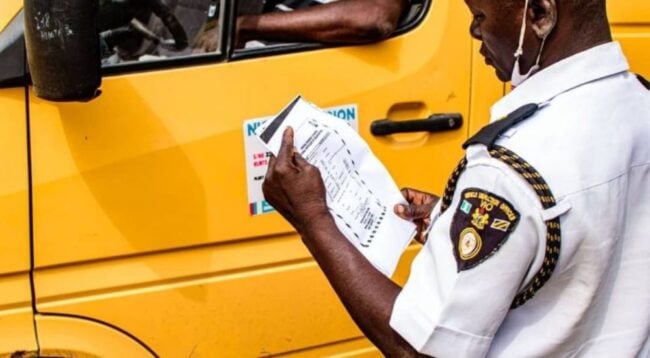
Lagos danfo enforcement is under fresh scrutiny after a video showing a badly damaged commercial bus still carrying passengers went viral online this week, sparking outrage and renewed questions about how such vehicles remain in service under an agency that has repeatedly promised to get unroadworthy buses off the road.
The clip, shared by an X user with the caption “Lagos wahala,” shows a mangled yellow danfo moving through traffic with commuters on board. It has not been independently verified by CrispNG, and the location and date of the footage remain unconfirmed. But whether or not this exact bus checks out, the reaction it has triggered points to a deeper and well documented problem: Lagos has struggled for years to keep its enforcement of commercial bus safety consistent.
What the viral danfo video shows
Online reactions ranged from shock to dark humour, with commenters questioning how anyone could board such a vehicle and others describing it as familiar proof of what commuting in Lagos can look like. That reaction, more than the clip itself, is what makes this worth examining. It reflects a public perception that unsafe danfos are common enough to be unsurprising, not an isolated incident.
Lagos danfo enforcement: a history of flip-flops
The agency responsible for checking commercial vehicle roadworthiness in Lagos is the state’s Vehicle Inspection Service, along with federal oversight from the FRSC on highways. But the state’s approach to enforcement has shifted repeatedly.
In 2017, then Governor Akinwunmi Ambode [permanently banned Vehicle Inspection Officers from Lagos roads](https://guardian.ng/sunday-magazine/motorists-worry-as-vios-return-to-lagos-roads/), blaming their activities for worsening traffic and directing the FRSC to restrict itself to highways rather than inner city streets. The decision followed complaints about the officers’ conduct rather than concerns about vehicle safety itself.
By 2019, those same officers were [quietly back on Lagos streets](https://www.pressreader.com/nigeria/business-day-nigeria/20190120/282346860994622), stopping and checking vehicles despite the supposedly permanent ban, according to motorist sightings reported at the time.
Lagos danfo enforcement promises vs reality
More recently, the Vehicle Inspection Service said it was making commercial buses its priority. In 2024, the agency’s chief vehicle inspection officer said danfos and similar buses would be [the year’s main enforcement focus](https://www.channelstv.com/2024/02/19/vis-vows-crackdown-on-danfo-other-commercial-transporters), and the service later reported [seizing more than 200 unroadworthy vehicles](https://www.itsnigeria.org/?p=7633), many of them commercial minibuses.
Those numbers suggest enforcement activity is happening. But the recurring appearance of visibly damaged buses still carrying passengers, whether this latest video holds up or not, suggests that activity has not translated into a system commuters can rely on.
The regulatory gap behind broken buses on Lagos roads
Part of the problem is structural. Commercial drivers in Lagos answer to at least three separate agencies with overlapping roles: the Vehicle Inspection Service for roadworthiness, the FRSC for federal highways, and LASTMA for general traffic enforcement. When a wrecked bus turns up on a viral video, it is not always obvious which agency should be held responsible for having missed it, and that ambiguity has made accountability difficult to pin down.
It also raises an uncomfortable question for commuters who have little choice but to use danfos daily. If enforcement drives produce headline seizure numbers but wrecked buses keep resurfacing, the gap may sit less in policy and more in how consistently that policy reaches the road.
What could fix Lagos danfo enforcement
Transport analysts and past officials have pointed to a mix of solutions: sustained rather than periodic inspection drives, clearer division of responsibility between the overlapping agencies, and continued investment in regulated alternatives such as BRT and app based bus services that are gradually offering commuters a way around the danfo system altogether.
Until then, videos like this week’s are likely to keep resurfacing, less as isolated shock content than as recurring evidence of a regulatory gap Lagos has not yet closed.
Frequently Asked Questions
Which agency regulates danfo buses in Lagos?
The Lagos State Vehicle Inspection Service handles roadworthiness checks for commercial buses, while the FRSC covers federal highways and LASTMA manages general traffic enforcement.
Has Lagos banned unroadworthy danfos before?
The state has run periodic enforcement drives rather than an outright ban, including a 2024 crackdown that led to the seizure of over 200 unroadworthy vehicles.
Why do damaged danfos still operate despite enforcement drives?
Overlapping agency responsibilities and inconsistent, campaign style enforcement rather than continuous inspection are commonly cited reasons the gap persists.