
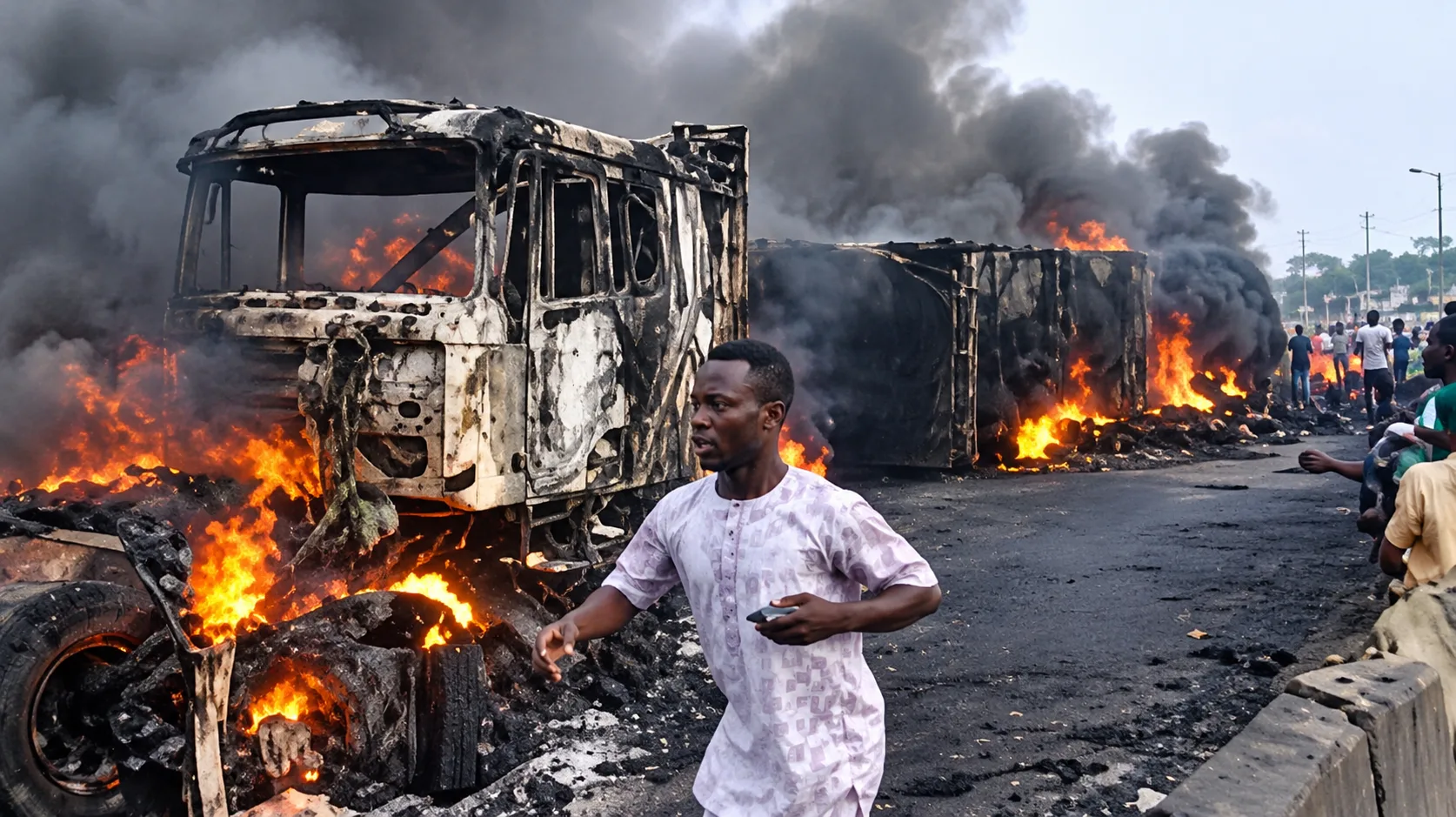
Recurring tanker accidents in Nigeria have raised concerns about the safety of transporting petroleum products. The NMDPRA has now urged drivers and transport operators to follow established safety standards. Here are five important measures that can help prevent accidents and reduce their impact.
Petroleum tankers carry products that can turn a road accident into a major fire or explosion. When a truck overturns, leaks or catches fire, drivers and nearby residents can face serious danger.
The Nigerian Midstream and Downstream Petroleum Regulatory Authority (NMDPRA) has renewed its call for stricter compliance with tanker safety standards.
At a safety sensitisation programme in Warri, Delta State, on November 12, 2026, the authority’s South-South Regional Coordinator, Ibrahim Dimowo, outlined key areas operators and drivers must understand.
The programme covered defensive driving, fatigue management, fire prevention, spill containment and emergency response.
Here are five safety measures highlighted by the regulator and other road safety stakeholders.
1. Practise defensive driving
Tanker drivers must maintain control of their vehicles and anticipate possible dangers on the road.
The Federal Road Safety Corps (FRSC) Assistant Corps Marshal, Operations, Omiko Godwin, advised drivers to look ahead, remain focused and maintain enough distance from vehicles in front of them.
He also warned that brake failure could cause serious accidents.
For tanker drivers, defensive driving means obeying speed limits, avoiding dangerous overtaking and allowing enough stopping distance.
2. Avoid driving while fatigued
Long journeys can leave drivers exhausted and less alert.
Fatigue can affect concentration, slow reaction time and increase the risk of losing control of a heavy vehicle.
At the Warri programme, the NMDPRA identified fatigue management as a key part of tanker safety.
The National Association of Road Transport Owners (NARTO) also urged drivers to observe proper rest periods.
3. Inspect tankers and recognise hazards
A tanker must be fit for the journey before it leaves a depot.
Operators should check the vehicle’s mechanical condition, tyres, brakes and other critical components. Drivers must also understand the risks along their routes.
In May 2025, the NMDPRA announced a 10-page inspection checklist under its Safe Load initiative. The checklist covers vehicle roadworthiness and the fitness and competence of drivers.
The authority also introduced truck identification measures and mandatory anti-spill containment equipment. The Guardian reported the measures.
4. Prevent fires and contain fuel spills
A fuel leak can expose motorists and nearby communities to fire and environmental hazards.
Drivers must understand fire prevention procedures and avoid actions that could trigger ignition around leaked petroleum products.
Tankers should also have appropriate safety equipment to limit the spread of spilled products after an accident.
The NMDPRA has previously required anti-spill devices as part of its tanker safety measures. Its latest sensitisation programme also highlighted fire prevention and spill containment.
5. Prepare for emergencies
Safety does not end when an accident occurs. Drivers and operators must know how to respond quickly.
The NMDPRA identified emergency response actions and journey management planning as important parts of its training.
Operators should have clear procedures for reporting accidents, alerting emergency agencies and securing affected areas.
Members of the public also have a responsibility. NARTO advised motorists to keep their distance from crashed or leaking tankers rather than approaching them.
Read also: Fuel Tanker Explosion: How to Save Yourself From Harm
What has Nigeria done about tanker safety?
The latest campaign comes after several regulatory interventions.
In February 2025, the NMDPRA announced that trucks exceeding 60,000 litres would no longer be allowed to load petroleum products at depots from March 1, 2025. The authority also announced plans to reduce the limit to 45,000 litres by the fourth quarter of that year.
The regulator introduced inspections, driver fitness checks and anti-spill equipment as part of wider efforts to reduce tanker accidents.
However, announcing safety measures is only one part of the challenge. Their consistent enforcement, alongside responsible driving and proper vehicle maintenance, remains essential.
The NMDPRA’s latest appeal in Warri therefore places responsibility on regulators, tanker owners and drivers to ensure that petroleum products reach their destinations without putting other road users at risk.