

Amazon cargo plane ran out of runway in Miami: Here’s what happened

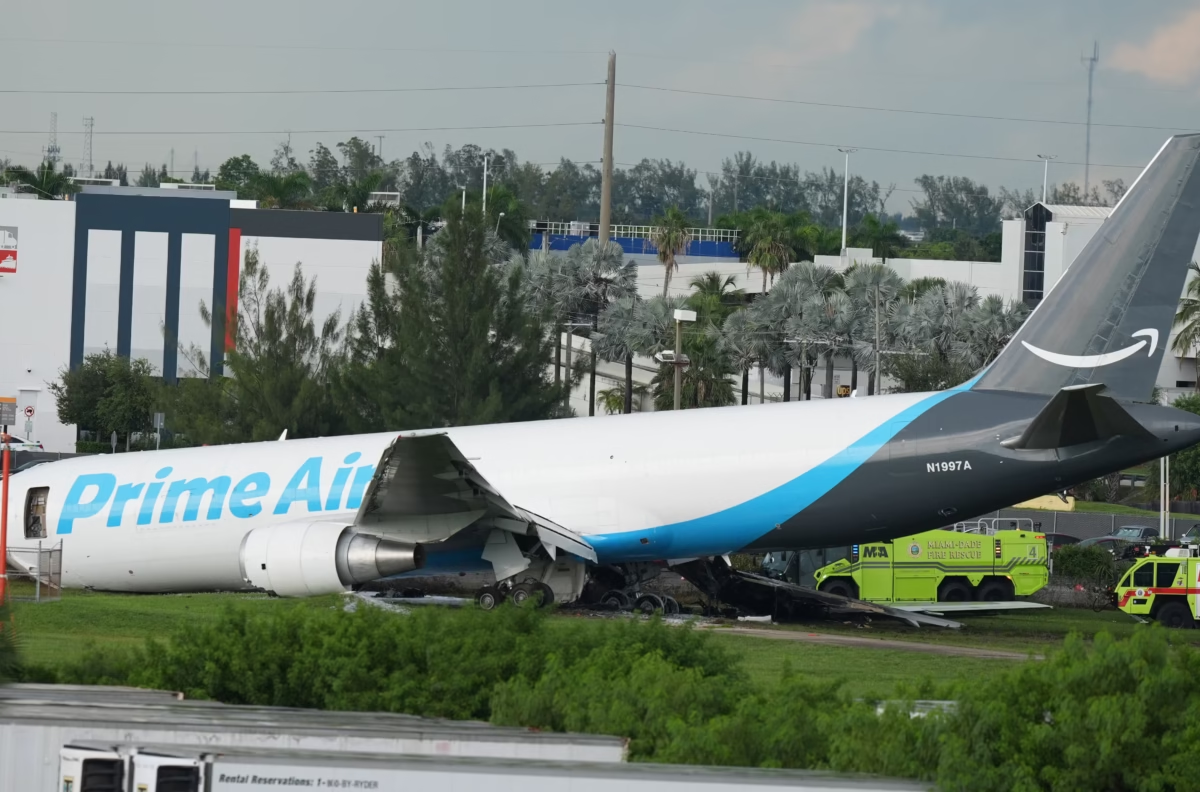
An Amazon cargo plane overshot a Miami runway, struck vehicles and killed five people.
An Amazon Air cargo plane crashed into vehicles after overshooting a runway at Miami International Airport, killing at least five people and injuring five others in a disaster that has raised fresh questions about runway safety and how airports protect surrounding roads.
The Boeing 767-300 was attempting to land on Runway 30 at around 2 p.m. ET Sunday when it appeared to travel well beyond the normal landing zone. Tracking data showed the aircraft was still moving at nearly 130 mph when it reached the end of the more than 9,000-foot runway.
The aircraft crossed a grassy area, broke through a chain-link fence and smashed through concrete barriers before reaching a four-lane road outside the secure airport area. Several vehicles were struck before the jet came to rest near a parking lot.
The National Transportation Safety Board is expected to investigate what caused the runway overrun and why the aircraft was unable to stop before leaving airport property.
How the Amazon Cargo Plane Crash Unfolded
The aircraft was a 32-year-old Boeing 767 traveling from San Juan, Puerto Rico, to Miami when it approached the airport under dark and stormy conditions.
Flight-tracking data indicated that the plane initially rose above the normal approach path for Runway 30 before descending back toward the runway. The aircraft also appeared to have passed through a developing thunderstorm as it approached Miami.
A sudden change in wind direction during the landing may have made the situation more difficult.
David Soucie, a CNN aviation safety analyst and former FAA safety inspector, said the changing wind may have produced a tailwind, making it harder for the aircraft to lose speed during the landing.
The pilots did not report a problem to air traffic controllers before the landing, according to air traffic control audio cited in the report. Video of the landing also appeared to show the aircraft touching down without the standard flare maneuver normally used to help the rear landing gear contact the runway first.
Those details will likely form part of the investigation into why the aircraft traveled so far before leaving the runway.
The Plane Was Still Moving at Nearly 130 MPH
One of the most significant details emerging from the crash is the aircraft’s speed as it approached the runway’s end.
The Boeing 767 was still traveling at nearly 130 mph, according to Flightradar24 tracking data, when it reached the end of the runway.
The jet then crossed a grassy section before breaking through a fence and destroying concrete barriers intended to prevent vehicles from entering the secure airport area.
The aircraft, weighing more than 100 tons, continued toward the road and struck several vehicles.
One vehicle was left severely damaged and twisted after the collision. The plane eventually slid to a stop just short of a parking lot containing dozens of vehicles. A fire then broke out around the aircraft’s right-side engine.
At Least Five People Were Killed
Miami-Dade Fire Rescue Chief Raied “Ray” Jadallah said five people died and another five were injured.
Three of the injured victims were taken to a trauma center in critical condition. Firefighters also had to rescue people trapped inside vehicles that were struck by the aircraft.
Rescue crews accessed the damaged aircraft through a cockpit window using a ladder, while firefighters worked around the burning plane.
More than 60 fire rescue units and about 200 firefighters responded to the crash, according to Jadallah.
Officials had not immediately established whether those killed were passengers or crew members aboard the aircraft, people inside the vehicles or individuals elsewhere near the crash site.
What Caused the Amazon Plane to Overshoot the Runway?
The exact cause remains under investigation.
Several factors have emerged that investigators will likely examine, including the weather, wind conditions, approach path, touchdown position, aircraft speed and the plane’s ability to decelerate.
The aircraft approached during a period of developing thunderstorms in the Miami area. Tracking data showed an unusual approach path, while aviation analyst David Soucie pointed to a possible sudden tailwind during the landing.
That does not establish that weather caused the crash.
Investigators will need to examine the aircraft’s flight data recorder, cockpit voice recorder, maintenance history, braking systems, landing performance and operational decisions before reaching conclusions.
READ ALSO
Who was the Pilot killed in the Carlisle Airport plane crash? What we know so Far
The Bigger Safety Question: What Was Beyond the Runway?
The crash has also drawn attention to a feature, or lack of one, that could become central to the wider safety debate.
Aviation experts said Miami International Airport does not have an Engineered Material Arresting System, commonly known as EMAS, in the location where it might have stopped the aircraft before it reached the roadway.
EMAS consists of specially engineered material installed at the end of a runway. The system is designed to crush under the weight of an aircraft and rapidly slow it down during a runway overrun.
Transportation analyst and former Department of Transportation inspector general Mary Schiavo said an arrestor bed could have stopped an aircraft before it reached the road.
The question now is whether such a system could have changed the outcome of Sunday’s crash and whether airports surrounded by busy roads should have additional protection at runway ends.
Why Runway Excursions Are a Major Aviation Concern
A runway excursion occurs when an aircraft leaves the runway during or after takeoff or landing.
The International Air Transport Association identifies runway excursions as the No. 1 type of aircraft incident worldwide, according to the report.
Runway overruns can become particularly dangerous at airports where runways are close to public roads, buildings, parking areas or other populated locations.
The Miami crash illustrates the potential consequences. What began as a landing problem became a wider emergency when the aircraft crossed the airport boundary and entered an area containing civilian vehicles.
That distinction could make the eventual investigation important beyond this individual accident.
Miami Airport Faces Major Travel Disruptions
The crash also disrupted operations at one of South Florida’s busiest airports.
Two of Miami International Airport’s four runways were closed for much of Monday, including Runway 30, where the crash occurred, and Runway 26L. The Federal Aviation Administration said the closures were expected to continue until 7 p.m. ET.
By 10 a.m., FlightAware had recorded 65 cancellations and around 140 delays involving flights in and out of Miami.
The FAA also warned that flights headed to the airport were averaging about 2½ hours late as authorities dealt with the crash scene and cleanup.
Passengers traveling through Miami could continue to face delays while investigators and airport crews work around the affected runways.
Who Operated the Amazon Cargo Plane?
The aircraft carried Amazon’s branding, but it was not operated directly by Amazon as an airline.
The Boeing 767 was operated by 21 Air, a North Carolina-based cargo carrier with an operations center in Miami.
21 Air works with multiple companies and is one of nine flight vendors used by Amazon Air. Amazon’s cargo network relies on numerous carrier partners to move packages across its network.
Amazon expressed condolences following the crash, saying it was heartbroken by the loss of life.
What Happens During the Investigation?
The National Transportation Safety Board is expected to lead the investigation into the crash.
Investigators will need to establish what happened during the aircraft’s approach, why it touched down where it did, why it remained at high speed and whether mechanical, operational or environmental factors contributed to the runway overrun.
The investigation will also examine the airport environment, including the barriers and fencing at the runway’s end and whether additional safety infrastructure could reduce the risk of a similar accident.
The investigation’s early findings may answer some questions, but determining the official cause of a major aviation accident can take considerably longer.
Frequently Asked Questions About the Amazon Cargo Plane Crash
What happened to the Amazon cargo plane in Miami?
An Amazon Air Boeing 767-300 overshot a runway at Miami International Airport, crossed airport property and struck several vehicles on a nearby four-lane road before coming to a stop.
How many people died in the Amazon plane crash?
At least five people were killed, while five others were injured. Three of the injured were reported to be in critical condition.
Where did the Amazon cargo plane crash?
The aircraft crashed at Miami International Airport after overshooting Runway 30 and continuing beyond the airport’s secured area into a roadway.
What type of aircraft crashed?
The aircraft was a Boeing 767-300 that was about 32 years old.
Who operated the Amazon cargo plane?
The aircraft was operated by 21 Air, a cargo carrier that works for several companies and is one of Amazon Air’s flight vendors.
Was the Amazon plane carrying passengers?
It was a cargo aircraft, not a conventional passenger flight. The report does not establish that the people killed were passengers or members of the flight crew.
Why did the Amazon cargo plane overshoot the runway?
The official cause had not been determined in the initial investigation. Weather, wind changes, the aircraft’s approach, touchdown and braking performance are among the factors that may be examined.
Was the plane going fast when it left the runway?
Tracking data indicated that the aircraft was traveling at nearly 130 mph when it reached the end of the runway.
Could an EMAS system have stopped the plane?
Aviation experts said an Engineered Material Arresting System could potentially stop an aircraft during a runway overrun. Whether such a system would have prevented this particular crash requires detailed investigation.
Are Miami International Airport flights affected?
Yes. The crash forced two of the airport’s four runways to close temporarily, contributing to significant delays and cancellations.
Is Amazon responsible for the crash?
The available information does not establish responsibility. The aircraft was operated by 21 Air, and investigators have not determined the cause of the accident.