

Wangari Maathai and why she won the Nobel Peace Prize

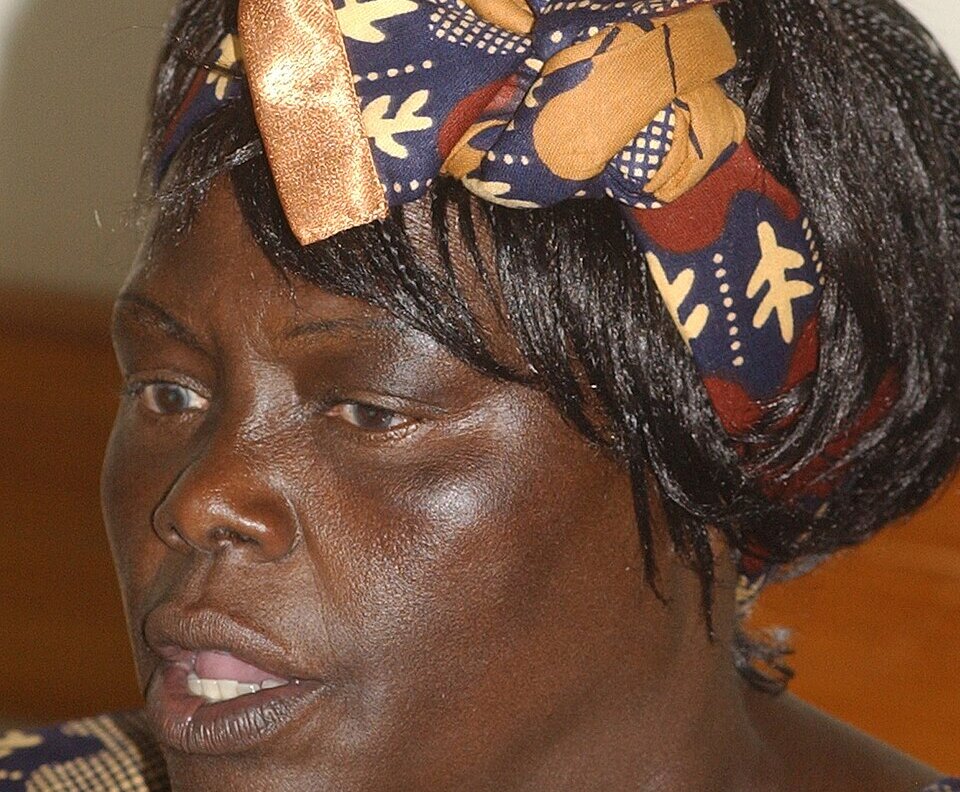
Wangari Maathai in Salvador, Brazil, on 13 July 2006. Photo: Antônio Cruz/Agência Brasil, via Wikimedia Commons; image licence (CC BY 3.0 BR). Cropped and resized.

Wangari Maathai was a Kenyan scientist and environmental campaigner who founded the Green Belt Movement in 1977. She won the 2004 Nobel Peace Prize for connecting environmental protection with democracy, women’s rights and the conditions needed for peace, becoming the first African woman to receive the prize.
Key facts
- Full name: Wangari Muta Maathai.
- Born: 1 April 1940, Nyeri, Kenya.
- Died: 25 September 2011, Nairobi, Kenya.
- Work: scientist, Green Belt Movement founder, environmental campaigner and member of Kenya’s parliament.
- Nobel recognition: Peace Prize, 2004.
The Nobel facts record her life dates and award. Her importance rests on a practical connection: people who depend on land and water also need a voice in decisions about those resources.
From Nyeri to a scientific career
Maathai grew up in Kenya under British colonial rule. A scholarship took her to the United States, where she studied biological sciences at Mount St Scholastica College in Atchison, Kansas, graduating in 1964. She then pursued a master’s degree at the University of Pittsburgh.
According to the Nobel biography, her education subsequently included doctoral study in Germany and Nairobi. That route matters because the founder of the Green Belt Movement came to public campaigning with a professional scientific background.
The Nairobi profile records her appointment as an assistant lecturer in veterinary anatomy in 1966. She received a scholarship for doctoral work in Germany in 1968, through the Nairobi–Giessen partnership, and the University of Nairobi awarded her PhD in 1971.
Her university responsibilities grew: she became chair of the Department of Veterinary Anatomy in 1976 and an associate professor in 1977. These posts belong alongside her environmental work in any account of her career. She taught and researched before tree planting became the activity for which she was most widely known.
Why the Green Belt Movement began
The movement’s starting point was the daily work of rural Kenyan women. They described dwindling water supplies, insecure access to food and longer journeys to collect wood. These were problems measured in hours of labour and household needs, rather than in an abstract debate about conservation.
The organisation’s movement history dates its foundation to 1977, under the National Council of Women of Kenya. Tree planting offered a response that communities could undertake themselves. Nurseries and seedlings connected environmental repair with work close to home.
The Goldman profile describes an initiative that began with a small nursery and developed through groups made up largely of women. Its aims included reducing soil erosion, restoring sources of wood fuel and creating income. Maathai received the Goldman Environmental Prize in 1991, well before the Nobel award.
There was an organisational choice behind this approach. Instead of treating rural women only as recipients of assistance, the project relied on their participation. They helped make the work possible, and the benefits addressed needs they had identified. The movement’s history therefore involves many growers and organisers alongside its founder.
How tree planting became civic action
In an essay published by Yale Reflections, Maathai explained that women received a small payment for seedlings they grew. Trees could supply fuel and fodder, as well as materials for homes and fences. The same activity could address several pressures on a household.
Her account also describes citizen education. Participants examined a problem, considered its causes and discussed possible solutions. This made environmental work a way to think about responsibility: what could neighbours do together, and which decisions required officials to be held accountable?
Maathai argued that protecting resources required room for citizens to speak and organise. A campaign might begin with a bare hillside, but questions about access to land or the destruction of a forest led towards public decision-making. The relationship between ecology and political rights grew out of the work itself.
The LSE assessment places this connection between women’s economic circumstances, environmental damage and political exclusion at the centre of her thought. It also emphasises her belief in practical action as a means of building confidence. The nursery was a place to grow trees and to discover that collective effort could produce a result.
The campaign to protect Uhuru Park
In the late 1980s, a proposed high-rise development threatened part of Nairobi’s Uhuru Park. Maathai opposed the scheme. The dispute made the question of who could decide the future of public green space particularly visible.
Goldman’s account records pressure on the Green Belt Movement, including the loss of its office premises, during the confrontation. It also records the withdrawal of foreign investors and the cancellation of the proposed project. The outcome illustrates why environmental campaigning could bring Maathai into conflict with political authority.
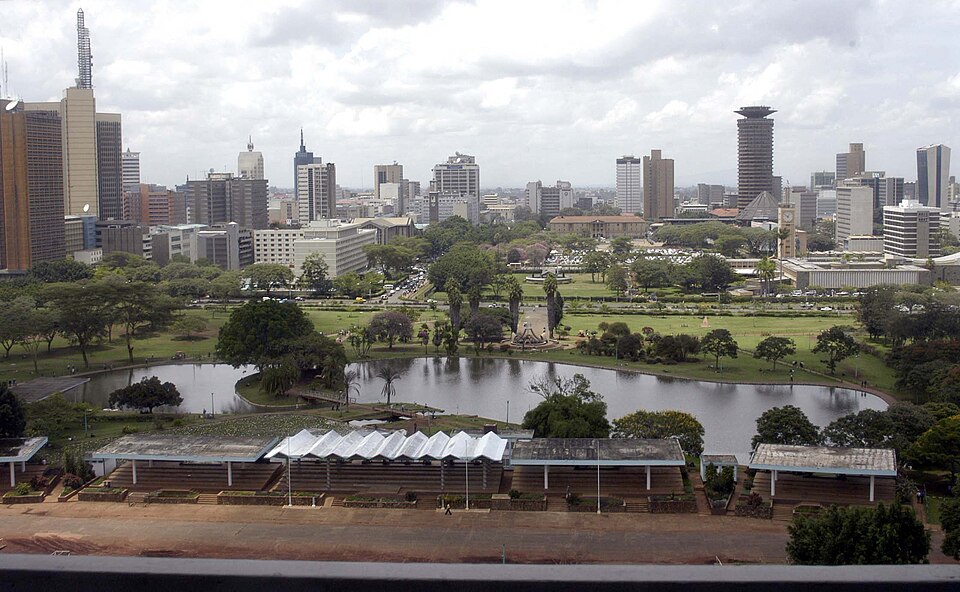

LSE’s account describes lobbying and letters directed beyond the Kenyan government, including to the international press. The campaign combined a local place with wider public attention. A park could be defended through argument, organisation and scrutiny of the interests seeking to build on it.
Keeping this episode separate from the movement’s rural planting programme helps explain the range of Maathai’s work. One involved growing useful trees; the other challenged a decision about land already held for public use. Both concerned people’s ability to influence their surroundings.
Why Wangari Maathai won the Nobel Peace Prize
On 8 October 2004, the Norwegian Nobel Committee announced the prize “for her contribution to sustainable development, democracy and peace”. The committee announcement explicitly connected her environmental work with human rights and women’s participation.
That reasoning went beyond a count of seedlings. The committee recognised an approach in which environmental care, livelihoods and democratic rights supported one another. It credited the mobilisation of women and the spread of the movement’s methods beyond Kenya.
Asked about the connection in a PBS interview on 25 January 2005, Maathai pointed to competition over resources such as water, farming land and grazing ground. She argued that responsible management and fair sharing mattered to peace.
She also explained that this broad argument had developed from meeting women’s practical needs. It would be misleading to imagine that the entire Nobel rationale existed fully formed at the beginning. Her account describes learning from the resistance and political obstacles encountered during environmental work.
A timeline of her life and work
| Date | Event |
|---|---|
| 1 April 1940 | Born in Nyeri, Kenya. |
| 1964 | Graduated from Mount St Scholastica College in Kansas. |
| 1971 | Awarded a PhD by the University of Nairobi. |
| 1977 | Founded the Green Belt Movement. |
| 1986 | The movement established a Pan-African Green Belt Network. |
| 1991 | Received the Goldman Environmental Prize. |
| December 2002 | Elected to Kenya’s parliament for Tetu. |
| January 2003 | Appointed assistant minister for environment and natural resources. |
| 2004 | Awarded the Nobel Peace Prize. |
| 25 September 2011 | Died in Nairobi. |
Public office and her legacy
Maathai’s election in December 2002 and ministerial appointment in January 2003 placed her inside government after years of public campaigning. The University of Nairobi’s record identifies the constituency as Tetu. Holding office was another phase in a career that had already included academic leadership and organising outside the state.
Her legacy also survives in her own writing. Unbowed, published in 2006, offers her autobiographical account; The Challenge for Africa followed in 2009. Reading her alongside institutional histories helps distinguish her interpretation of events from the honours later attached to her name.
The wider lesson is about participation as much as planting. A conservation project can provide material benefits while raising questions about whose knowledge counts and who controls public resources. For another account of community environmental work, CrispNG’s interview on plastic pollution describes a different campaign in Africa.
Where the records differ
The date of Maathai’s master’s degree differs between institutional accounts. Nobel’s biographical profile gives 1966. The University of Pittsburgh’s Pitt Chronicle of 4 March 2013, page 7, gives 1965; Nairobi’s profile also uses 1965. The awarding university’s record supports 1965, while the discrepancy remains visible in the Nobel account.
The Nobel website itself preserves different tree counts: the biographical profile says more than 20 million, while the committee’s announcement of 8 October 2004 credits the movement with 30 million. The pages give no common counting date. Both describe a collective effort, so the figures should stay attached to their specific accounts. Neither is a movement total for 2026 or a count of Maathai’s own planting.
Frequently asked questions
What was Wangari Maathai famous for?
She founded the Green Belt Movement and linked conservation with women’s livelihoods and democratic participation. Her 2004 Nobel Peace Prize recognised that combined contribution, rather than a single tree-planting event.
Why did an environmentalist receive a peace prize?
Maathai argued that access to resources and accountable government affect the prospects for peace. The Nobel Committee’s citation recognised sustainable development and democracy together with peace, making its reasoning broader than environmental protection alone.
How many trees did Wangari Maathai plant?
The Nobel Committee credited the movement’s mobilisation of women with 30 million trees in its October 2004 announcement. The figure belongs to a collective programme at that date; it is misleading to assign the entire total to her own hands.
What did Wangari Maathai study?
She studied biological sciences in the United States and completed doctoral work associated with veterinary anatomy at the University of Nairobi. Her academic career included teaching, a department chair and an associate professorship.
Sources and further reading
- Nobel facts and Nobel biography.
- Committee announcement, 8 October 2004.
- Nairobi profile, Wangari Maathai Institute.
- Movement history, Green Belt Movement.
- Goldman profile, environmental prize biography.
- Maathai essay, Yale Reflections.
- LSE assessment, Hub for African Thought.
- PBS interview, 25 January 2005.
- Pitt Chronicle, 4 March 2013, page 7.
Last reviewed: 27 October 2026