

Boehly is out: What Clearlake’s full control means for Chelsea

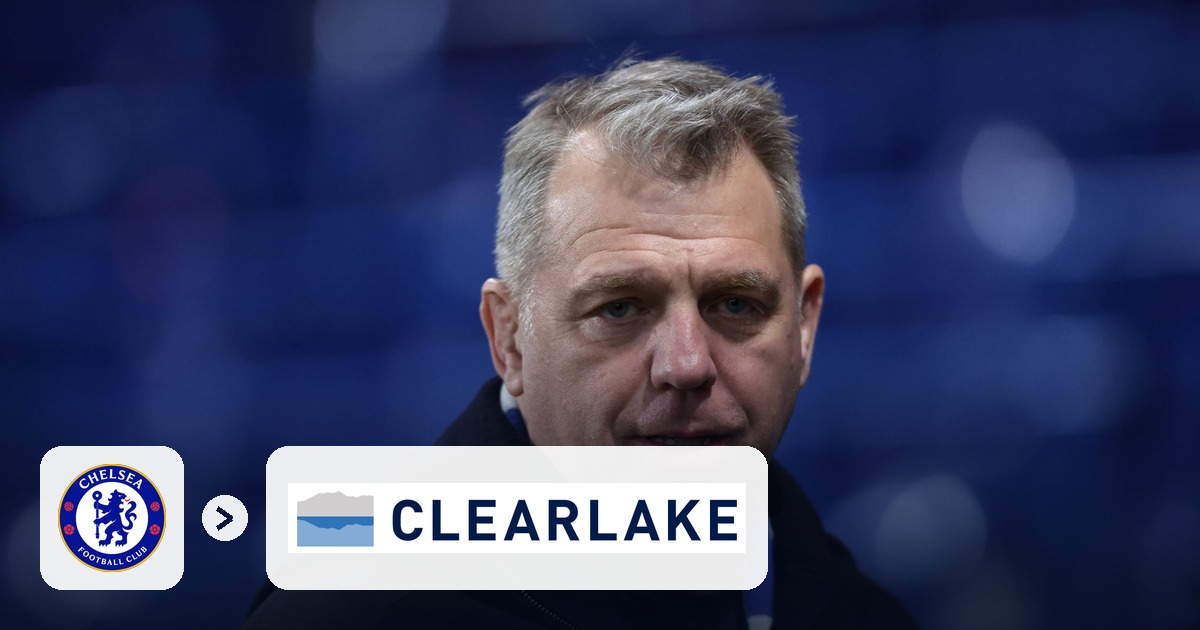
Todd Boehly is no longer in control of Chelsea.
Four years after helping lead the purchase of the Premier League club from Roman Abramovich, the American billionaire has sold his stake and stepped down as chairman as Clearlake Capital takes full control of Chelsea.
Mark Walter has also sold his stake, while Swiss billionaire Hansjörg Wyss has exited his position in the ownership structure. The transactions leave Clearlake, led by Behdad Eghbali and José E. Feliciano, with full control of the club.
That brings an end to the ownership arrangement that has defined Chelsea since 2022.
But there is an important detail.
This is not simply a new owner arriving at Stamford Bridge.
Clearlake was already Chelsea’s majority owner, holding 61.5% of the club. What has changed is that the other major investors have now sold their interests, giving Clearlake control of the entire ownership structure.
So, what does Boehly’s exit actually mean for Chelsea?
Boehly helped bring Chelsea into the new era
Boehly became the public face of Chelsea’s new ownership after the consortium completed the takeover from Abramovich in 2022.
The consortium paid about £2.5 billion for the club and committed further funds towards investment in Chelsea. Boehly subsequently became chairman and was heavily involved in the club’s sporting and business direction.
Under the ownership group, Chelsea invested heavily in its men’s, women’s and youth teams, as well as training facilities, medical resources and academy development.
The club itself said the ownership group had worked towards building a sustainable foundation for long-term sporting success.
Boehly’s departure therefore marks the end of an important chapter in the post-Abramovich era.
But it also changes the balance inside the club.
Chelsea no longer has the same ownership structure
When Boehly and his partners bought Chelsea, the club was acquired by a consortium rather than one individual owner.
Clearlake was the majority investor, while Boehly, Walter and Wyss held the remaining interests.
That arrangement meant Chelsea had different individuals and investment interests sitting within the same ownership structure.
Now, that arrangement has effectively been dismantled.
Clearlake is taking full control, with Eghbali and Feliciano becoming the central figures in the club’s ownership. Boehly is leaving the chairmanship he held since the 2022 takeover.
The significance is therefore less about who owns Chelsea for the first time and more about who now has the final say.
Why does full control matter?
The biggest potential change is decision-making.
A club with multiple significant owners can require discussions between different interests before major decisions are made.
Chelsea’s ownership structure had also been associated with disagreements over issues including the club’s stadium plans. Reports in recent weeks have described tensions between the ownership factions, although the exact internal dynamics have not always been publicly disclosed.
With Boehly and Walter leaving and Clearlake taking full control, there are fewer ownership interests competing within the structure.
That could make major decisions more straightforward.
But it is important not to confuse simpler ownership with an automatic change in Chelsea’s football strategy.
Chelsea have said there will be no immediate changes to the club’s day-to-day operations, leadership or strategy following the ownership transition.
That means supporters should not expect everything at Stamford Bridge to suddenly look different because Boehly has left.
What happens to Chelsea’s transfer strategy?
One of the biggest questions will inevitably concern recruitment.
Since the 2022 takeover, Chelsea have become one of the biggest spenders in world football, assembling a squad with a large number of young players and handing several of them long-term contracts.
That recruitment model has been closely associated with the ownership’s attempt to build for the long term rather than simply buy established stars.
Clearlake was already the majority owner during that period.
So Boehly’s departure does not mean the recruitment philosophy has automatically been abandoned.
In fact, Chelsea’s official statement following the ownership change emphasised continued investment in sporting performance, infrastructure, academy development and the club’s wider football operation.
The more immediate question is whether Clearlake changes the way that strategy is executed now that it no longer has to operate alongside Boehly and Walter as major minority owners.
Boehly leaves after a complicated four years
Boehly’s Chelsea tenure has been marked by enormous spending, managerial changes and an attempt to rebuild the club after the Abramovich era.
The club has also won silverware during the ownership period, including the 2025 UEFA Conference League and FIFA Club World Cup.
But the ownership group has faced scrutiny over its sporting strategy and the sheer scale of its spending.
The transfer market has seen Chelsea make major investments in young players, while the club has simultaneously undergone significant changes in its football leadership.
Boehly is now leaving that project behind.
In his farewell statement, he said it had been an honour to serve as Chelsea chairman and expressed confidence in the club’s future.
What remains unchanged?
Despite the significance of the ownership change, Chelsea are not starting from scratch.
Clearlake has been the club’s majority owner since 2022 and has therefore already been deeply involved in the direction of Chelsea.
The club has also said the transition will not bring immediate changes to its day-to-day operations or strategic direction.
That is why describing this as Chelsea getting a new owner would miss an important part of the story.
Chelsea is instead moving from a multi-investor ownership structure to one in which Clearlake has full control.
The people running the football operation may not suddenly change.
The bigger change is who ultimately controls the ownership decisions behind them.
The Boehly era is over — but Clearlake’s real test begins now
Boehly helped usher Chelsea into the post-Abramovich era.
Now, he is leaving it.
Clearlake, meanwhile, is no longer simply the majority partner within a wider consortium. It has full control of the club.
That gives Eghbali and Feliciano greater control over the direction of Chelsea and removes one of the most prominent figures from the club’s ownership structure.
But it also means that future decisions at Chelsea will be more directly associated with Clearlake.
The ownership group can no longer point to a complicated consortium when explaining disagreements or major decisions.
The next phase will therefore be about what Clearlake does with the control it has now secured — from Chelsea’s sporting strategy and infrastructure plans to the club’s long-term financial and football ambitions.
Boehly’s Chelsea chapter has ended. The Clearlake era, which began in 2022 alongside him, now enters a new phase with Clearlake holding the reins alone.