

What is a UNESCO World Heritage Site?

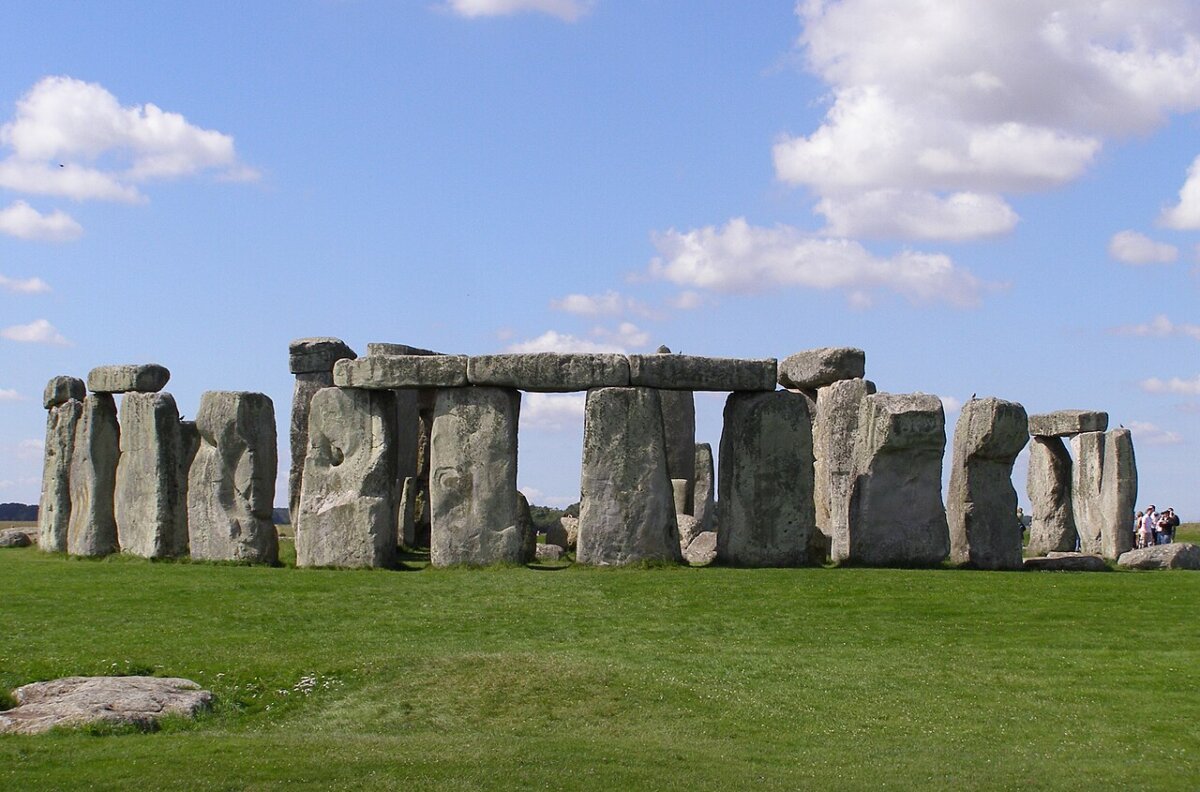
Stonehenge on 30 July 2007, part of the Stonehenge, Avebury and Associated Sites property inscribed in 1986. Photo: garethwiscombe, via Wikimedia Commons; CC BY 2.0. Resized.

A UNESCO World Heritage Site is a cultural or natural place recognised as having exceptional importance beyond national borders and included on the World Heritage List. Countries nominate sites, and the World Heritage Committee decides whether they qualify. Responsibility for protecting them remains primarily with the country where they are located.
Key facts
- The test: a place must demonstrate Outstanding Universal Value, meet selection criteria and have adequate protection and management.
- The categories: cultural, natural and mixed, reflecting the reasons for a site’s significance.
- The decision: national nomination leads to expert evaluation and a decision by the World Heritage Committee.
- The distinction: a country’s Tentative List contains possible candidates; the World Heritage List contains inscribed properties.
- The responsibility: international recognition supports conservation work carried out through national and local arrangements.
The purpose of UNESCO World Heritage Site status
The system rests on the World Heritage Convention, adopted on 16 November 1972. It brings cultural places and natural areas into a shared framework for identifying and conserving heritage whose significance reaches beyond the country that contains it.
The idea has two parts. Countries accept duties towards the heritage within their territory, while international co-operation can support that work. Recognising a place as important to humanity gives other countries a reason to help preserve it.
That helps explain why a prehistoric monument and a geothermal national park can appear on the same list. Their importance comes from different qualities, but both can hold evidence or natural features that would be difficult or impossible to replace.
Cultural, natural and mixed sites explained
UNESCO’s selection criteria cover different forms of significance. Cultural criteria include human creativity, exchanges of ideas, cultural traditions, historic buildings and forms of settlement. Natural criteria concern exceptional natural phenomena, Earth’s history, ecological processes and habitats important for biodiversity.
A place can qualify through cultural significance even when trees, rivers or mountains are central to it. A cultural designation can recognise a relationship between people and their environment. Calling it “mixed” requires it to meet cultural and natural criteria in its own right.
| Category | What recognition concerns | How to read the entry |
|---|---|---|
| Cultural | Human history, achievement, traditions or relationships with a place. | Look for cultural criteria numbered (i) to (vi). |
| Natural | Natural features, processes, beauty or biodiversity of exceptional significance. | Look for natural criteria numbered (vii) to (x). |
| Mixed | A property qualifying for both cultural and natural significance. | Look for at least one criterion from each group. |
UNESCO’s heritage guidance explains these categories and the importance of the qualities that convey a property’s value. The setting can matter as much as a single recognisable structure within it.
What Outstanding Universal Value means
Outstanding Universal Value, often shortened to OUV, describes significance considered exceptional enough to matter across national boundaries and to future generations. A nomination must explain that significance and support it with evidence.
There are further tests beyond the selection criteria. Integrity concerns whether a property is sufficiently whole and includes the features needed to express its importance. Authenticity concerns whether the cultural values are conveyed credibly through attributes such as materials, design, use or traditions.
The Historic England glossary explains that authenticity applies to cultural properties and the cultural aspects of mixed properties. This matters when comparing an archaeological site with a natural habitat: the assessment follows the qualities for which each is proposed.
How a UNESCO World Heritage Site is chosen
The nomination process runs through a country that is party to the Convention. It requires evidence, assessment and a formal decision. UNESCO’s 2026 guidelines, dated 29 July 2026, set out the detailed rules, including a preliminary assessment before a full nomination.
- A country identifies a candidate. It places the property on its Tentative List, an inventory of places it may propose for inscription.
- Early assessment tests the case. The preliminary assessment considers whether the proposed property has the potential to justify Outstanding Universal Value.
- The country prepares a nomination. The file explains significance, boundaries, protection and management, with supporting documentation.
- Advisory bodies evaluate it. ICOMOS assesses cultural nominations and IUCN assesses natural nominations. The relevant bodies work together where appropriate.
- The Committee decides. It can inscribe a property, seek further information through referral or deferral, or decide against inscription.
These stages explain why a promising candidate can remain outside the final list. A tentative entry records an intention to consider nomination; it offers no guarantee of eventual inscription.
Who protects a UNESCO World Heritage Site?
Article 6 of the Convention respects national sovereignty and property rights under national law. UNESCO does not acquire ownership of a place through inscription. Article 4 places the primary conservation duty on the state concerned.
The practical work can involve public authorities, property owners, site managers and communities. The particular arrangements depend on the property and the country. For example, NPS policy says World Heritage inscription leaves the US National Park Service’s jurisdiction and park management requirements in place.
A management system turns recognition into decisions about conservation, research and change. Management guidance from Historic England explains the importance of the Statement of Outstanding Universal Value. It records the reasons for inscription and provides a baseline against which proposals affecting the property can be assessed.
That is why the statement deserves more attention than a promotional description. It identifies what needs to survive, so that routine maintenance and larger development decisions can focus on the features that carry the site’s significance.
Three examples that show the differences
Stonehenge extends beyond the stone circle
The Stonehenge entry is formally called Stonehenge, Avebury and Associated Sites. Inscribed in 1986, it covers two areas containing prehistoric ceremonial and funerary monuments in southern Britain.
The familiar circle is one part of that larger property. Reading the full name and mapped boundaries prevents the mistaken assumption that recognition applies only to the monument most often photographed.
Yellowstone represents natural processes
The Yellowstone entry records inscription in 1978 under all four natural criteria. Its significance includes geothermal features, geological processes, ecosystems and wildlife habitats.
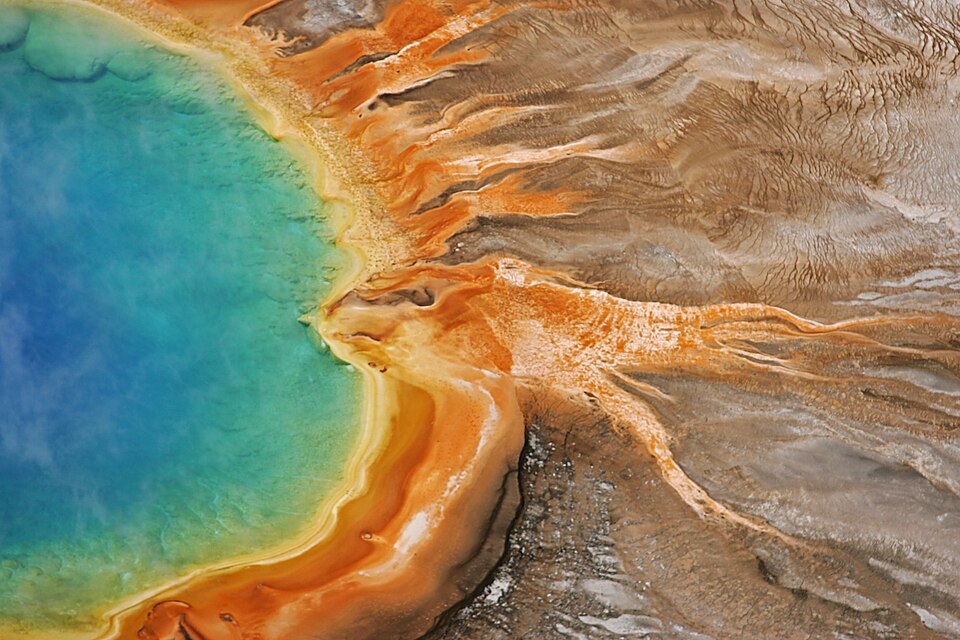

The photograph of Grand Prismatic Spring illustrates one kind of feature involved in that assessment. A natural site can be recognised for how Earth’s systems work, alongside the visual qualities that attract attention.
Osun-Osogbo connects a physical place with living beliefs
Nigeria’s Osun-Osogbo entry records inscription in 2005 as a cultural property. The grove includes a river, shrines and sculptures associated with Yoruba religious traditions.
Its forest setting helps express cultural significance. The example shows why a wooded place can be a cultural site, and why living practices can form part of the value of a physical property. CrispNG’s heritage examples feature introduces other listed places.
How World Heritage differs from intangible heritage
UNESCO also recognises living heritage through the separate 2003 Convention for the Safeguarding of the Intangible Cultural Heritage. Its heritage definition includes oral traditions, performing arts, rituals, knowledge and craft skills passed between generations.
A place and a practice may be closely connected while being recognised through different systems. The World Heritage List concerns properties. Intangible heritage safeguarding concerns the knowledge, skills and activities that communities maintain and transmit.
This distinction is useful whenever a headline says something has received “UNESCO recognition”. Identify the programme involved before assuming that a dance, food tradition or historic town has received the same designation.
What happens when a site is threatened?
The List of World Heritage in Danger identifies threats to the qualities that justified inscription. UNESCO’s danger guidance describes both proven dangers and potential threats, including conflict, environmental damage and harmful development.
The purpose is to draw attention and support corrective action. The Committee works with the state concerned on measures to address the problems, then monitors progress. A site can leave the Danger List after its condition improves.
The World Heritage List itself can also change. If a property loses the characteristics that justified inscription, the Committee can remove it. Recognition therefore brings continuing conservation responsibilities beyond the announcement of a successful nomination.
How to check what a designation covers
Start with the official UNESCO property page. Read the full name, inscription date, criteria and Statement of Outstanding Universal Value, then consult the maps. A famous landmark may form part of a wider property, and the property’s boundary may differ from the surrounding town or administrative area.
For a proposed site, check the Tentative List separately. For conservation questions, look at the dated Committee decisions and reports. These records help distinguish the original reasons for recognition from later concerns about the property’s condition.
Frequently asked questions
What does UNESCO stand for?
UNESCO stands for the United Nations Educational, Scientific and Cultural Organization. World Heritage is one area of its work, governed through the 1972 Convention and the institutions established under it.
Is the Eiffel Tower a UNESCO World Heritage Site?
The Eiffel Tower forms part of the property called Paris, Banks of the Seine, inscribed in 1991. The Paris listing includes a wider riverside architectural ensemble, rather than a separate entry for the tower alone.
Does a site have to meet all ten criteria?
A property must meet at least one selection criterion, together with the relevant integrity, authenticity, protection and management requirements. The criteria shown on its UNESCO page identify the accepted basis for inscription; they are not a score out of ten.
Does UNESCO own World Heritage Sites?
Ownership and national sovereignty remain governed by the arrangements recognised in the Convention and national law. “World” describes the significance and international conservation interest, rather than a transfer of the land to the United Nations.
Sources and further reading
- World Heritage Convention, especially Articles 1–7.
- Selection criteria and nomination process, UNESCO World Heritage Centre.
- Operational Guidelines, edition dated 29 July 2026.
- Heritage guidance, UNESCO World Heritage Centre.
- Historic England glossary and management guidance.
- NPS policy, section 4.3.7.
- Stonehenge entry, Yellowstone entry, Osun-Osogbo entry and Paris listing.
- Heritage definition, UNESCO Intangible Cultural Heritage.
- Danger guidance, UNESCO World Heritage Centre.
Last reviewed: 27 October 2026