

Why is Trump threatening Oman? Strait of Hormuz talks put Gulf State in spotlight

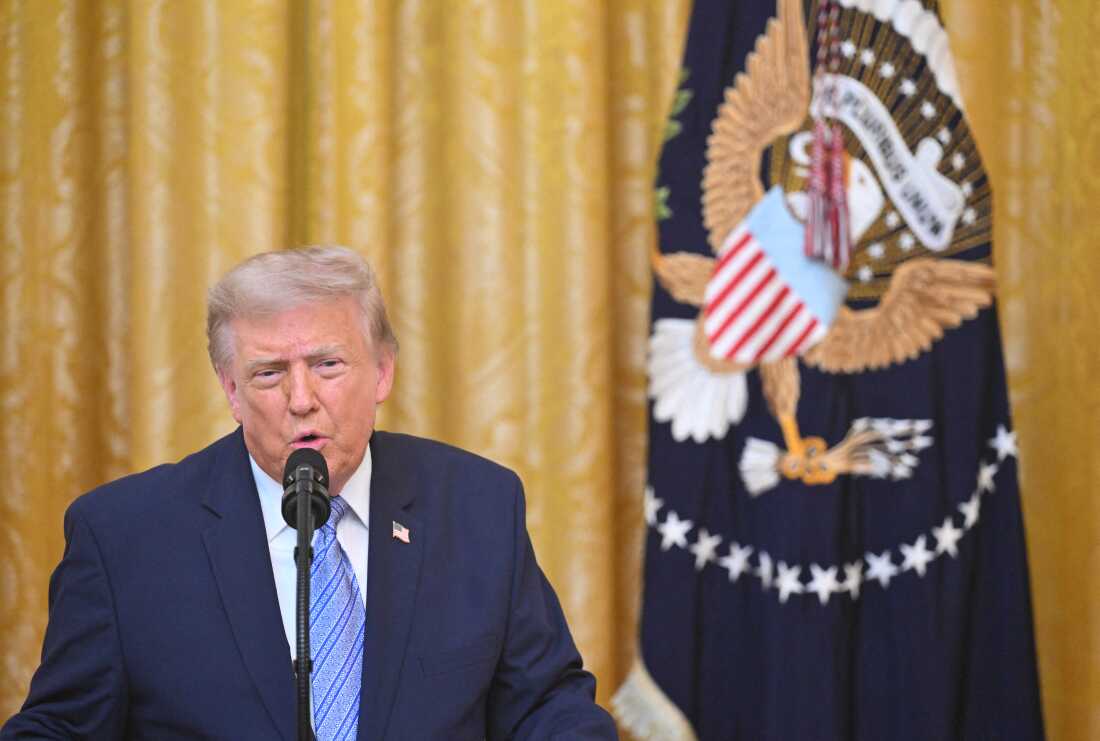
President Trump addresses the nation from the East Room of the White House. Image Credit: Saul Loeb/Pool/AFP via Getty Images
US President Donald Trump has threatened military action against Oman amid growing tensions over the Strait of Hormuz, a vital global shipping route at the centre of the escalating conflict between the United States and Iran.
Trump made the warning on Monday, August 17, 2026, saying Oman could face bombing if it interferes with a US agreement with Tehran over control and navigation through the strategic waterway.
The remarks come as Oman and Iran continue discussions on maritime navigation arrangements, while Washington separately pursues negotiations with Tehran. The developments have placed Oman, traditionally viewed as a key diplomatic intermediary in the Gulf, at the centre of a rapidly worsening regional crisis.
Trump Warns Oman Over Strait of Hormuz Talks
Trump told Fox News journalist Trey Yingst that the United States could take military action if Oman obstructed Washington’s efforts to reach a deal with Iran over the Strait of Hormuz.
The warning represents a significant escalation in pressure on Oman, which has historically played a diplomatic role in facilitating dialogue between Iran and Western governments.
Iranian and Omani officials have reportedly been discussing future arrangements for maritime navigation through the strait for several weeks. Iran’s foreign ministry said Monday that the two countries were working towards a joint declaration.
The Strait of Hormuz is one of the world’s most strategically important maritime passages, making any disruption a major concern for international trade, energy supplies and global markets.
Why the Strait of Hormuz Matters
The Strait of Hormuz connects the Persian Gulf with the Gulf of Oman and the wider Arabian Sea. Its strategic importance means that developments involving the waterway can have consequences far beyond the Middle East.
Any prolonged disruption to shipping through the strait could increase transportation costs and place additional pressure on energy markets. The latest dispute has consequently attracted international attention as Washington and Tehran attempt to shape the future of maritime traffic in the region.
Oman’s involvement is particularly significant because of its geographical position and long-standing diplomatic relationship with Iran.
Iran Rejects 60-Day Negotiation Deadline
The dispute comes alongside disagreement between Washington and Tehran over a previously agreed memorandum of understanding.
Iranian Foreign Ministry spokesman Esmaeil Baqaei said Monday that a 60-day deadline for negotiations was no longer relevant, arguing that the United States had violated the agreement shortly after it was signed.
According to Baqaei, Iran did not begin negotiations because what Tehran described as widespread violations occurred within weeks of the agreement.
The disagreement adds another layer of uncertainty to efforts aimed at reducing tensions between the two countries.
READ ALSO
Dan Caine reportedly wants out of Iran War as Trump’s top General warns more strikes may not work
Will the Strait of Hormuz reopen? Trump signals major breakthrough with Iran
Wider Middle East Conflict Raises Regional Concerns
The latest developments involving Oman are unfolding as violence and diplomatic tensions spread across several parts of the Middle East.
In Iraq, the federal government announced an investigation into an attack on the office of the Kurdistan regional prime minister. Kurdish authorities blamed Iran for the incident, while Tehran rejected the allegation and called for vigilance against what it described as possible false-flag operations.
No casualties were reported in the attack.
Meanwhile, Yemen has also become increasingly involved in the wider regional conflict. The Houthi movement claimed it had attacked a Saudi military vessel and accompanying boats in the Red Sea.
The United Nations has warned that the escalation in Yemen could push the country back towards full-scale conflict, raising concerns over an already severe humanitarian situation.
Oman Faces Pressure as Regional Tensions Rise
Oman has historically maintained diplomatic channels with countries that have struggled to communicate directly. Its role has made Muscat an important venue for negotiations involving Iran and Western governments.
The latest threat from Trump puts that diplomatic position under renewed pressure.
The situation also highlights the delicate balance facing Oman as it attempts to maintain relations with Iran while navigating growing pressure from the United States and other regional powers.
With negotiations over the Strait of Hormuz continuing, international attention is likely to remain focused on whether diplomatic efforts can prevent the dispute from escalating further.
What Happens Next?
The immediate focus will be on the talks involving Oman, Iran and the United States, particularly any agreement concerning navigation through the Strait of Hormuz.
A deterioration in relations could have wider implications for maritime security and regional stability. On the other hand, successful diplomacy could help prevent another major escalation in an already volatile Middle East conflict.
For now, Trump’s warning has increased the pressure on Oman at a time when the country is attempting to maintain its role as a diplomatic bridge between competing powers.
FAQ
1. Why is Donald Trump threatening Oman?
According to the report provided by France 24, US President Donald Trump threatened to bomb Oman if the country interferes with a US agreement with Tehran concerning shipping through the Strait of Hormuz. Trump made the comments while discussing ongoing talks involving Oman and Iran.
2. What did Trump say about Oman?
Trump was reported as saying that if Oman “gets in the way” of a US deal with Tehran over the Strait of Hormuz, the United States would bomb the country. The comments represent a serious escalation in rhetoric toward Oman.
3. Is Oman involved in negotiations with Iran?
Yes. The report says Oman and Iran have been holding discussions for weeks about future maritime navigation arrangements through the Strait of Hormuz. Iran’s foreign ministry also said the two countries were working on a joint declaration.
4. What is the Strait of Hormuz?
The Strait of Hormuz is a strategically important maritime passage in the Gulf region. The France 24 report identifies ongoing negotiations over control and navigation through the shipping route as a major issue in the current US-Iran confrontation.
5. Why is the Strait of Hormuz important?
The Strait of Hormuz is an important international shipping route. Any major disruption to navigation through the strait could have significant consequences for maritime trade and regional security.
6. Is Oman at war with the United States?
The supplied report does not state that Oman is at war with the United States. It reports a threat from Trump linked to Oman’s involvement in discussions with Iran over the Strait of Hormuz.
7. Is Trump going to bomb Oman?
There is no confirmation in the supplied report that the United States has decided to carry out an attack on Oman. The report describes Trump’s statement as a threat connected to the ongoing negotiations over the Strait of Hormuz.
8. What is Oman doing in the US-Iran conflict?
Oman is involved diplomatically, with talks involving Iran over maritime navigation through the Strait of Hormuz. The report says Muscat and Tehran have been discussing future arrangements for the shipping route.
9. What did Iran say about the Oman talks?
Iran’s foreign ministry said on Monday that Tehran and Muscat were working on a joint declaration concerning their discussions over the Strait of Hormuz.
10. What is the latest situation between Oman and Iran?
The supplied report says Oman and Iran have been engaged in discussions for several weeks over maritime navigation arrangements. The talks have become particularly significant amid the wider US-Iran conflict.
11. What happened in Iraq during the latest Middle East conflict?
Iraq’s federal government announced an investigation into an attack on the office of the prime minister of the autonomous Kurdistan region. Kurdish authorities blamed Iran for the attack, while Iranian officials rejected the allegation and called for vigilance against what they described as possible false-flag operations.
12. Were there casualties in the attack on the Kurdistan prime minister’s office?
The report states that there were no reported casualties in the attack.
13. What did Iran say about the 60-day negotiation deadline?
Iranian foreign ministry spokesman Esmaeil Baqaei said the 60-day deadline was irrelevant, arguing that the United States had violated the agreement only weeks after it was signed.
14. What happened to the Iranian pilots reportedly missing in Qatar?
Iran’s foreign ministry said it would consider three missing Iranian pilots to be prisoners in Qatar until their situation was clarified. Qatar has denied holding the pilots and said it had previously invited Iranian officials to receive information about search-and-rescue operations.
15. What did the Houthis say about a Saudi vessel?
The Houthi movement said it had targeted a Saudi military vessel and four accompanying boats in the Red Sea. The claim was presented by the group’s military spokesperson as part of its maritime blockade of Saudi Arabia.
16. Has the Yemen conflict escalated?
The supplied report says the ceasefire that had been in place since 2022 broke down the previous month as Yemen became increasingly drawn into the wider Middle East conflict.
17. What has the UN said about the Yemen conflict?
UN human rights chief Volker Turk expressed concern about the increasing civilian toll and urged all parties to de-escalate. He warned against actions that could return Yemen to full-scale conflict.
18. What is the latest news about Oman and the Strait of Hormuz?
The latest development in the supplied report is Trump’s threat against Oman if it interferes with US efforts to reach a deal with Iran concerning navigation through the Strait of Hormuz. Oman and Iran are separately holding discussions on the issue.
19. Why is Oman important in Middle East diplomacy?
In the supplied report, Oman’s importance comes from its involvement in discussions with Iran over the Strait of Hormuz at a time when the region is experiencing heightened military and diplomatic tensions.
20. What does the Trump-Oman dispute mean for the Middle East?
The threat adds another layer of tension to an already volatile regional situation involving the United States, Iran, Oman, Yemen, Saudi Arabia and Iraq. The immediate implications remain uncertain, and the supplied report does not confirm any military action against Oman.
21. What are the latest US-Iran tensions?
The report describes continuing disagreements over negotiations, maritime navigation through the Strait of Hormuz and the status of a previous memorandum of understanding. Iran says the US violated the agreement, while Washington continues pursuing its own talks with Tehran.
22. Could the Strait of Hormuz become a major flashpoint?
The supplied report indicates that the Strait is already a major point of disagreement between the parties. Ongoing talks between Oman and Iran, alongside separate US negotiations, have placed the shipping route at the centre of the latest diplomatic tensions.
23. What countries are involved in the latest Middle East developments?
The report discusses developments involving Oman, Iran, the United States, Iraq, Qatar, Saudi Arabia and Yemen, with different disputes and military or diplomatic developments unfolding across the region.
24. What is the latest Oman news in August 2026?
The major Oman-related development in the supplied report is Donald Trump’s threat against Oman over its role in discussions with Iran concerning the Strait of Hormuz. The comments came amid wider tensions surrounding the US-Iran conflict.
25. What should happen next in the Oman-US dispute?
The supplied report does not provide a confirmed next step. The situation will depend on developments in the US-Iran negotiations, Oman-Iran maritime discussions and the wider conflict in the Middle East.