

Dan Caine reportedly wants out of Iran War as Trump’s top General warns more strikes may not work

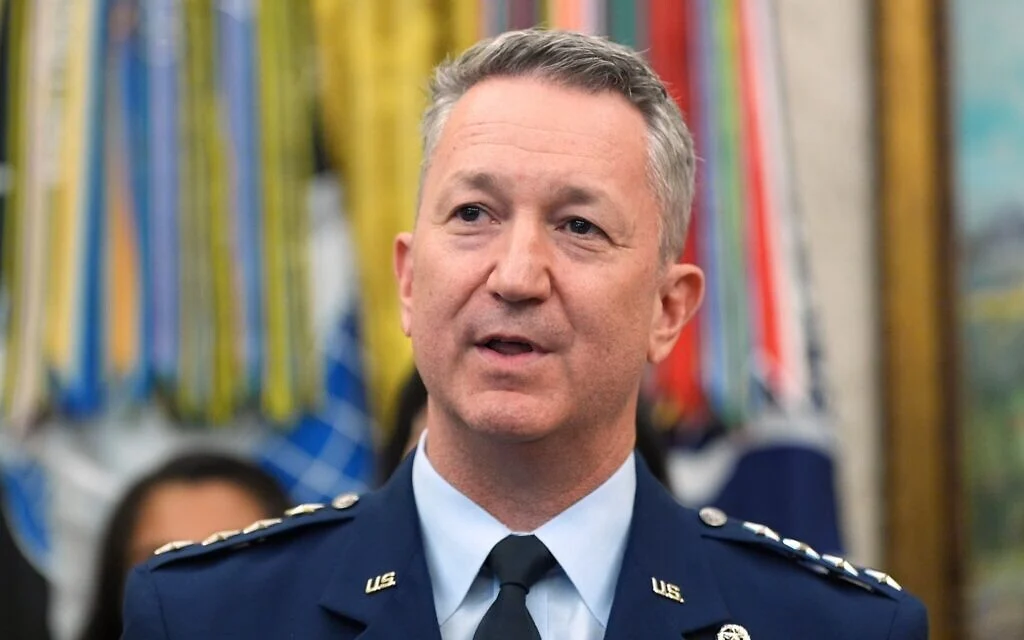
US Gen. Dan Caine, chairman of the Joint Chiefs of Staff, speaks during a meeting about military families with President Donald Trump, in the Oval Office of the White House, August 3, 2026, in Washington. (AP Photo/Alex Brandon)
Gen. Dan Caine, the chairman of the Joint Chiefs of Staff, is reportedly working behind the scenes to explore a possible way out of the Trump administration’s war with Iran, even as President Donald Trump continues to signal that additional military pressure could help force Tehran toward a deal.
According to reporting cited by CNN and published by The Daily Beast, Caine has privately discussed the limits of continued military action with senior members of Trump’s national security team. One source familiar with the discussions described the general as “looking for an off-ramp.”
The reported conversations come as the conflict enters its sixth month, with growing questions over the effectiveness of additional strikes, the availability of certain weapons and the financial cost of U.S. military operations in the Middle East.
Who Is Dan Caine and What Is His Role?
Dan Caine is the chairman of the Joint Chiefs of Staff, the senior military adviser to the president and other national security leaders.
His role is to provide military advice and present options to the commander in chief. The Daily Beast report says Caine has discussed the prospects for the Iran war with several senior Trump officials, including CIA Director John Ratcliffe, Secretary of State Marco Rubio and Vice President JD Vance.
According to the report, these discussions took place before Caine met with Trump, with the goal of coordinating their message and emphasizing the limitations of some military options.
The reported conversations do not mean Caine has independently decided to end the war. The source material instead describes him as assessing the military limits and potential paths toward an eventual exit.
Dan Caine Reportedly Warns More Strikes May Not Be Enough
The central development surrounding Caine is the reported concern that continued bombing may not necessarily produce the political outcome Washington wants.
CNN reported that Caine has privately discussed the limits of further military action and the possibility of finding a way to move toward a ceasefire.
One source described the general’s approach as an effort to protect the military, rather than as an attempt to undermine the president.
The distinction is significant because the U.S. military’s role is to advise the president, while the president retains authority over national security decisions.
A spokesperson for Caine declined to discuss his confidential conversations with Trump, Defense Secretary Pete Hegseth or other senior officials. The spokesperson also rejected anonymous descriptions of those conversations that were not made by people directly involved.
Trump Continues to Push His Iran Strategy
The reported discussions come as Trump continues to defend his administration’s military campaign against Iran.
According to the supplied report, Trump has argued that military pressure could help produce a deal while also criticizing reports about weapons shortages.
The president had previously indicated that the conflict would be relatively short, making the reported entry into a sixth month particularly significant.
The disagreement is not necessarily described as a direct confrontation between Trump and Caine. Rather, the report suggests that military officials are assessing whether continued strikes can achieve the administration’s objectives and what options might exist if military pressure reaches its limits.
U.S. Military Faces Reported Weapons Shortages
Another major issue surrounding the conflict is the availability of certain weapons.
The Washington Post reportedly found that the U.S. military was experiencing shortages involving long-range guided missiles and interceptors. The report said the shortages were among the reasons fewer missile strikes had taken place during the previous week.
Defense Secretary Pete Hegseth denied the report.
The issue has nevertheless become part of the wider debate over the sustainability of the military campaign. Modern U.S. military operations can consume significant quantities of precision-guided weapons and missile-defense interceptors, creating pressure on production and stockpiles when a conflict lasts longer than initially expected.
The supplied reporting does not establish that the United States has run out of weapons. It instead reports concerns over shortages of particular weapons systems.
READ ALSO
Will the Strait of Hormuz reopen? Trump signals major breakthrough with Iran
How Much Has the Iran War Cost the United States?
The financial burden of the conflict is another factor highlighted in the report.
Hegseth told Congress last month that the war had cost approximately $37.5 billion. He subsequently requested an additional $67 billion for Middle East operations.
Those figures illustrate the scale of the resources being committed to the conflict and help explain why questions about the war’s duration have become increasingly important.
The longer the conflict continues, the greater the pressure on military resources, weapons production and federal spending.
White House Defends Dan Caine
The White House pushed back against any suggestion that Caine’s reported discussions represented a problem within Trump’s national security team.
A White House official described Caine as an important asset to the president and pointed to what it called the success of U.S. military operations, including Operation Epic Fury, Midnight Hammer and Absolute Resolve.
The official said Caine provides the president with accurate and unbiased information and a range of options before Trump makes decisions based on what he considers best for U.S. national security.
That response is important because it frames Caine’s reported discussions as part of the normal process of military advice rather than evidence of a public split between the chairman and the president.
Is Dan Caine Trying to End Trump’s Iran War?
The available reporting does not establish that Caine has ordered or attempted to end the conflict.
What the report does indicate is that he has reportedly discussed the limits of continued military action with other senior officials and explored possible ways to move toward an exit.
The phrase “off-ramp” refers to a potential pathway out of a difficult or escalating situation. In this context, it suggests consideration of diplomatic or military options that could eventually reduce hostilities.
Caine’s spokesperson has declined to discuss his private conversations, meaning the precise content of those discussions remains unclear.
What Could Happen Next in the Iran War?
The future of the conflict could depend on whether military pressure produces the political concessions the Trump administration is seeking.
If negotiations make progress, Washington could have an opportunity to reduce military operations. If talks fail, the administration could face pressure to maintain or increase military activity despite concerns over weapons availability, costs and the limits of further strikes.
For now, the reported discussions involving Caine highlight a central question facing the Trump administration: how to achieve its objectives in Iran without allowing the conflict to become an open-ended military commitment.
The Daily Beast’s report, citing CNN and anonymous sources, provides a picture of senior officials weighing those challenges. Caine’s office has not publicly confirmed the reported private discussions, leaving the exact nature of his advice to Trump unclear.
FAQ
Who is Dan Caine?
Dan Caine is the chairman of the Joint Chiefs of Staff and serves as a senior military adviser to the U.S. president and national security leadership.
Is Dan Caine trying to end Trump’s Iran war?
According to the reporting provided, Caine has reportedly discussed the limitations of continued military action and possible ways to find an “off-ramp” from the conflict. His office has not publicly confirmed the details of those private discussions.
What does “off-ramp” mean in the Dan Caine report?
An “off-ramp” refers to a potential way to reduce or end an escalating conflict. In this report, it refers to possible options for moving away from continued military operations in Iran.
Did Dan Caine secretly meet with Trump officials?
The supplied report says Caine privately discussed the limits of military action with senior Trump administration officials, including John Ratcliffe, Marco Rubio and JD Vance, before meeting with Trump.
What did Dan Caine reportedly tell Trump advisers?
The report says Caine discussed the limits of further military action and concerns about whether continued bombing would be enough to secure a ceasefire. The exact details of his private conversations have not been publicly disclosed.
Has Dan Caine confirmed the reported talks?
No. Caine’s spokesperson said the chairman’s confidential conversations with the president, defense secretary and other senior leaders are not discussed publicly.
What is Dan Caine’s role in the Iran war?
As chairman of the Joint Chiefs of Staff, Caine provides military advice and options to the president. The president makes the final decisions regarding U.S. national security policy and military operations.
Is the U.S. running out of weapons because of the Iran war?
The supplied report cites concerns about shortages involving long-range guided missiles and interceptors. It does not establish that the United States has completely run out of weapons. Defense Secretary Pete Hegseth denied the reported shortages.
How much has the Iran war cost the United States?
According to the supplied reporting, Defense Secretary Pete Hegseth told Congress that the war had cost approximately $37.5 billion and requested another $67 billion for Middle East operations.
Who is Pete Hegseth?
Pete Hegseth is the U.S. secretary of defense. He has been involved in decisions concerning the military campaign and has defended the administration’s handling of the conflict.
Who is Marco Rubio in the Iran war?
Marco Rubio is the U.S. secretary of state and one of the senior officials reportedly involved in discussions with Caine about the conflict and potential options for moving forward.
Who is JD Vance in the Iran war?
JD Vance is the U.S. vice president. The supplied report says Caine discussed the conflict and military options with Vance and other senior administration officials.
Who is John Ratcliffe?
John Ratcliffe is the CIA director. According to the report, Caine discussed the limits and prospects of the Iran conflict with Ratcliffe.
How long has the Iran war lasted?
The supplied Daily Beast report describes the conflict as entering its sixth month.
What is Operation Epic Fury?
Operation Epic Fury is one of the military operations referenced by the White House in defending the administration’s handling of the conflict. The supplied source also mentions Midnight Hammer and Absolute Resolve.
Why is Dan Caine’s reported “off-ramp” important?
The reported discussions are significant because they suggest senior U.S. officials are examining whether additional military action can achieve the desired outcome and how the conflict could eventually be brought toward a conclusion.
Will Trump end the Iran war?
The supplied sources do not establish whether or when Trump will end the war. They show that the administration continues to weigh military and diplomatic options while the conflict continues.
Is there a disagreement between Trump and Dan Caine?
The supplied reporting does not establish a direct public disagreement between Trump and Caine. It reports that Caine has privately discussed military limitations with other officials while continuing to advise the president.
What happens if the Iran war continues?
A prolonged conflict could increase pressure on U.S. military resources, weapons stockpiles and federal spending. The supplied report highlights these concerns but does not predict a specific outcome.