

Will the Strait of Hormuz reopen? Trump signals major breakthrough with Iran

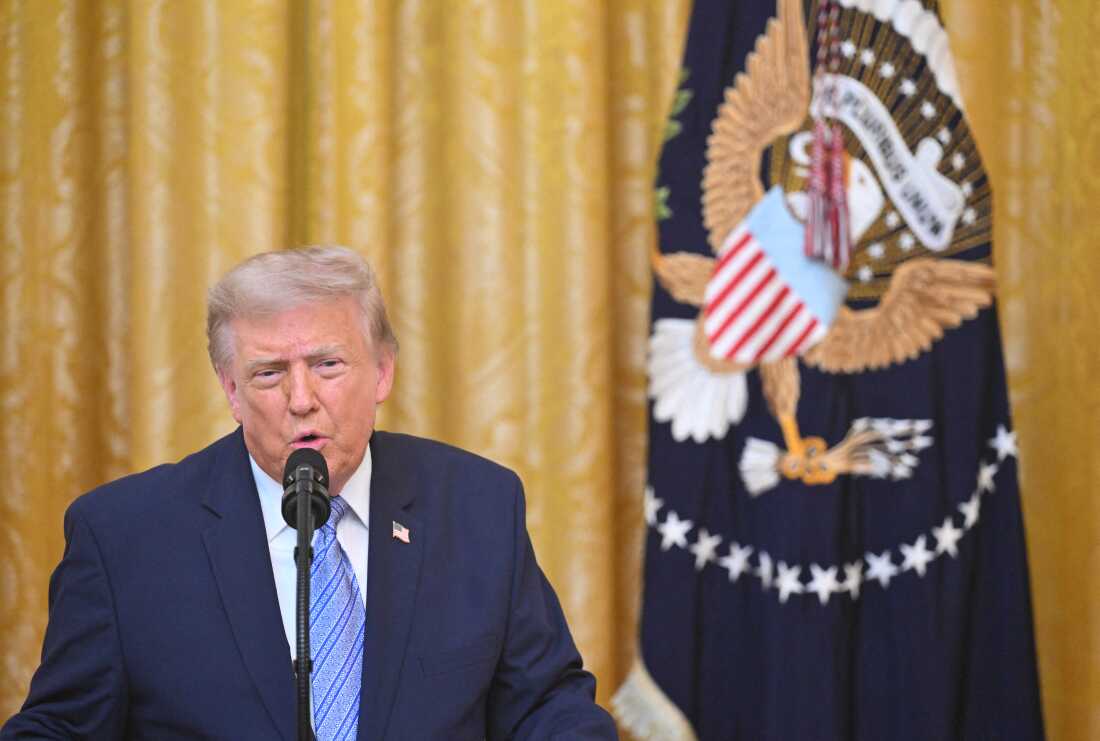
President Trump addresses the nation from the East Room of the White House. Image Credit: Saul Loeb/Pool/AFP via Getty Images
President Donald Trump says he is personally involved in negotiations with Iran as diplomatic efforts intensify to reopen the Strait of Hormuz, one of the world’s most strategically important shipping routes. His latest remarks come amid continued military tensions, fresh US sanctions on Iranian financial networks, and growing concern over energy markets and regional security.
Although Trump stopped short of declaring that an agreement has been reached, he expressed confidence that negotiations are moving in a positive direction. His comments arrive at a critical moment, with the closure of the Strait of Hormuz continuing to disrupt global oil shipments while diplomatic channels remain active.
Trump says US-Iran negotiations are progressing
Speaking from the White House, Trump said discussions surrounding the Strait of Hormuz are advancing.
“I think we’re doing very well,” Trump told reporters, adding that he is directly participating in negotiations.
While acknowledging that no final agreement has been reached, the president suggested that a breakthrough could happen soon if ongoing discussions continue positively.
Trump also predicted that gasoline prices could continue declining if stability returns to the region, arguing that recent US military actions against Iran have strengthened security conditions around one of the world’s busiest energy corridors.
Why the Strait of Hormuz remains the centre of negotiations
The Strait of Hormuz links the Persian Gulf with the Gulf of Oman and serves as one of the world’s most important maritime trade routes.
Before hostilities escalated, roughly one-fifth of global oil exports and significant liquefied natural gas (LNG) shipments moved through the narrow waterway.
Following renewed military confrontations earlier this year, commercial shipping traffic declined sharply after Iran restricted access and the United States increased naval operations around Iranian waters.
Negotiations currently focus on establishing shipping arrangements that would allow commercial vessels to safely resume transit while addressing disagreements over who controls navigation within the strait.
Iran reportedly wants to maintain authority over vessels travelling through its territorial waters and preserve the option of imposing future transit fees. The United States has maintained that international shipping must remain free from Iranian control.
Iran disputes direct negotiations with Washington
Despite Trump’s repeated statements that discussions are progressing, Iranian officials continue to deny direct negotiations with the United States.
According to Iranian authorities, current discussions are taking place through Oman, which has emerged as the principal mediator between both sides.
Iranian Parliament Speaker Mohammad Bagher Ghalibaf criticised Trump’s public comments, accusing Washington of using “theater diplomacy” while insisting that the United States should honour previous commitments before expecting further concessions.
This disagreement over the nature of the negotiations highlights the diplomatic complexity surrounding the current talks.
READ ALSO
Trump says he’s “close” to ordering massive new attack on Iran as Middle East teeters on the brink
New US sanctions target Iran’s financial networks
As diplomatic discussions continue, the Trump administration has simultaneously intensified economic pressure on Tehran.
The US Treasury Department announced fresh sanctions targeting companies and individuals accused of helping Iran move hundreds of millions of dollars through what officials describe as a “shadow banking system.”
Separately, the State Department imposed sanctions on several cryptocurrency exchanges and financial facilitators allegedly connected to Iran’s sanctions-evasion network.
US officials argue that these financial restrictions are intended to reduce Tehran’s ability to fund military operations, support regional proxy groups, and expand its nuclear programme.
Military operations continue despite diplomatic efforts
Although negotiations remain active, military activity across the Middle East has not completely subsided.
US Central Command confirmed that American forces continue supporting maritime security operations in the region while enforcing restrictions around Iranian ports.
Meanwhile, Israel and the United States recently conducted another successful test of the Arrow missile defence system, reinforcing joint efforts to improve protection against long-range ballistic missile threats.
Military analysts caution that diplomatic progress remains fragile as long as proxy groups continue operating across the region.
Saudi Arabia and regional allies strengthen security cooperation
Regional governments are also adjusting to the evolving security situation.
Saudi Arabia, Turkey and Pakistan recently signed a defence cooperation agreement aimed at strengthening collective security following months of escalating regional instability.
At the same time, intelligence reports cited by multiple officials suggest Saudi Arabia remains concerned about potential attacks from Iranian-backed groups operating in Iraq and Yemen.
The growing cooperation among regional partners reflects broader concerns that tensions could quickly spread beyond the Strait of Hormuz.
Experts warn broader US-Iran conflict remains unresolved
While negotiations over Hormuz have generated cautious optimism, many foreign policy experts argue they represent only one aspect of the broader confrontation between Washington and Tehran.
Several analysts note that even if an agreement is reached regarding commercial shipping, significant disagreements remain over Iran’s nuclear programme, regional influence, sanctions, and military activities.
Some experts have also questioned whether repeated cycles of military escalation followed by diplomatic outreach may undermine long-term trust between both governments.
As negotiations continue, the reopening of the Strait of Hormuz could provide short-term economic relief, but broader peace efforts are expected to require considerably more complex diplomatic engagement.
FAQ
Why is the Strait of Hormuz so important?
The Strait of Hormuz is one of the world’s busiest energy shipping routes, carrying around one-fifth of global oil exports and significant volumes of liquefied natural gas. Any disruption affects global energy prices and international trade.
What did Donald Trump say about Iran?
Trump said he is personally involved in negotiations with Iran regarding the Strait of Hormuz and believes discussions are progressing well, although no final agreement has been reached.
Has the US reached a deal with Iran?
No. Trump indicated that negotiations are ongoing and suggested an agreement could come soon, but both sides have not announced a finalized deal.
Is Iran negotiating directly with the United States?
Iran says it is not holding direct negotiations with the United States. Iranian officials maintain that discussions are taking place through Oman, which is acting as a mediator.
Why was the Strait of Hormuz closed?
The waterway became heavily restricted following renewed military conflict involving the United States, Israel and Iran, creating security concerns for commercial shipping.
What are the main disagreements in the Hormuz negotiations?
The key dispute involves control of shipping routes. Iran wants authority over vessels passing through its territorial waters, while the United States insists on unrestricted international navigation.
What sanctions did the US announce against Iran?
The US imposed sanctions targeting Iran’s financial networks, cryptocurrency exchanges, front companies and individuals accused of helping Tehran evade previous sanctions.
How do the Hormuz negotiations affect oil prices?
If commercial shipping resumes safely, energy supplies could stabilize, potentially reducing global oil prices and lowering fuel costs in many countries.
Is the US still carrying out military operations against Iran?
Military operations have decreased compared to earlier stages of the conflict, but US forces continue maritime security missions while negotiations proceed.
What role is Oman playing?
Oman is serving as the principal mediator between Iran and the United States during discussions over the future operation of the Strait of Hormuz.
Could reopening the Strait of Hormuz end the US-Iran conflict?
Not necessarily. Experts say reopening the waterway would address a major economic issue, but broader disputes over Iran’s nuclear programme, sanctions and regional security would still need separate negotiations.
Why are global markets watching the Hormuz negotiations?
Because the Strait of Hormuz is vital for global energy supplies, any agreement or renewed conflict could significantly influence oil prices, inflation, shipping costs and international financial markets.