

PiggyVest at 10: How a simple savings idea became a financial ecosystem

In December 2015, the future of PiggyVest was not looking particularly promising because there was no PiggyVest yet.
There was only PushCV, a young Nigerian startup founded by Somto Ifezue, Odunayo Eweniyi and Joshua Chibueze.
And PushCV had a problem.
The company was running out of money.
The founders had to reduce their team from about 25 people to six as they tried to keep the business alive. Then, on December 31, 2015, Eweniyi came across a tweet about a simple idea: a digital platform that could help Nigerians save money.
It was the kind of idea that could easily have disappeared into the noise of social media.
Instead, the founders looked at it and thought they could build it.
That decision would eventually produce one of Nigeria’s biggest fintech companies.
Ten years later, the company that started as PiggyBank has more than six million users and has grown from a digital savings product into a wider financial ecosystem.
But getting there was not a straight line.
The idea came from something Nigerians already knew
The founders were not trying to teach Nigerians how to save.
Nigerians already knew how.
For decades, people had used wooden kolos to put money away little by little. The problem was that the traditional method had not moved with the people carrying smartphones and using digital financial services.
So the founders wondered whether they could take the discipline of the kolo and put it on a phone.
That became PiggyBank.
The first version launched in January 2016.
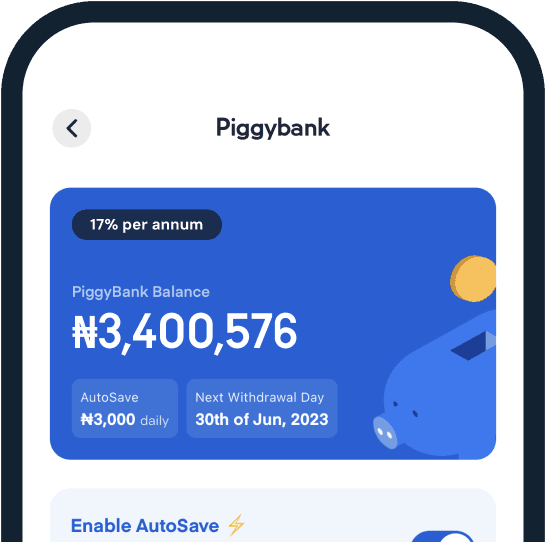
The proposition was simple: Nigerians could put money aside digitally and earn interest instead of leaving their savings idle or keeping cash at home.
It was a small idea, but it attacked a very familiar problem.
People wanted to save. They simply needed a system that made saving easier and spending harder.
As TechCabal reported in its account of PiggyVest’s early years, the company had about 450 users who saved N21 million within its first year.
That was enough to convince the founders that they had something worth pursuing.
But the first version of the dream almost became a nightmare.
PiggyBank had to shut down
A few months after launch, the young company discovered security problems with its product.
Some users had managed to link other people’s cards to accounts. The team also found weaknesses in its OTP protection.
For a financial platform, that was not a small technical problem.
People were trusting PiggyBank with their money.
So the founders made a difficult decision.
They stopped new sign-ups and took the platform offline in March 2016, only about three months after launching it.
It meant interrupting the momentum they had just begun to build.
But they used the shutdown to rebuild the product and strengthen its security, liquidity and treasury systems.
By April, PiggyBank was back.
The decision would become an early lesson in what it meant to build a financial company: getting people to download an app was one thing; getting them to trust it with their money was another.
Then the name had to change
The company soon encountered another problem, this time outside its technology.
The regulators objected to the use of the name “PiggyBank” because of its implication of a banking service.
The founders already had another name they had acquired: PiggyVest.
They adopted it.
The new name also fitted where the company was heading.
The business was no longer interested only in helping people put money away. It wanted to help them grow their money too.
That distinction would become important.
PiggyBank had started with saving.
PiggyVest was beginning to think about wealth.
Saving was only the beginning
The next stage was not simply adding more users.
It was adding more reasons for those users to keep using the platform.
The company introduced different savings products that allowed people to save according to their circumstances and goals.
There was a difference between someone who wanted to save freely and someone who wanted to lock money away until a particular date.
That thinking produced products such as Flex and SafeLock, while Target Savings gave users a way to save towards specific goals.
The idea remained rooted in the original kolo.
But the digital version could do more.
It could remind users to save.
It could track their progress.
It could restrict access to money they were tempted to spend.
And, importantly, it could reward them with interest.
This helped PiggyVest turn saving from something people were expected to do into something that could become a routine.
The growth began to feed itself.
People saved.
They saw the system work.
They told friends.
Those friends joined.
And they told other people.
By the end of 2018, the company’s users had grown from hundreds to thousands, driven heavily by word of mouth. By 2019, PiggyVest said it had reached one million users.
The kolo had found its audience.
Then PiggyVest went after investments
The next logical question was: if people were already trusting PiggyVest to keep their money, could the platform help them do more with it?
That led to another major change.
In 2019, PiggyBank became PiggyVest and began expanding into investment products.
This was more than a rebrand.
It changed the company’s identity.
The company was no longer only a digital alternative to a wooden savings box. It was becoming a platform through which Nigerians could save and invest.
That distinction would shape everything that came afterwards.
PiggyVest had started with the problem of keeping money.
Now it was moving towards the larger problem of building wealth.
Trust became the real product
The company’s growth was not powered by technology alone.
It needed trust.
That mattered because PiggyVest was asking Nigerians to do something emotionally difficult: take money they could physically hold and put it somewhere they could only see on a screen.
The company therefore had to keep proving that its promises were real.
One of the features that helped was its free withdrawal days, which allowed users to access their savings at designated times without penalties.
When users received their money as promised, they talked about it.
Social media became one of PiggyVest’s biggest growth engines.
Its users were not simply customers. Many became promoters of the product.
That helped the platform grow without depending heavily on traditional advertising in its early years.
By 2022, PiggyVest had crossed four million users. By 2024, that number had passed five million.
The company was no longer just selling a savings app.
It was building a community around financial discipline.
Then the ecosystem started taking shape
PiggyVest’s biggest transformation came when the company began adding services beyond savings and investments.
In 2021, its parent company acquired Abeg, a payments platform that was later renamed PocketApp.
The acquisition gave PiggyVest something it had not previously controlled in the same way: a payments business.
That mattered because the financial life of a customer does not begin when they save.
Money has to come in.
It has to move around.
It has to be spent.
It can be invested.
It can eventually be saved again.
With PocketApp, PiggyVest was moving closer to being present across those different stages.
As TechCabal reported on the company’s payment expansion, PiggyVest later began internalising its payment infrastructure through PocketApp to give users faster and more reliable ways to fund their accounts.
That was not simply another feature.
It was part of the bigger plan.
PiggyVest was becoming more than a savings app
By this point, the original idea had changed dramatically.
The company that began with a digital version of a kolo now had savings products, investment products, a payments platform and business-focused financial services.
PiggyVest also expanded into products such as PiggyVest Business, while continuing to develop new ways for users to manage their money.
The pieces began to fit together.
A user could earn money elsewhere, move it into the ecosystem, save part of it, invest another part and use payment services when needed.
That is what makes an ecosystem different from a single financial product.
The company was no longer solving one financial problem.
It was trying to sit in the middle of several.
The numbers now tell a different story
The scale of that transformation is visible in the money moving through the platform.
In 2024 alone, PiggyVest paid out N835 billion to customers and crossed N2 trillion in total payouts since its launch. At the time, the company said users were saving about N44,000 every second.
Those numbers are a long way from the N21 million saved by its first group of users.
And they explain why the company’s tenth anniversary is more significant than simply celebrating survival.
PiggyVest has spent the decade turning a very small idea into a large financial infrastructure used by millions of people.
The kolo is still there, only much bigger
The most interesting thing about PiggyVest’s story is that the original idea never really disappeared.
The company still does what the wooden kolo was designed to do.
It helps people put money aside.
Everything else came afterwards.
First came the digital savings product.
Then came better ways to save.
Then investments.
Then payments.
Then business services.
And now the company is looking towards an even broader financial ecosystem.
The journey from one to the other was not a single giant leap.
It was a series of decisions based on what users needed next.
That is why PiggyVest’s first decade is less a story about an app becoming popular and more a story about a simple product continually expanding its definition.
PiggyVest at 10: What comes next?
At 10, PiggyVest is entering a very different phase from the one it started in.
The company no longer needs to convince Nigerians that digital savings are possible.
Millions have already done it.
Its challenge now is to convince those users that it can handle more parts of their financial lives.
That explains the push into payments, business finance and other financial products.
It also explains why the company has been investing in infrastructure rather than simply adding features.
The next version of PiggyVest is therefore not just a bigger savings app.
It is an attempt to build a place where Nigerians can save, invest, move and manage their money.
Ten years ago, three founders looked at the familiar idea of a kolo and wondered if they could put it on a phone.
They did.
Then they discovered that people wanted more than a digital kolo.
They wanted a better way to save.
Then a better way to invest.
Then a better way to move money.
And with every new need, PiggyVest expanded.
That is how a simple savings idea became a financial ecosystem.