

Panama Earthquake: What We Know About the Damage, Aftershocks and US Response

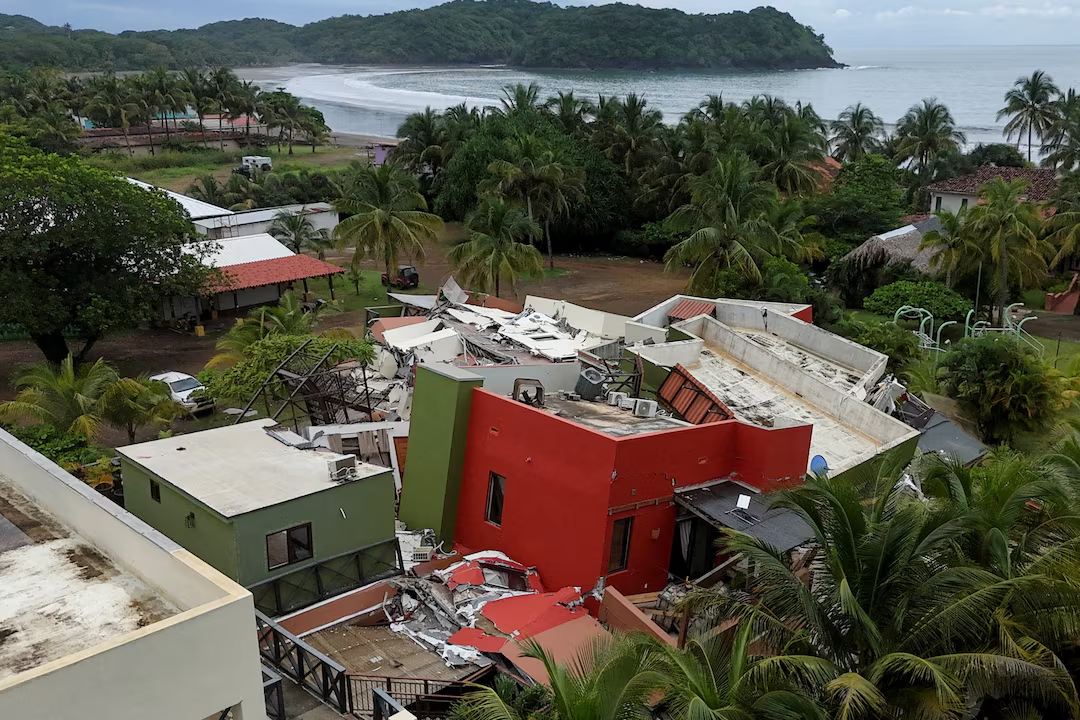
A drone view shows El Sitio Hotel, with sections collapsed following an earthquake that struck near Panama’s southern coast in Playa Venao, Provincia de Los Santos, Panama, October 11, 2026. REUTERS/Enea Lebrun
Panama is assessing damage to homes, schools and bridges after a powerful earthquake struck the country on Friday, October 9, 2026. More than 200 aftershocks have followed the main quake, raising concerns about the safety of residents and damaged buildings.
The 7.7-magnitude earthquake struck southern Panama. It triggered evacuations and disrupted daily activities, although authorities have reported no deaths.
At least 27 people sustained injuries, while assessments continue in affected communities. The government has also declared a state of emergency to support relief operations and repairs.
Here is what to know about the earthquake, its impact and the response.
Panama Earthquake: What Happened?
The earthquake struck southern Panama on October 9, shaking buildings and prompting residents to leave their homes and workplaces.
According to Reuters, the quake occurred about 200 kilometres from Panama City, with its epicentre in a sparsely populated area. Despite the distance, people felt the shaking in the capital.
The earthquake damaged buildings in several communities. Some residents fled outdoors as authorities assessed the risks.
More than 200 aftershocks followed the main earthquake. Although their intensity and frequency were reportedly declining, the continuing tremors remained a concern for residents and emergency officials.
How Much Damage Has the Earthquake Caused?
The earthquake damaged homes and public infrastructure, particularly in Panama’s central provinces.
A situation report published by ReliefWeb on October 12 put the number of damaged homes at approximately 1,250. More than 800 people had sought shelter, while at least 27 people were reported injured.
The damage also affected schools, roads and bridges. Authorities reported problems with at least 14 bridges in Veraguas and Los Santos, increasing the pressure to restore transport links.
The government suspended classes nationwide on Monday as officials assessed the situation and considered safety risks.
However, the full extent of the destruction remained uncertain. Assessments in remote areas could reveal additional damage.
Despite the disruption, the Panama Canal continued operating, according to Reuters.
Why Has Panama Declared a State of Emergency?
The government declared a national state of emergency to mobilise resources for relief and reconstruction.
The measure allows authorities to access up to $100 million to respond to the disaster. The government must also manage the expenditure within its broader fiscal commitments.
President José Raúl Mulino visited affected areas and called for urgent repairs to damaged roads and bridges.
The immediate priorities include supporting displaced residents, assessing damaged buildings and restoring infrastructure. Authorities must also determine which structures remain safe for people to occupy.
The absence of reported deaths does not remove the need for urgent assistance. Damaged homes and disrupted transport can leave families vulnerable even after the main earthquake has passed.
What Is the United States Doing to Help?
The United States has pledged $5 million in assistance and deployed a 20-member team to support the response.
The team is assisting with rescue-related operations and assessments of damaged infrastructure, according to Reuters.
A video published by the US Department of Defense’s media distribution platform, DVIDS, shows US Ambassador to Panama Kevin Marino Cabrera discussing coordination between US personnel and Panamanian authorities.
The footage also features personnel from the US Department of State’s Disaster Assistance Response Team (DART) and the Los Angeles Urban Search and Rescue team.
Their involvement highlights the role of international cooperation in disaster response. Specialist teams can help local authorities assess damage, coordinate emergency activities and identify areas that require additional support.
Are Residents Still at Risk?
The continuing aftershocks remain a concern, particularly for people whose homes or workplaces sustained damage during the main earthquake.
Aftershocks are smaller earthquakes that follow a larger seismic event. They can occur as the Earth’s crust adjusts to changes caused by the main quake.
Even when an aftershock is weaker, it can worsen damage to structures already weakened by the initial shaking.
This is why authorities need to inspect damaged buildings before residents return. People may also require temporary shelter while officials determine whether their homes are safe.
Although the intensity and frequency of the aftershocks were reportedly declining, that trend does not guarantee that further tremors will stop immediately.
What Happens Next?
Panama’s response will depend on the findings of continuing damage assessments and the needs of affected communities.
Authorities must determine the number of homes requiring repairs, restore damaged transport links and provide shelter for displaced families.
The emergency declaration provides a financial mechanism for relief, while US assistance offers additional support for rescue operations and infrastructure assessments.
For now, the absence of reported deaths is a significant development. However, the scale of the damage means the recovery effort will continue beyond the immediate earthquake response.