

Lionel Messi retires from Argentina: The 10 moments that defined his historic International career

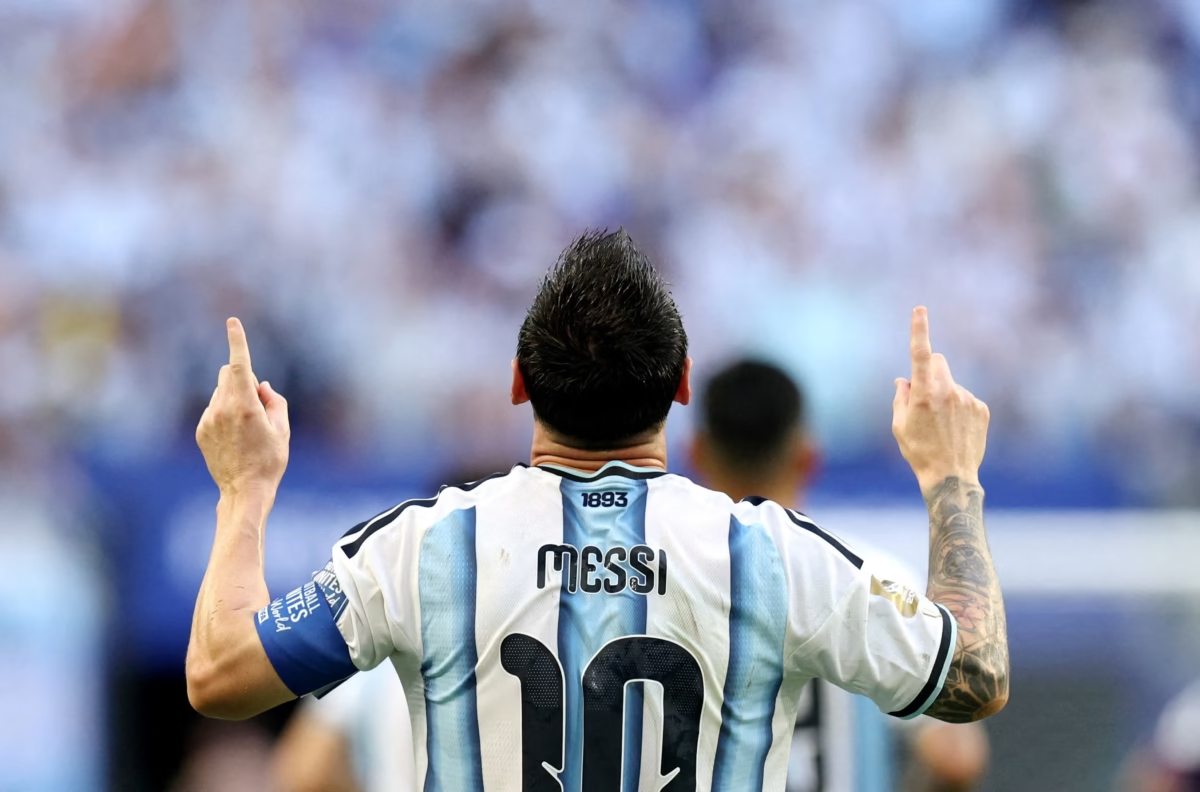
Lionel Messi’s greatest moments during his historic Argentina career. Credit: Reuters
Lionel Messi’s extraordinary journey with the Argentina national team has reached its final chapter.
After more than two decades representing the Albiceleste, Messi announced his retirement from international football on August 31, 2026, ending one of the most celebrated careers in the history of the sport. The 39-year-old leaves behind an international legacy filled with record-breaking performances, painful defeats, emotional comebacks and the trophies that ultimately transformed his relationship with the Argentina national team.
Messi’s farewell was particularly emotional because his international career was not always defined by universal celebration. For years, he faced criticism over Argentina’s failures in major finals and repeated questions about whether his club success could be replicated for his country.
By the time he walked away, however, Messi had helped deliver the achievements that once seemed out of reach, including the 2021 Copa América, the 2022 FIFA World Cup and another Copa América title in 2024.
His international retirement closes a chapter spanning 21 years, 207 appearances and 125 goals, according to ESPN, placing him among the most prolific international players in men’s football history.
Messi’s emotional retirement brings an end to 21 years with Argentina
In his farewell message, Messi described leaving the national team as a decision that continued to cause him deep pain.
The Argentina captain emphasized that he had always given everything for the shirt, including during the difficult years when the national team repeatedly fell short in major tournaments.
Those words reflected one of the defining themes of Messi’s Argentina career. Before finally winning major senior international trophies, he endured defeats in several finals and criticism from sections of the public who questioned his commitment to the national team.
Messi briefly retired from international football in 2016 following Argentina’s Copa América Centenario final defeat to Chile. At the time, Argentina had lost several major finals during his career, adding to the pressure surrounding the country’s biggest football star.
He returned only months later.
That decision changed the course of his international story.
Winning the 2022 World Cup became Messi’s defining Argentina moment
No achievement carries greater significance in Messi’s Argentina career than winning the 2022 FIFA World Cup in Qatar.
Argentina’s dramatic victory over France gave Messi the one major trophy many believed he needed to complete his international legacy. Messi scored twice during the final and converted his penalty during the shootout as Argentina secured its first World Cup title since 1986.
The triumph also strengthened Messi’s standing in football’s long-running greatest-of-all-time debate.
For Argentina, the victory represented more than another international title. Messi became permanently linked with the country’s third World Cup star and joined the small group of players who have led Argentina to football’s biggest prize.
The 2022 triumph remains the undisputed No. 1 moment of his international career.
Messi finally ended Argentina’s long wait for a major trophy in 2021
Before the World Cup came another historic breakthrough.
Messi helped Argentina win the 2021 Copa América, defeating Brazil in the final and ending years of frustration for both the national team and its captain.
The tournament was especially significant because Messi had repeatedly come close to winning a major senior international trophy. His Argentina teams had reached multiple finals, but the celebrations always belonged to someone else.
In 2021, that changed.
Messi finished the tournament as one of its standout performers, scoring four goals and earning recognition as the competition’s best player. The title removed a major burden from his international career and opened the door to an even more successful period with Argentina.
A second Copa América title added to Messi’s international legacy
Argentina successfully defended its continental crown at the 2024 Copa América in the United States.
While Messi was not the tournament’s leading scorer, his presence and leadership remained central to Argentina’s continued success.
The victory also gave Messi an opportunity to celebrate a major title alongside supporters after the fan restrictions that surrounded the 2021 Copa América.
By this stage of his career, Messi had moved from being a player criticized for failing to win with Argentina to the central figure in one of the most successful periods in the national team’s modern history.
Messi’s 2008 Olympic gold marked an early international breakthrough
Long before his World Cup and Copa América triumphs, Messi was already making his mark on the international stage.
At the 2008 Olympic Games in Beijing, Messi helped Argentina win the gold medal while playing alongside stars including Juan Román Riquelme and Javier Mascherano.
Messi was only 21 years old at the time, and the Olympic success became one of the first major international achievements of his career.
It also offered an early glimpse of the role he would eventually play in Argentina’s football history.
READ ALSO
Messi’s goals and records helped reshape Argentina’s football history
Messi leaves international football as Argentina’s all-time leading scorer.
One of his landmark moments came during the Copa América Centenario in 2016, when he scored a stunning free kick against the United States and surpassed Gabriel Batistuta as Argentina’s leading goalscorer.
He continued adding to that record for the remainder of his international career, eventually reaching 125 goals.
Messi also produced countless decisive performances in World Cup qualification, Copa América matches and international friendlies.
His longevity was equally remarkable. Representing Argentina for more than two decades, he played across multiple generations of teammates and appeared at six World Cup tournaments.
The 2012 hat trick against Brazil remains one of Messi’s greatest goals
Individual brilliance was never in short supply during Messi’s Argentina career.
One of his most memorable performances came against Brazil in a 2012 friendly. With the match level at 3-3, Messi completed his hat trick with a remarkable individual goal.
He collected the ball near the halfway line, beat defenders and unleashed a powerful finish from outside the penalty area to give Argentina a 4-3 victory.
Matches between Argentina and Brazil always carry enormous significance, making the goal and the hat trick particularly memorable in Messi’s international highlight reel.
Messi’s 2014 World Cup campaign showed his ability to carry Argentina
Argentina did not win the 2014 World Cup, but Messi’s performances helped take the team deep into the tournament.
His display against Nigeria in the group stage was among the highlights, with Messi scoring twice, including a trademark free kick.
Argentina eventually reached the final before losing to Germany.
The defeat added to the painful narrative surrounding Messi’s international career at the time, but the tournament also demonstrated his importance to Argentina and set the stage for his eventual redemption years later.
Messi’s fiery Netherlands moment showed another side of the Argentina captain
Messi was often portrayed as quiet and reserved, but his competitive personality was impossible to ignore during Argentina’s 2022 World Cup campaign.
Following Argentina’s tense quarterfinal victory over the Netherlands, Messi produced a post-match moment that quickly went viral after reacting angrily toward someone nearby during a television interview.
The incident became another symbol of the intensity surrounding Argentina’s World Cup campaign.
It also challenged the long-standing criticism that Messi lacked the passion or leadership associated with some of Argentina’s previous football icons.
By the end of the tournament, few questions remained about his emotional investment in the national team.
Messi’s retirement message shows the criticism was never forgotten
ESPN’s analysis of Messi’s farewell suggested that the painful criticism he received during the early part of his international career remained an important part of his story.
Messi spent significant space in his retirement statement emphasizing that he had always given everything for Argentina, including during the years when major trophies remained elusive.
His words highlighted the personal side of an extraordinary sporting career.
Messi eventually won nearly everything Argentina supporters had hoped he would win. Yet the memories of earlier criticism and his brief 2016 retirement appeared to remain part of his emotional relationship with international football.
His retirement message was not just a celebration of trophies and records. It was also a reflection on the pressure, expectations and sacrifices behind them.
Lionel Messi leaves Argentina with a legacy few players can match
Messi’s retirement from international football marks the end of an era for Argentina and world football.
His career included Olympic gold, two Copa América titles, a World Cup triumph, more than 200 international appearances and 125 goals.
The road to those achievements was not always smooth.
Messi experienced devastating final defeats, criticism and a previous retirement before returning to help lead Argentina into its most successful modern period.
That journey may be one reason his farewell carries such emotional weight.
The trophies will define much of Messi’s legacy, particularly the 2022 World Cup victory, but his Argentina career was also shaped by resilience. He returned when he could have stayed away, continued when expectations were at their highest and eventually delivered the international success that had once seemed impossible.
With his international career now complete, Lionel Messi leaves behind a record that will remain central to Argentina’s football history for generations.
FAQ: Lionel Messi International Retirement and Argentina Career
Has Lionel Messi retired from international football?
Yes. Lionel Messi announced his retirement from international football on August 31, 2026, bringing his Argentina career to an end after more than two decades.
When did Lionel Messi retire from Argentina?
Messi officially announced his retirement from the Argentina national team on August 31, 2026.
How old was Lionel Messi when he retired from international football?
Messi was 39 years old when he announced his retirement from Argentina’s national team.
How many appearances did Lionel Messi make for Argentina?
Messi finished his Argentina career with 207 international appearances, according to ESPN.
How many goals did Lionel Messi score for Argentina?
Lionel Messi scored 125 goals for the Argentina national team, making him the country’s all-time leading goalscorer.
What trophies did Lionel Messi win with Argentina?
Messi won several major international titles with Argentina, including the 2008 Olympic gold medal, the 2021 Copa América, the 2022 FIFA World Cup and the 2024 Copa América.
Did Lionel Messi win the World Cup with Argentina?
Yes. Messi won the 2022 FIFA World Cup after Argentina defeated France in a dramatic final. He scored twice during the match and converted his penalty in the shootout.
What is Lionel Messi’s greatest moment for Argentina?
For many fans and football analysts, Messi’s greatest Argentina moment was winning the 2022 World Cup in Qatar. The victory completed one of football’s most celebrated international careers.
Did Messi retire from Argentina before 2026?
Yes. Messi previously announced his retirement from international football in 2016 after Argentina lost the Copa América Centenario final to Chile. He returned to the national team a few months later.
Why did Messi initially retire from Argentina in 2016?
Messi announced his retirement after Argentina lost another major final, adding to years of frustration and criticism surrounding the national team’s inability to win a senior international trophy during that period.
Why did Lionel Messi return to the Argentina national team?
Messi reversed his 2016 retirement and returned because he wanted to continue representing Argentina. His return eventually led to the most successful period of his international career.
How many World Cups did Lionel Messi play in?
Messi played in six FIFA World Cup tournaments during his international career.
What are Lionel Messi’s biggest Argentina career highlights?
His biggest highlights include winning Olympic gold in 2008, ending Argentina’s major trophy drought by winning the 2021 Copa América, lifting the 2022 World Cup and winning another Copa América title in 2024.
Did Messi score against Brazil for Argentina?
Yes. Messi produced several memorable performances against Brazil, including a hat trick in a 4-3 Argentina victory in 2012.
Will Lionel Messi continue playing club football?
Messi’s international retirement applies to his Argentina national team career. His retirement announcement does not automatically mean he has retired from club football.
How does Messi’s Argentina career compare with Cristiano Ronaldo’s international career?
Messi and Cristiano Ronaldo have both established extraordinary international records. Messi’s career with Argentina includes a World Cup and multiple Copa América titles, while comparisons between the two players continue to depend on the records, trophies and achievements being measured.
What did Messi say in his Argentina retirement message?
Messi described retirement from international football as a painful decision and emphasized that he had always given everything for Argentina, including during difficult years before the national team began winning major trophies.
Why is Messi’s international retirement so significant?
Messi’s retirement ends a 21-year Argentina career that included record-breaking goals, more than 200 appearances and some of the most important trophies in the country’s football history. His 2022 World Cup victory is widely regarded as the defining achievement of his international legacy.